Nissan Leaf vs. Tesla Model Y: Price Parity, Performance Chasm
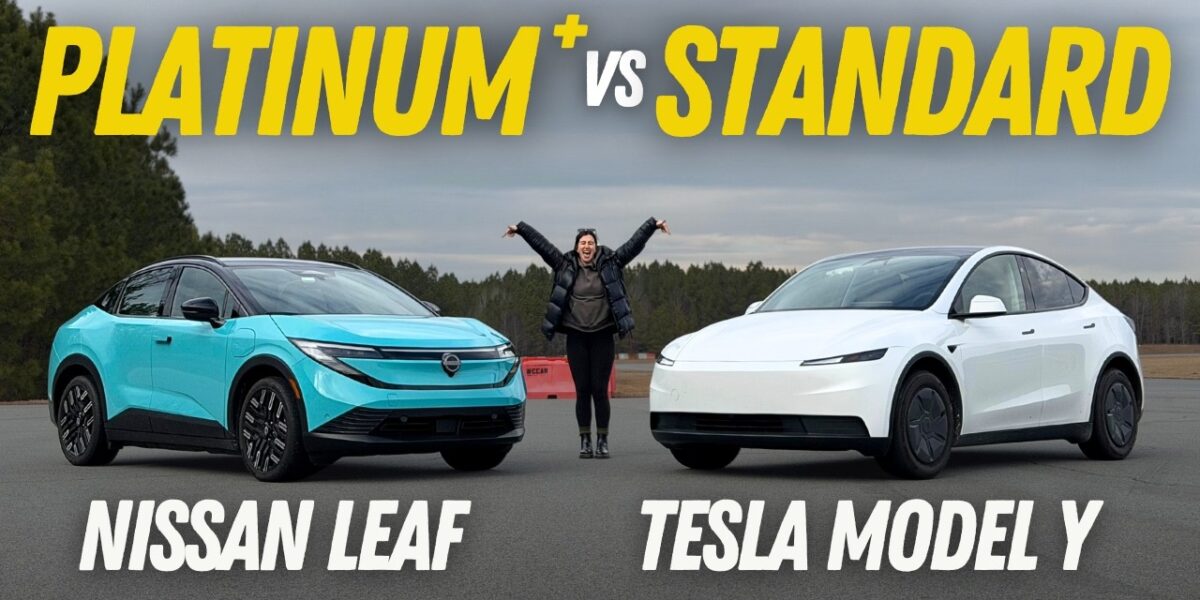
The top-tier Nissan Leaf Platinum Plus and the entry-level Tesla Model Y Standard are priced within $200 of each other, forcing a tough choice. While the Leaf offers a more refined interior and towing capability, the Model Y dominates in performance, range, and charging infrastructure, making it the stronger value proposition.

Nissan Leaf vs. Tesla Model Y: Price Parity, Performance Chasm
In a surprising twist of the EV market, the top-tier Nissan Leaf Platinum Plus and the entry-level Tesla Model Y Standard are priced within a mere $200 of each other. This striking price parity forces a crucial question for consumers: Should you opt for a fully-loaded, comfortable Nissan Leaf or step into the base Tesla Model Y? We put these two electric vehicles head-to-head to find out.
The Price Conundrum: Same Money, Different Worlds
At first glance, the idea of a premium Nissan Leaf matching the price of a base Tesla Model Y seems almost unbelievable. The Nissan Leaf Platinum Plus, with its optional blue paint, comes in at $42,380, while the Tesla Model Y Standard, also with optional white paint, is priced at $42,380. Strip away the paint options, and they are virtually identical in MSRP. However, the comparison quickly diverges when considering the buying experience and potential lease deals.
The traditional Nissan dealership experience, often characterized by haggling, upselling, and less-than-stellar customer service, stands in stark contrast to Tesla’s streamlined online purchasing model. While Tesla showrooms offer guidance, the pricing is fixed, and the process is largely frictionless. This transparency and ease of purchase give the Model Y a significant edge, even if the sticker prices are the same. Furthermore, the Leaf, not being a high-volume seller, is likely to see substantial lease incentives, potentially making it a cheaper option for those who prefer leasing.
Performance: The Model Y Dominates
Where the comparison truly highlights the disparity is in performance. While the Nissan Leaf offers a competent driving experience, the Tesla Model Y Standard simply outclasses it across the board. The Model Y boasts a 0-60 mph time of approximately 6.5 seconds, significantly quicker than the Leaf’s estimated 7.5-8.0 seconds. This performance gap is not just about straight-line speed; it translates to a more engaging and responsive driving feel.
The Model Y’s superior power output is evident, providing a more dynamic driving experience that aligns with the expectations of many EV buyers. While the Leaf is a perfectly adequate commuter car, it lacks the punch and exhilaration that the Model Y delivers, even in its most basic configuration.
Key Performance Specs (Approximate):
- Tesla Model Y Standard: Horsepower: ~295 hp, Torque: ~317 lb-ft, 0-60 mph: ~6.5 seconds
- Nissan Leaf Platinum Plus: Horsepower: ~214 hp, Torque: ~250 lb-ft, 0-60 mph: ~7.5-8.0 seconds
Interior and Practicality: A Tale of Two Philosophies
The interior of these two vehicles presents a study in contrasting design philosophies. The Nissan Leaf Platinum Plus, being the top-trim model, offers a more visually appealing and feature-rich cabin. It boasts a lighter, more airy interior, a glass roof, and physical seat controls – a welcome touch for those who find touch-based systems cumbersome. The materials feel more premium, and the overall ambiance is cheerful and inviting. The Leaf also includes niceties like rear air vents, heated seats, and a 120V power outlet in the cargo area, along with a towing capacity of up to 3,500 lbs (an option not available on the Model Y).
However, the Tesla Model Y Standard, despite its more utilitarian interior, offers superior practicality in terms of space. The cargo volume is significantly larger, with a deep underfloor storage area and a more accommodating rear hatch opening. While the Model Y’s interior can feel dark and lacks physical seat controls (relying on the touchscreen), its overall design is more modern and minimalist. The lack of a glass roof in the standard Model Y does contribute to a less airy feel compared to the Leaf.
The Model Y also offers a frunk (front trunk), albeit a small and non-waterproof one, whereas the Leaf’s front-end packaging is dominated by its powertrain components, leaving little to no frunk space. In terms of rear-seat comfort, both offer adequate space for adults, though the Model Y’s larger dimensions provide a slight advantage in knee room. The Leaf’s inclusion of a 120V outlet and its towing capability are significant advantages for certain buyers.
Range and Charging: Close but Not Equal
In terms of electric range, the Tesla Model Y Standard offers an EPA-estimated range of up to 310 miles, while the Nissan Leaf Platinum Plus is rated at an EPA-estimated 212 miles. In real-world testing, the Model Y typically achieves in the mid-to-high 200s, while the Leaf often falls into the low 200s.
Charging speed is another area where the Model Y pulls ahead. While the Leaf can achieve a peak charging speed of 150 kW and hold it for a decent duration, the Model Y can reach speeds of up to 250 kW at Supercharger stations. Although the Leaf’s charging curve is designed for deeper charges, the Model Y’s faster peak charging capability, combined with Tesla’s extensive Supercharger network and seamless charging experience, provides a more convenient and quicker path to replenishment, especially on road trips.
Key Range & Charging Specs (Approximate):
- Tesla Model Y Standard: Range: ~310 miles (EPA), Peak Charging: ~250 kW
- Nissan Leaf Platinum Plus: Range: ~212 miles (EPA), Peak Charging: ~150 kW
Value Proposition: Who Wins?
The value proposition hinges on what the buyer prioritizes. If a comfortable, well-appointed interior, physical controls, and the unique advantage of towing capability are paramount, the Nissan Leaf Platinum Plus makes a compelling case, especially if significant lease incentives can be found. Its cheerful design and practical features like the 120V outlet add to its appeal as a daily driver.
However, for those seeking superior performance, longer range, a more advanced charging infrastructure, and greater cargo space, the Tesla Model Y Standard is the clear winner. Its modern design, impressive acceleration, and access to the Supercharger network offer a more compelling overall EV experience, despite its more spartan interior and lack of physical seat controls. The Model Y’s purchase experience also adds significant value through its transparency and ease.
Verdict
While the Nissan Leaf Platinum Plus offers surprising interior refinement and some unique practical advantages for its price point, the Tesla Model Y Standard ultimately emerges as the more capable and desirable electric vehicle. The performance gap, longer range, superior charging network access, and larger cargo capacity make it the more well-rounded package. The Leaf is a solid commuter, but the Model Y provides a more engaging and future-proof EV experience, even in its most basic trim. The $200 price difference, when weighed against the substantial differences in performance, range, and charging infrastructure, makes the Model Y the smarter buy for most consumers.
Source: The Top Nissan Leaf & Base Tesla Model Y Cost The Exact Same! (YouTube)

Related Articles


Will.i.am’s Trinity Tricycle Faces Skepticism
Musician Will.i.am has unveiled the Trinity, an AI-powered electric tricycle, marking his latest tech venture. Despite ambitious features, the project faces significant funding challenges, raising doubts about its mass production potential.


Porsche 911: The Unloved 996 vs. The Beloved 997
We compare the much-maligned Porsche 996 against its beloved successor, the 997. Discover why these two generations, separated by just two years, command vastly different prices and which one offers the better value for driving enthusiasts.
2026 Mazda CX-5: Solves Old Problems, Creates New Ones
The 2026 Mazda CX-5 gets a much-needed interior space upgrade and refined ride, but its move to a large touchscreen for climate controls and lack of powertrain options raise questions. It remains a great driver's SUV, but faces stiff competition.