Toyota GR GT: V8 Power and Hybrid Tech Merge
Toyota's new GR GT V8 hybrid sports car is poised to redefine performance with its innovative engineering. Featuring a potent 641-hp V8, advanced hybrid tech, and a focus on driving dynamics, it aims to challenge established supercar benchmarks.

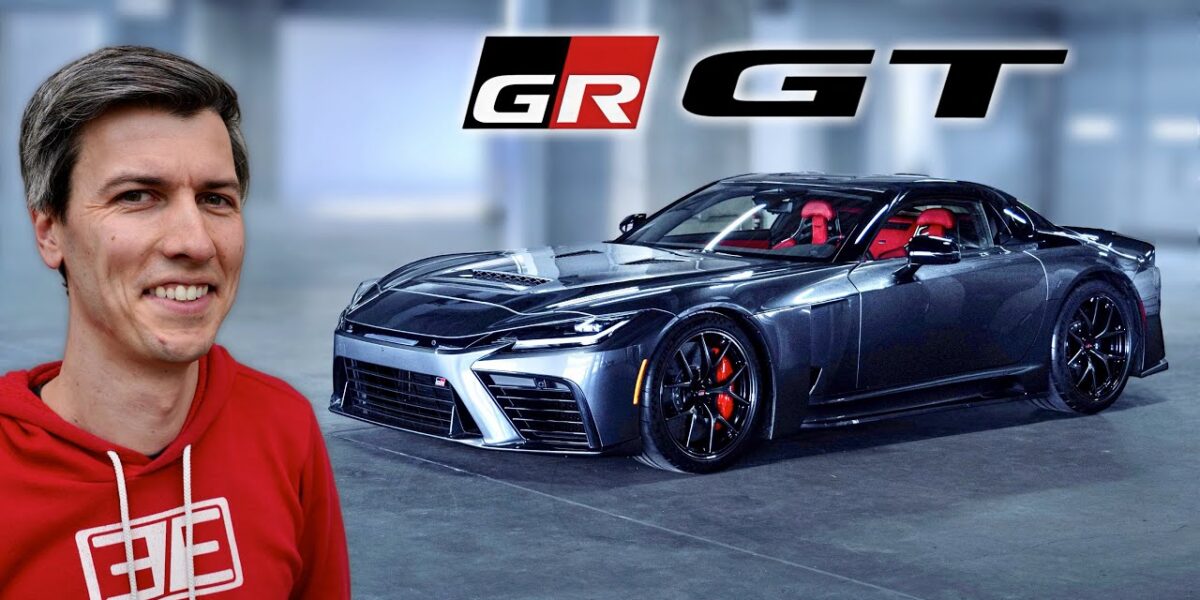
Toyota GR GT: V8 Power and Hybrid Tech Merge
Toyota has pulled the wraps off what could be its most exciting performance machine yet: the GR GT. While official details are scarce, a deep dive into the released imagery and engineering principles reveals a sports car built with a singular focus on driving dynamics. With a potent V8 engine, integrated hybrid system, and an obsessive attention to weight distribution and aerodynamics, the GR GT promises a thrilling experience for the discerning enthusiast.
A Focus on Driving Purity
Toyota emphasizes three core pillars for the GR GT: a low center of gravity, low weight with high rigidity, and exceptional aerodynamic performance. The car’s design is strikingly low, measuring over three inches shorter in height than a Honda S2000 and nearly two inches lower than a Mazda Miata. While its center of gravity height is estimated at a still-impressive 518mm, slightly higher than the GR86 and GR Supra, this is attributed to the packaging of its V8 engine and high-voltage battery pack for the hybrid system.
To achieve its low center of gravity, Toyota has employed several clever engineering solutions. The V8 engine features a shorter stroke, lowering its deck height, and a dry-sump oil system further allows for a lower engine mounting position. This, combined with extensive use of lightweight materials like carbon fiber for the hood, roof, and rear bulkhead, and aluminum body panels, contributes to the car’s rigidity and aids in keeping weight manageable.
Performance Projections
While official performance figures are yet to be released, an analysis of the GR GT’s specifications allows for educated estimations. Based on its 45:55 front-rear weight distribution, an estimated center of gravity height, and assumed tire grip levels, the 0-60 mph sprint could fall between 2.9 and 3.2 seconds. The higher center of gravity, counterintuitively, aids in weight transfer to the rear wheels during acceleration, potentially improving launch times compared to vehicles with a lower CG. However, Toyota projects a more realistic 0-60 mph time in the low to mid-3-second range for the initial model, with the potential for higher performance variants to dip into the high 2s.
At the heart of the GR GT lies a 4.0-liter twin-turbocharged 90-degree V8 engine. Toyota claims this powerhouse will produce 641 horsepower and 627 pound-feet of torque, or greater. The engine benefits from both port and direct injection for optimal performance and efficiency. Its short stroke and wide bore design, similar in bore to the GR Corolla but with a significantly shorter stroke, suggest a high-revving nature, with potential redlines estimated around 8,000 RPM.
Powertrain and Drivetrain Innovation
The GR GT utilizes an innovative transaxle design that integrates a wet-clutch electric motor with an 8-speed automatic transmission. This setup not only supplements the V8’s power and helps mitigate turbo lag but also allows for a shorter wheelbase and overall vehicle length by cleverly reversing the direction of power flow. This packaging solution contributes to the car’s agile handling characteristics and optimal weight distribution.
Aerodynamics and Design
Toyota has adopted an ‘aerodynamics-first’ approach, focusing on passive aerodynamic elements to achieve a low drag coefficient targeting speeds exceeding 200 mph (320 km/h). Functional elements such as tire air outlets, cooling ducts, and a hood scoop for turbocharger cooling are integrated seamlessly into the design. The absence of active aerodynamic components contributes to reduced weight and complexity.
Weight Considerations and Competitors
Despite the extensive use of lightweight materials, the GR GT’s claimed weight of 1750 kg (approximately 3858 lbs) places it in a competitive but not class-leading position. Competitors like the McLaren 720S and Porsche Turbo S, while potentially more expensive or featuring all-wheel drive, achieve similar or lower weights. The Aston Martin Vantage S, a close competitor in terms of weight and performance, also offers a slightly lighter package, though it lacks a hybrid system. The GR GT’s weight is a notable factor, but the advanced engineering and performance potential aim to offset this.
Interior and Value Proposition
Details on the interior are limited, but the exterior design suggests a driver-focused cockpit prioritizing function and performance. The GR GT is positioned as a high-performance halo car for Toyota, likely commanding a premium price point. Its value proposition will depend on its ultimate performance, driving dynamics, and Toyota’s renowned reliability, offering a blend of exotic supercar performance with the promise of dependable engineering.
Availability
Toyota has not yet announced specific pricing, trim levels, or availability for the GR GT. Enthusiasts will be eagerly awaiting further details as the launch approaches.
Source: Toyota GR GT – All The Engineering Details We Know! (YouTube)

Related Articles


Reliable Rides: Great Alternatives to Your Dream Car
Discover reliable alternatives to high-maintenance enthusiast cars. From sporty sedans like the Cadillac ATS-V to the thrilling Honda S2000, find your next fun, dependable ride.


Reliable Rides: Ditch Your Dream Car’s Woes
Enthusiast cars promise thrills but often deliver expensive headaches. Discover five reliable alternatives that offer exhilarating performance and driving fun without the constant worry of breakdowns. From American muscle to Japanese precision, find your next dependable dream machine.


Lamborghini Eyes 2+2 Grand Tourer: A Bold New Direction?
Lamborghini is reportedly considering a new 2+2 grand touring car, a move that would expand its lineup beyond traditional two-seater supercars and the Urus SUV. This potential model could compete with the Ferrari Roma, offering a blend of performance and comfort for long-distance driving.