2026 VW Tiguan Turbo R-Line: Sporty SUV with Quirks
The 2026 Volkswagen Tiguan Turbo R-Line offers a potent 268-hp engine and a luxurious interior, but its user interface quirks and large touchscreen detract from the overall experience. Approaching $50,000, it's a powerful but flawed contender in the competitive SUV market.

2026 Volkswagen Tiguan Turbo R-Line: Sporty SUV with Quirks
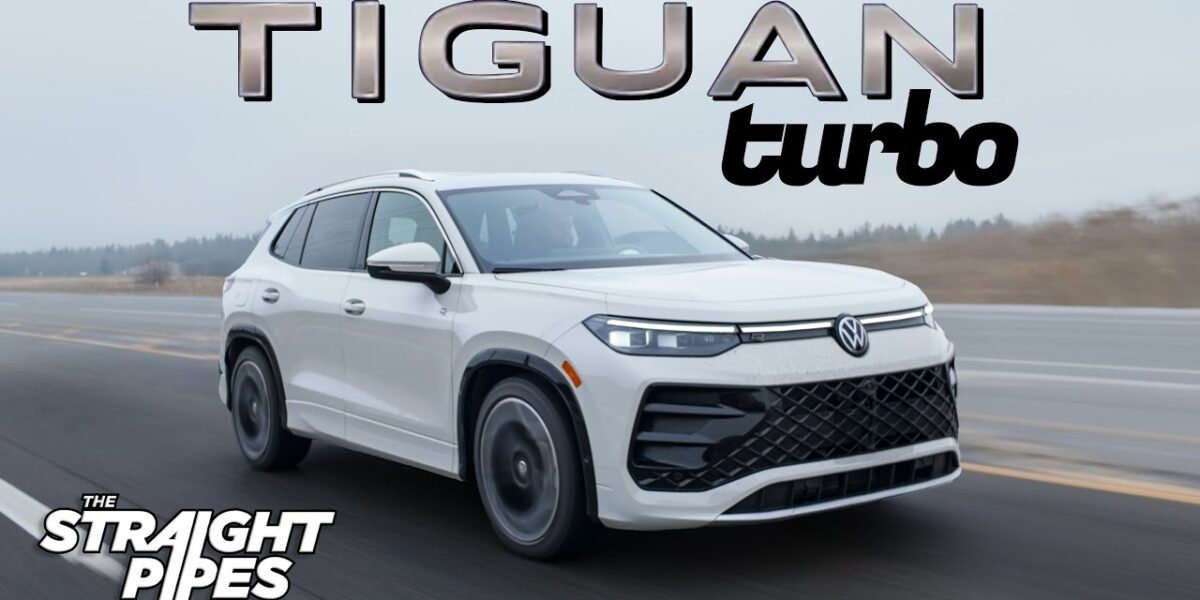
The 2026 Volkswagen Tiguan Turbo R-Line arrives with a powerful 2.0-liter turbocharged four-cylinder engine, delivering 268 horsepower and 258 pound-feet of torque. While the “Turbo” designation might seem redundant given that all Tiguans feature turbocharging, this specific trim is positioned as the performance variant, akin to Porsche’s naming conventions. Living with the Tiguan Turbo R-Line for a week revealed a vehicle that drives well, handles competently, and offers a comfortable ride, but it’s not without its peculiar user interface quirks and design choices that might test the patience of even the most seasoned driver.
Performance
Under the hood, the Tiguan Turbo R-Line boasts a potent 2.0-liter turbocharged engine, producing a healthy 268 horsepower and 258 lb-ft of torque. This power is channeled through an automatic transmission, which, while avoiding the CVT pitfall, exhibits somewhat slow shifts with noticeable pauses between gears, leading to a slight dip in acceleration. The engine’s power delivery is characterized by a noticeable, almost old-school turbo lag, where the boost builds gradually after the throttle is applied, offering a unique, if not entirely modern, driving sensation. While not blisteringly fast, it provides a “just above adequate” level of power, making overtakes and merging onto highways feel more confident than in lesser trims. The 4Motion all-wheel-drive system, standard on this R-Line trim, provides decent grip and stability, especially in less-than-ideal conditions.
Interior and Technology
The interior of the Tiguan Turbo R-Line aims for a premium feel, particularly in the R-Line trim, with touches like real American walnut wood trim and comfortable, spacious seats that offer good support and even a surprisingly potent massage function. The caramel-colored leather adds a touch of luxury. However, the cabin’s design is dominated by a massive, arguably oversized, 12-inch infotainment touchscreen. This screen houses the climate controls and other essential functions, which, unfortunately, are not illuminated and rely on touch-sensitive sliders for temperature and volume adjustment. This setup, a common Volkswagen complaint, is particularly frustrating due to the lack of tactile feedback and the potential for accidental inputs. The placement of the start/stop button on the drive mode selector is also an unusual choice. Accessing the 360-degree camera requires a multi-step process, involving dragging the park button and then selecting the camera view, a workaround that feels unnecessarily complex. Rearranging home screen icons also proved to be a challenge, requiring a specific double-tap-and-hold maneuver that isn’t intuitive. Even the display of the vehicle’s coolant temperature is presented in a vague 90-degree increment, offering little actionable information for the average driver. The combination of the turn signal and wiper stalk is another area where usability suffers, increasing the likelihood of accidental high-beam activation. The head-up display, however, is well-executed, positioned effectively within the driver’s line of sight without being obtrusive.
Design and Value
The exterior styling of the Tiguan Turbo R-Line is assertive, with sharp lines, a prominent grille, and sculpted headlights that give it an aggressive stance. The large grille, in particular, contributes to a more imposing look compared to lower trims. However, the rear fascia features large, fake grilles and faux exhaust tips, which detract from the otherwise sporty design and feel like an unnecessary attempt to inflate the vehicle’s visual presence. The wheels, while stylish, were noted to be identical to those found on some Hyundai models, a minor point of concern regarding design uniqueness. Pricing for the top-trim Tiguan Turbo R-Line approaches $50,000 (USD), placing it in a competitive segment against rivals like the Mazda CX-5 and potentially others. For this price, buyers receive a well-equipped, powerful, and comfortable SUV, but they must also contend with the aforementioned user interface frustrations and some questionable design choices. The value proposition hinges on whether the sporty performance and upscale interior touches outweigh the drawbacks of the infotainment system and some of the more peculiar design elements. For those seeking a more engaging driving experience in the compact SUV segment and willing to overlook some of the technological and design quirks, the Tiguan Turbo R-Line offers a compelling, albeit expensive, option.
Verdict
The 2026 Volkswagen Tiguan Turbo R-Line is a potent and comfortable compact SUV that offers a significant step up in performance from its standard siblings. Its 268 horsepower engine provides spirited acceleration, and the R-Line trim adds a touch of luxury and sportiness. However, the vehicle is significantly hampered by its over-reliance on a large, unintuitive touchscreen interface for critical functions like climate control, and a host of other usability issues within the infotainment system. While the driving dynamics are solid and the interior materials are pleasing, these user experience drawbacks prevent the Tiguan Turbo R-Line from achieving a truly top-tier status. It’s a capable machine for those prioritizing power and comfort, but potential buyers should carefully consider whether they can live with the frustrating user interface before committing to a purchase.
Source: BIG GOLF R? 2026 VW Tiguan Turbo R Line Review (YouTube)

Related Articles
2026 Mazda CX-5: Solves Old Problems, Creates New Ones
The 2026 Mazda CX-5 gets a much-needed interior space upgrade and refined ride, but its move to a large touchscreen for climate controls and lack of powertrain options raise questions. It remains a great driver's SUV, but faces stiff competition.


Bentley Bentayga Speed Ditches Hybrid for V8 Power
Bentley's Bentayga Speed ditches its hybrid aspirations for a potent V8, offering thrilling performance and signature luxury. While incredibly capable, its high price and strong competition leave it in a unique, though not always leading, position.


BMW X6 M Obliterates Rivals in Drag Race Showdown
The BMW X6 M has proven its incredible speed, dominating a recent drag race against exotic cars and other performance SUVs. Finishing just milliseconds behind the fastest supercars, the X6 M delivers unmatched acceleration for its class. This luxury SUV offers a thrilling driving experience without sacrificing practicality.