Top 10 Open-Source Hacking Tools Revealed
A deep dive into ten powerful, free, and open-source hacking tools, including Nmap, Wireshark, Metasploit, and Hashcat. The article explores their capabilities for network analysis, vulnerability exploitation, and password cracking, while stressing the critical importance of ethical use and legal compliance.

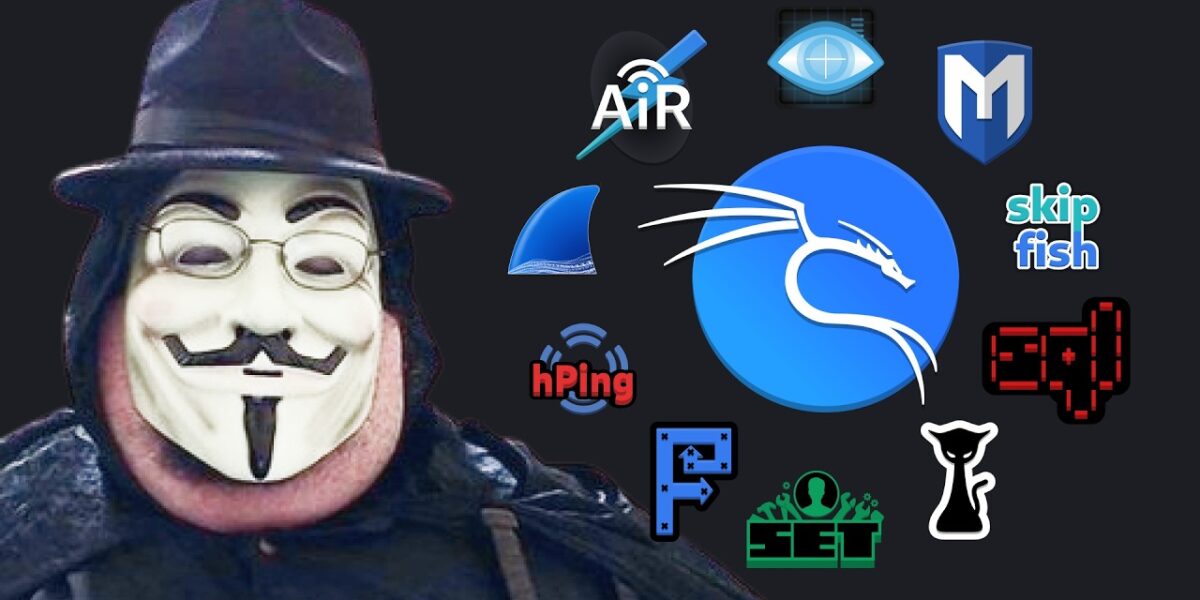
Unveiling the Arsenal: 10 Powerful Open-Source Tools for Ethical Hacking
In the ever-evolving landscape of cybersecurity, understanding the tools used by both defenders and attackers is paramount. Recently, a comprehensive overview of ten potent, free, and open-source hacking tools was presented, highlighting their capabilities and the ethical considerations surrounding their use. These tools, often found pre-installed on specialized operating systems like Kali Linux, offer a deep dive into network analysis, vulnerability detection, password cracking, and more. The emphasis throughout is on ethical application, with stern warnings against unauthorized use, which can lead to severe legal consequences.
The Foundation: Kali Linux and Ethical Hacking Principles
The discussion centers around Kali Linux, a Debian-derived Linux distribution designed for digital forensics and penetration testing. For those not wishing to install Kali Linux directly, individual tools can be installed on other operating systems, including via Windows Subsystem for Linux (WSL). The video also highlights Hostinger as a sponsor, recommending its Virtual Private Servers (VPS) for setting up a flexible and powerful environment to practice with these tools, citing features like NVMe SSD storage and AMD EPYC chips, alongside easy container management with Docker and one-click backend hosting.
Mapping the Digital Territory: Network Discovery and Analysis
The first essential tool discussed is Nmap (Network Mapper). Often described as a network scanner, Nmap probes networks by sending packets and analyzing the responses. This process reveals active hosts, open ports, running services, and operating systems. For penetration testers, this information is crucial for identifying potential entry points or misconfigurations. The basic command `nmap ` can provide initial insights, while more aggressive scans using options like `-A` can offer deeper system and OS detection, along with traceroute information to map packet paths.
Complementing Nmap’s network overview is Wireshark, a powerful network protocol analyzer. Wireshark allows users to capture and inspect network traffic at a granular level, examining individual packets and their payloads in real-time or from recorded data. This capability is invaluable for understanding data flow, identifying unusual traffic patterns, and potentially uncovering sensitive information transmitted unencrypted. Its graphical interface is essential for managing the vast amount of data collected from hundreds of protocols.
Exploitation and Vulnerability Management
Perhaps the most well-known framework in the hacking community, Metasploit is presented as a comprehensive toolkit for developing, testing, and executing exploits. It acts as a versatile platform that can simplify the process of launching attacks, even for less experienced users. The example demonstrated involves using the Eternal Blue exploit against an older Windows system to gain a reverse shell, granting access to the compromised machine. However, the presenter cautions that relying too heavily on Metasploit might bypass valuable learning opportunities in understanding underlying security principles.
For wireless network security, Aircrack-ng is introduced. This suite of tools is designed for assessing the security of Wi-Fi networks. It can be used to monitor network traffic, capture packets, and crack WPA/WPA2-PSK keys. The process often involves identifying target networks with tools like `airdump-ng` and then using `aircrack-ng` to attempt password recovery. This underscores the importance of using strong, encrypted Wi-Fi protocols like WPA3 and always opting for HTTPS connections for sensitive data transmission.
Identifying vulnerabilities in web applications is the focus of Skipfish. This security scanning tool recursively crawls websites to detect a wide range of vulnerabilities, including Cross-Site Scripting (XSS) and SQL injection flaws. Skipfish generates detailed HTML reports and can be configured to use authenticated sessions, allowing it to scan deeper into web applications that require login credentials. The identified vulnerabilities can then potentially be exploited using other tools.
Cracking the Code: Password Security
The video addresses password security, debunking the Hollywood myth of simple password cracking. It explains that modern systems use cryptographic hashing algorithms (like SHA or bcrypt) and salting to obscure passwords. Tools like John the Ripper and Hashcat are presented for password recovery. Hashcat, highlighted as particularly user-friendly, can attempt to crack password hashes using various methods, including brute-force attacks and dictionary attacks leveraging wordlists like `rockyou.txt`. The effectiveness of these attacks depends heavily on the strength of the original password and the hashing algorithm used.
Data Recovery and Database Exploitation
In the realm of digital forensics, Foremost is presented as a file carving tool. It recovers deleted files from disk images by searching for file headers and footers, even in the absence of a file system. This is critical for reconstructing data from damaged or formatted drives, a common task in forensic investigations.
For interacting with and exploiting databases, SQLMap is a key tool. SQLMap automates the process of detecting and exploiting SQL injection flaws and taking over database servers. It can discover databases, map their schemas, and then execute various SQL injection techniques to extract or manipulate data. The video also touches upon the use of raw SQL statements in forms to potentially trick servers.
Denial of Service and Social Engineering
The concept of Denial of Service (DoS) attacks is explored using hping3. This tool can generate and send custom TCP/IP packets, and when used with the `–flood` option, it can overwhelm a target server with traffic, rendering it unavailable. While a single machine can launch a DoS attack, distributing this across a network of compromised machines (a botnet) escalates it to a Distributed Denial of Service (DDoS) attack, significantly increasing its impact and potential for causing massive financial losses.
Finally, the Social-Engineer Toolkit (SET) is discussed, emphasizing that many security breaches exploit human trust rather than technical vulnerabilities. SET provides a framework for creating sophisticated phishing attacks, including email, SMS, and website cloning. By creating a convincing fake login page, attackers can trick users into revealing their credentials, which can then be used for further malicious activities. This highlights the importance of user awareness and training in cybersecurity.
Why This Matters
This collection of open-source tools, while powerful, serves as a double-edged sword. For cybersecurity professionals, ethical hackers, and system administrators, these tools are indispensable for testing defenses, identifying weaknesses, and ultimately strengthening security postures. They enable proactive vulnerability assessment and realistic simulation of attack scenarios. However, their potential for misuse is significant. Unauthorized access and malicious activities using these tools can have devastating consequences, ranging from data theft and financial loss to reputational damage and legal repercussions. The underlying message is clear: knowledge of these tools must be paired with a strong ethical compass and adherence to legal frameworks. Continuous learning and responsible application are key to navigating the complex world of cybersecurity and ensuring that technology serves to protect, rather than compromise, digital assets.
Source: 10 open source tools that feel illegal… (YouTube)

Related Articles


AI Finds Thousands of Crypto Security Flaws
A new AI model, Mythos, has discovered thousands of critical security flaws in software, posing potential risks to cryptocurrency platforms. The threats are more likely to target centralized exchanges and applications rather than the core blockchain technology itself.


Hackers Steal $10,000 from Locked iPhone
Cybersecurity experts have demonstrated a sophisticated hack that can steal up to $10,000 from a locked iPhone using a 'Tap to Pay' vulnerability. The exploit bypasses the phone's lock screen and payment verification by tricking the device into thinking a large sum is a small transit fare. This known flaw highlights ongoing security concerns with mobile payment systems.


AI Spurs Cybersecurity Overhaul: Kyndryl CEO
The rise of generative AI is dramatically reshaping the cybersecurity landscape, introducing new vulnerabilities and demanding greater vigilance. Kyndryl CEO Martin Schroeter highlights the urgent need for robust security measures and the growing importance of data sovereignty for nations and businesses. Infrastructure bottlenecks are also complicating data center expansion plans.