Dating App Horror: Killer’s Trail of Dismemberment
A severed leg found on a Milwaukee beach led investigators down a chilling path, uncovering the brutal murder of 19-year-old Shardai Robinson. The case exposed a killer's trail through dating apps, surveillance footage, and a history of violence, culminating in a life sentence.

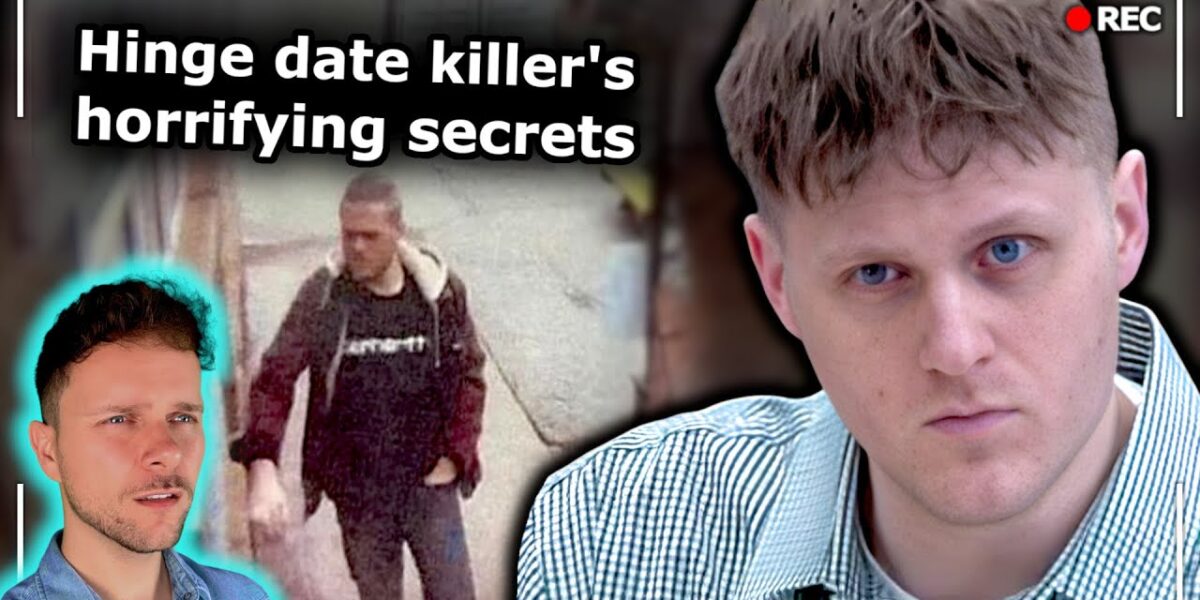
Dating App Horror: Killer’s Trail of Dismemberment
Milwaukee, Wisconsin – The idyllic image of Milwaukee, a city celebrated for its brewing heritage and strong community ties, was brutally shattered in April 2024. What began as a grim discovery on a beach evolved into a chilling investigation, exposing a dark underbelly of violence linked to the modern dating landscape.
A Gruesome Discovery
On the morning of April 2, 2024, a routine walk along the cliffs of Warmont Park yielded a horrifying find: a severed human leg washed ashore. Initially suspected as an accident, the nature of the dismemberment quickly alerted investigators to a far more sinister reality – homicide.
That same day, on the opposite side of the city, authorities responded to reports of a burnt-out vehicle. The charred remains of a Honda Civic, its interior ravaged by flames but still identifiable by its license plate, were discovered. Inside the wreckage, investigators found burnt clothing and fragments of a phone, further solidifying the suspicion of foul play.
The grim discoveries were not isolated. In the days that followed, additional body parts surfaced across Milwaukee: a human foot near 31st and Galina Streets, and later, a torso and an arm on a secluded beach in South Milwaukee. The realization dawned on investigators that these scattered remains likely belonged to a single victim, and a desperate search began for the missing head and the perpetrator.
The Victim: Shardai Robinson
Tragically, DNA analysis confirmed that all the recovered remains belonged to 19-year-old Shardai Robinson, a college student who had been reported missing just days prior. Shardai, born in Vicksburg, Mississippi, and raised in Milwaukee, was a bright and ambitious young woman. She was pursuing a degree in criminal justice at Milwaukee Area Technical College, worked two jobs, and was weeks away from graduation. Her family described her as kind, positive, and a devoted sister and daughter.
In the months leading up to her death, Shardai, like many young adults, had turned to dating apps in search of a connection. This decision would tragically lead her to Maxwell Steven Anderson.
The Hunt for the Killer
With Shardai identified and the burnt-out car linked to her, investigators launched a comprehensive review of Milwaukee’s extensive surveillance network. Their strategy involved tracing Shardai’s movements from her last known sighting and working backward from the location of her abandoned vehicle.
The investigation pinpointed April 1st, 2024, the night Shardai disappeared. She had arranged a first date with a man she met online, choosing to meet at a seafood restaurant called The Twisted Fisherman. Surveillance footage captured Shardai and her date at the restaurant, and later at a bar called Jukes on Water. This was the last time Shardai was clearly seen alive on camera.
Phone tower data and a location-sharing app used by Shardai revealed her phone’s movements after leaving the bar. It tracked her phone to a residence on South 39th Street, where a home security camera captured shadows consistent with two people entering the property. Shardai’s phone remained in that vicinity for over three hours.
Later, around 12:45 a.m. on April 2nd, footage showed the Honda Civic leaving the area and heading towards downtown, then across the city towards the lake. Between 2:45 a.m. and 3:00 a.m., the phone was near Warmont Park, the same area where the leg was later found. A nearby camera captured a vehicle matching Shardai’s Civic entering the area, followed by a lone figure making multiple trips to the shoreline.
Crucially, surveillance footage from a bus passing by Lisbon Avenue captured a figure walking away from a parking lot just as a fire erupted, presumably the one that destroyed Shardai’s car. This individual, wearing a gray hooded sweatshirt and carrying a large tan backpack, was later seen on other cameras, including one showing him boarding a bus with cash, heading south. Another house camera captured the same man entering a property, which was only an eight-minute walk from where Shardai’s phone had last been active.
Maxwell Steven Anderson Identified
Investigators followed up on leads from The Twisted Fisherman, where staff recognized the man from the surveillance footage. He was identified as Maxwell Steven Anderson, a 33-year-old former employee. His dating app activity, phone records, and employment history confirmed his presence at all locations Shardai had visited that night and that his phone’s movements mirrored the car’s route.
A search warrant for Anderson’s property yielded clothing and materials matching those seen in the surveillance footage, including the distinctive hoodie and backpack. Police arrested Anderson during a traffic stop near his home.
A Troubling History
Anderson’s past revealed a pattern of concerning behavior. Raised in a wealthy family, he was described by former classmates as socially awkward and withdrawn. His adult life was marked by numerous arrests for offenses including fleeing police, property damage, underage alcohol violations, domestic abuse, and drunk driving. Despite these encounters with law enforcement and family interventions, Anderson often faced minimal consequences, contributing to a sense of impunity.
His history also included a brief stint in the Navy, from which he was discharged, and instances of violence against relatives. Former partners described him as controlling, secretive, manipulative, emotionally volatile, and prone to heavy drinking. One ex-girlfriend noted his obsession with hidden compartments in his home, suggesting a desire for concealment.
Trial and Conviction
Maxwell Steven Anderson’s trial began on May 27, 2025. The prosecution presented a substantial case, including data, surveillance footage, phone records, and witness statements, establishing Anderson’s connection to Shardai through dating apps and his presence throughout her final night.
Evidence revealed that Anderson had taken photos of Shardai’s body after her death, which the prosecution argued were trophy images. The defense contended that there was no direct video of the killing and that the entire body was not recovered. However, the jury found these arguments unconvincing.
On June 6, 2025, after just 45 minutes of deliberation, Maxwell Steven Anderson was found guilty on all counts: first-degree intentional homicide, mutilating a corpse, arson, and hiding a corpse. He was sentenced to life in prison without the possibility of parole.
Justice and Reflection
The case of Shardai Robinson highlights the evolving risks associated with online dating and the devastating consequences of unchecked violent tendencies. While justice has been served for Shardai and her grieving family, her tragic story serves as a stark reminder of the vulnerability that can arise when seeking connection in the digital age, and the critical importance of accountability within the justice system.
Source: Date Killer Horrified When He Realizes Caught On Camera | The Case of Sade Robinson (YouTube)

Related Articles

The Price of Attention: Two Fatal Pursuits of Fame
Two men, Derek Keeper and Francesco Schettino, pursued attention and validation, resulting in tragic outcomes. Keeper died in a car crash due to his anti-seatbelt stance, while Schettino's reckless actions as a cruise ship captain led to a deadly shipwreck. Their stories serve as cautionary tales about the pursuit of recognition and the severe consequences of poor judgment.

TV Stars’ Dark Secrets: Shocking Crimes Revealed!
Beloved TV stars have been involved in shocking real-life crimes, from sexual assault and fraud to murder. This article explores the disturbing cases of figures like Bill Cosby, Danny Masterson, and the Chrisley family. These scandals shattered public illusions and brought severe legal consequences.

Teens Planned Horrific Ritual Sacrifice To Resurrect Killer
Two Florida high school students, Isabelle Valdez and Lois Liippard, were arrested for allegedly plotting a ritual sacrifice to resurrect mass killer Adam Lanza. An anonymous tip to Fortify Florida exposed their disturbing obsessions and a detailed murder plan targeting a fellow student.