AI Fuels Growth: Top Tech Stocks for 2026
A strategic investment approach focusing on the burgeoning AI sector has shown significant outperformance, with average returns far exceeding market benchmarks. The strategy identifies key players across AI models, chips, data center infrastructure, and software, highlighting companies like Nvidia, Google, Broadcom, and Palantir as foundational investments for sustained growth.


AI Fuels Growth: Top Tech Stocks for 2026
As the investment landscape shifts, a strategic approach focusing on the burgeoning artificial intelligence (AI) sector is gaining traction. This strategy, eschewing luck for a deep understanding of market dynamics, aims to build a robust portfolio by identifying key players across five critical AI markets: models, chips, data center infrastructure, AI-native applications, and enterprise software. This approach has demonstrated significant outperformance, with past lists achieving average returns of 77% in 2024 and 36% in 2025, substantially exceeding the S&P 500’s performance of over 25% and 18% respectively in those years. Over two years, this strategy has yielded a 140% return.
The Foundation: Broad Market Exposure with an AI Focus
For a foundational investment, the NASDAQ 100 (QQQ), an index fund heavily weighted towards technology companies, has historically shown strong long-term performance, returning 22% in the current year, outperforming the S&P 500’s 18%. However, to achieve a more concentrated exposure to the AI revolution, the Vanguard Information Technology ETF (VGT) is presented as a superior alternative. VGT, holding 322 companies across semiconductors, hardware, system software, and applications, offers a diversified yet focused approach. Its top holdings, which constitute 60% of the fund, include major AI players like Nvidia, Microsoft, Broadcom, Palantir, AMD, and Micron. VGT also boasts lower fees compared to QQQ, enhancing compounding returns.
The global artificial intelligence market is expected to grow nearly 19-fold over the next nine years, projecting a compound annual growth rate of 38.5% through 2034. This significantly outpaces the S&P 500’s average historical return.
Key AI Markets and Leading Companies
AI Models: Setting the Pace for Innovation
Companies developing AI models are pivotal as they define the standards, APIs, and features for the entire AI ecosystem. Key players identified include:
- Nvidia: With its Neotron family of AI models, Nvidia is at the forefront of reasoning and agentic AI development.
- Meta Platforms: Its Llama models are among the most widely adopted open-source Large Language Models (LLMs), integrated across its vast user base and utilized by external developers.
- Google: The integration of its Gemini model into core services like Search, Workspace, and Cloud provides unparalleled access to revenue streams, user feedback, and critical data.
These companies leverage their global distribution networks, from smartphones and GPUs to cloud services, to drive AI model adoption.
AI Chips: The “Picks and Shovels” of the AI Gold Rush
The hardware powering AI is critical. The identified leaders in AI chip design and manufacturing are:
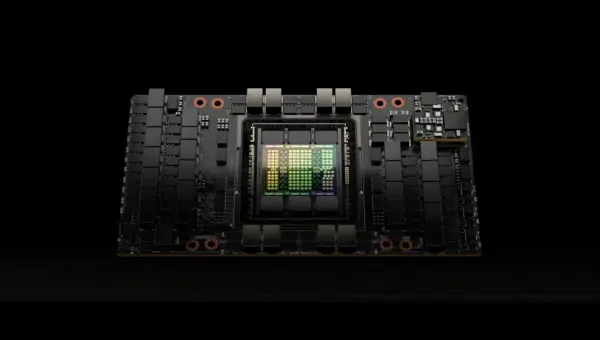
- Nvidia: Dominates the data center GPU market with a 92% share, powering most AI model training and inference. Recent strategic moves, including the acquisition of Grok’s assets, further solidify its position.
- Google: Develops its own Tensor Processing Units (TPUs) for AI acceleration, competing directly with GPUs and potentially offering them to external clients, challenging Nvidia’s market share.
- Broadcom: A leader in custom chip design for major AI players and holds a near-monopoly in the Ethernet switch chip market, essential for data center networking.
- Taiwan Semiconductor Manufacturing Company (TSMC): As the world’s largest chip foundry, TSMC manufactures nearly all advanced processors, holding over 70% of the foundry market and approximately 90% of advanced node production.
- Micron: A key supplier of High Bandwidth Memory (HBM), essential for high-performance AI accelerators, and the only U.S. company with significant market share in this critical component.
These companies benefit from deep moats, characterized by high capital requirements, intellectual property, and established supply chain relationships, making them difficult to dislodge.
Data Center Infrastructure: Supporting the AI Engine
The physical infrastructure for data centers is crucial for scaling AI operations. Key companies in this space include:
- Nvidia and Google: Already discussed for their chip and model advancements, they are also integral to data center infrastructure.
- Vertiv Holdings (VRT): Provides essential power and cooling infrastructure, including advanced liquid cooling systems designed to support high-density AI server deployments and massive GPU clusters.
- Iron Mountain (IRN): Focuses on building AI-first data centers, partnering with hyperscalers and securing significant grid-connected power capacity, positioning itself as a provider of clean, scalable AI infrastructure.
These companies are vital for enabling the massive computational power required for AI.
AI-Native Applications and Enterprise Software: Integrating AI into Workflows
The integration of AI into existing applications and the creation of new AI-native software are driving efficiency and innovation. Key players are:
- Palantir Technologies: Developing AI operating systems for enterprises and governments through platforms like Gotham and Foundry, which integrate fragmented data and enable AI-driven decision-making in real-world workflows.
- CrowdStrike: Provides the cybersecurity backbone for AI-driven enterprises. Its Falcon platform leverages AI to detect and respond to cyber threats in real-time, benefiting from the increased threat landscape created by generative AI.
These companies are essential for operationalizing AI and securing its deployments.
Market Impact and Investor Considerations
The AI sector represents a transformative technological shift with significant long-term implications for investors. The rapid growth projected for the AI market suggests sustained demand for the underlying technologies and infrastructure. Investors are advised to consider the following:
- Diversification within AI: Investing across different segments of the AI value chain—from models and chips to infrastructure and software—mitigates risk and captures broad market growth.
- Technological Moats: Companies with strong intellectual property, high capital barriers to entry, and established supply chains are better positioned for sustained profitability.
- Adaptability: The fast-evolving nature of AI necessitates that companies remain agile and innovative. Companies that demonstrate a willingness to adapt, as seen with Google’s TPU development or Nvidia’s strategic acquisitions, are more likely to thrive.
- Long-Term Perspective: The AI revolution is a multi-year phenomenon. A long-term investment horizon is crucial to capitalize on the compounding growth potential of these technologies.
By focusing on companies that are integral to the AI ecosystem and possess strong competitive advantages, investors can position themselves to benefit from this technological megatrend without relying on speculative bets.
Source: Top 10 Stocks I'm Buying to Get Rich in 2026 (Without Getting Lucky) (YouTube)

Related Articles


AI Data Centers Spark Rural Uprising
Rural American towns are fighting back against a surge of AI data centers. These massive facilities threaten water supplies, farmland, and local infrastructure. Residents and lawmakers are pushing for new rules to control their growth and ensure companies bear more of the costs.


Data Centers Spark Rural Uprising Over Land and Power
Rural communities are fighting back against the rapid expansion of data centers, citing concerns over massive energy consumption and changes to their land. These facilities, vital for AI technology, are straining local power grids and raising questions about the balance between digital progress and community well-being.

Nvidia Chips Smuggled: China Gains AI Edge?
An investigation into alleged smuggling of $92 million in Nvidia AI chips to China raises national security concerns. U.S. authorities are scrutinizing how advanced technology bypassed export controls, potentially boosting China's military AI capabilities.