NVIDIA Unveils Vera Rubin: A Leap in AI Computing Power
NVIDIA CEO Jensen Huang unveiled the Vera Rubin architecture, a significant leap in AI computing power. The new system delivers up to 5x peak inference performance and 3.5x peak training performance over its predecessor, driven by innovations in chip design, networking, and system integration, all while enhancing energy efficiency.

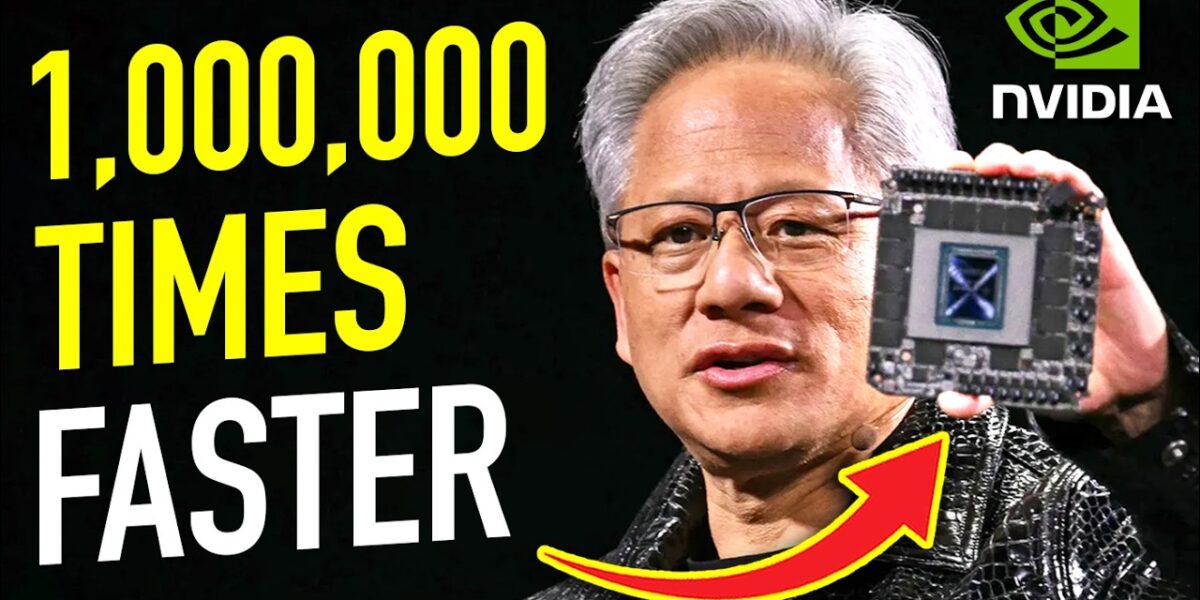
NVIDIA Accelerates AI Frontier with Vera Rubin Architecture
In a significant announcement that underscores the relentless pace of artificial intelligence development, NVIDIA CEO Jensen Huang has unveiled the company’s latest advancements, spearheaded by the introduction of the Vera Rubin architecture. This new generation of computing hardware is designed to meet the exponentially growing demands of AI models, promising substantial gains in performance, efficiency, and speed. The company’s strategy hinges on aggressive, year-over-year innovation across its entire technology stack, from silicon design to system integration.
The AI Compute Imperative
The core driver behind NVIDIA’s continuous innovation is the insatiable appetite for computational power in artificial intelligence. Huang highlighted that AI models are increasing in size by an order of magnitude annually, with token generation demand also surging. This escalating complexity necessitates a corresponding leap in computing capabilities. “The faster you compute, the sooner you can get to the next level of the next frontier,” Huang stated, emphasizing NVIDIA’s commitment to advancing the state-of-the-art in computation every year without fail.
Introducing Vera Rubin: A Co-Designed System
The Vera Rubin architecture represents a departure from incremental upgrades, featuring a complete redesign of key components. It comprises the Vera CPU and the Rubin GPU, integrated into a unified system. Huang detailed that the Vera CPU, designed for power-constrained environments, offers twice the performance per watt compared to existing leading CPUs. Its data rate is described as “insane,” built to handle the demands of supercomputing.
The Rubin GPU, the powerhouse of the new architecture, delivers five times the floating-point performance of its predecessor, Blackwell. Remarkably, this performance leap is achieved with only a 1.6x increase in transistor count. This efficiency gain is attributed to NVIDIA’s strategy of “extreme co-design,” innovating across all chips and the entire system stack simultaneously. Huang explained that Moore’s Law, which historically dictated transistor density increases, has slowed, making such holistic design crucial for continued progress.
Groundbreaking Tensor Core Technology
A key innovation enabling the performance gains is the new MVFP4 tensor core within the transformer engine. Unlike previous iterations, this is not merely a data path but an entire processing unit capable of dynamically adapting its precision. This allows it to adjust its computational structure to achieve higher throughput where precision can be relaxed, and revert to higher precision where necessary. Huang described this adaptive capability as essential, as it operates too rapidly for software intervention. He suggested that the MVFP4 format and structure could become an industry standard due to its revolutionary impact on throughput and precision retention.
System-Level Innovations: MGX and Networking
Beyond individual chips, NVIDIA has re-engineered its infrastructure. The MGX chassis, designed for easier assembly and serviceability, has been significantly improved. A previous two-hour assembly process is now reduced to five minutes, with 80% to 100% liquid cooling integration. This enhanced thermal management is critical, as the Vera Rubin system doubles the power consumption of its predecessor, Grace Blackwell, while maintaining similar airflow and using 45°C hot water for cooling, eliminating the need for traditional water chillers.
Networking, a critical bottleneck in large-scale AI deployments, has also seen major advancements. NVIDIA’s Spectrum X AI Ethernet switch, co-designed with the Vera CPU, is now in full production. This technology is designed to handle the intense, low-latency, and bursty traffic characteristic of AI workloads. Huang asserted that NVIDIA is now the world’s largest networking company, with Spectrum X sweeping the AI landscape. The economic impact is substantial: a 10% increase in throughput, achievable with Spectrum X, can translate to billions of dollars in value for massive data centers.
Further enhancing the network, the BlueField-4 processor is introduced to virtualize and isolate data center segments, offloading networking, security, and virtualization software. Additionally, the new MVLink 6 switch, featuring 400 Gbps ports, enables every GPU to communicate with every other GPU simultaneously at unprecedented speeds. This interconnectivity is designed to handle data volumes far exceeding global internet traffic capacity.
Addressing AI Memory Demands
Huang also addressed the growing need for memory in AI. The working memory, or KV cache, where AI models store context during operations, can expand dramatically over long interactions. To overcome the limitations of on-chip memory, NVIDIA has integrated the BlueField-4 with substantial off-rack memory storage. Each compute node can now be backed by 150 terabytes of context memory, with each GPU gaining an additional 16 terabytes directly accessible at high speeds. This distributed memory architecture is crucial for handling larger context windows and more complex AI tasks.
Performance and Efficiency Gains
The aggregate effect of these innovations is a significant performance uplift. NVIDIA projects that the Vera Rubin system offers 1.7 times more transistors, 5 times higher peak inference performance, and 3.5 times higher peak training performance compared to the previous generation. Crucially, this enhanced performance is delivered with remarkable energy efficiency. The system’s ability to utilize 45°C water for cooling contributes to an estimated 6% reduction in global data center power consumption. Furthermore, power smoothing technology mitigates the massive, instantaneous power spikes common in AI workloads, allowing data centers to operate at their full power budget without overprovisioning.
Market Impact and Investor Outlook
The introduction of the Vera Rubin architecture positions NVIDIA to maintain its dominance in the AI hardware market. The company’s strategy of full-stack, co-designed innovation addresses the core challenges of scaling AI, including computational power, memory bandwidth, and networking latency. For investors, NVIDIA’s consistent delivery of next-generation hardware, coupled with its integrated system approach, suggests continued strong demand and market leadership. The focus on energy efficiency and cost reduction in token generation also addresses long-term economic viability for AI deployments.
The implications extend beyond NVIDIA, influencing the broader semiconductor and data center industries. The emphasis on co-design and system-level integration highlights a trend towards more specialized and optimized hardware solutions for AI. As AI continues its rapid evolution, companies that can provide the foundational infrastructure, like NVIDIA, are poised for significant growth. The ability to train larger models faster and more efficiently directly translates to faster time-to-market for new AI applications and services, a critical competitive advantage in the current technological landscape.
Source: NVIDIA CEO Jensen Huang Leaves Everyone SPEECHLESS (CES Supercut) (YouTube)

Related Articles


AI Reshapes Economy: New Wealth Opportunities Emerge
Artificial intelligence is set to dramatically reshape the global economy within five years, creating both challenges and significant wealth-building opportunities. Experts emphasize the need to adapt by learning AI skills, drawing parallels to how past technological shifts democratized access to knowledge and investment strategies.


AI Misdiagnoses Medical Cases 80% of the Time
A recent U.S. study reveals that AI chatbots are misdiagnosing medical conditions in 80% of cases, highlighting significant risks in relying on artificial intelligence for health advice. Personal stories shared by individuals demonstrate how online self-diagnoses led to incorrect treatments and prolonged suffering, underscoring the irreplaceable value of human medical professionals.


Magnificent 7 Stocks Surge Amid Market Uncertainty
Tech giants, the 'Magnificent 7,' are surging despite market fears, showing technical breakouts and strong growth potential. Amazon invests heavily for long-term gains, while Google deepens its AI capabilities. Meta refocuses on core strengths, and Apple's services business continues its impressive expansion.