Trump’s Words Move Markets: War’s Hidden Economic Toll
Professor Justin Wolfers analyzes the volatile financial market reactions to President Trump's Iran conflict rhetoric. He dissects the dual economic impacts of war—direct oil price shocks and broader, diffuse costs—and questions the administration's strategic clarity.

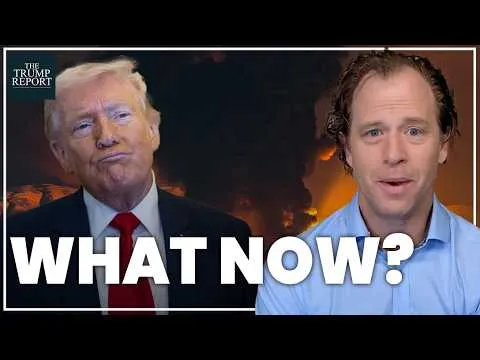
Markets React Wildly to Shifting Rhetoric on Iran Conflict
The financial markets’ volatile dance in response to President Trump’s pronouncements on the conflict with Iran offers a stark illustration of the power of presidential rhetoric. As Professor Justin Wolfers of the University of Michigan highlights, the rapid fluctuations in oil prices and stock market performance underscore a profound uncertainty, not just about geopolitical events, but about the very strategy and intentions guiding them. This sensitivity reveals a precarious global economic landscape where even a single man’s words can trigger billions in market value shifts, a phenomenon Wolfers finds particularly striking when observing Trump’s unique ability to declare victory and then pivot, a skill he calls an “enormous political skill.” However, he questions whether this agility stems from a coherent strategy or a reactive response to market sentiment, noting that the conflicting messages from the administration, such as Vice President Pence’s statements about continued intensity juxtaposed with the President’s hints at a swift conclusion, sow confusion rather than clarity.
The Dual Channels of Economic Impact: Oil and Beyond
The immediate economic fallout of a conflict, particularly one involving a major oil-producing region, is often felt at the pump. Wolfers explains a simple rule of thumb: a 10% rise in oil prices typically leads to a 10% rise in gasoline prices.
With oil prices having surged significantly, he anticipates further increases in gasoline costs, potentially nearing $4 a gallon in the United States. This direct impact on household budgets, though significant, represents only one facet of the economic cost.
Wolfers emphasizes a second, often overlooked, channel: the broader, more diffuse impacts of war itself. Drawing an analogy to the Iraq War, where initial estimates of duration were vastly underestimated, he points to the long-term consequences that extend far beyond immediate financial transactions.
These include the radicalization of populations, the fracturing of global alliances and trade relationships, and a loss of international confidence. The economic implications of a divided global security landscape, where allies like Europe may feel compelled to arm themselves separately, translate into significant long-term fiscal burdens for all involved, as the cost of maintaining military readiness escalates.
“Wars are traditionally the last resort. They’re the last resort because they destroy lives, they destroy families, they destroy societies, and they destroy economies. They do so in very diffuse ways.”
Historical Echoes and Fiscal Legacies
Historically, major wars have consistently been followed by significant increases in government debt. Wolfers notes that periods of heightened military spending, whether in Britain or the United States, are invariably marked by substantial upticks in national debt.
Beyond the direct financial costs, the human toll of war—soldiers returning with PTSD, leading to lifelong productivity losses and increased reliance on veteran services—represents another substantial, albeit more personal, economic burden. These ongoing costs, even if a conflict is short-lived, can have lasting repercussions on national budgets and social welfare systems.
Market Manipulation or Strategic Agility?
The debate over whether President Trump’s pronouncements are attempts at market manipulation or a unique form of strategic agility is complex. Wolfers acknowledges the possibility that the President, more than other world leaders, possesses the ability to declare success and reverse course, a trait he finds admirable in principle.
However, he expresses skepticism about the current situation, suggesting that the lack of a clear communication or military strategy, evidenced by the conflicting messages from different administration officials, points away from deliberate market manipulation. While acknowledging that some individuals may attempt to profit from such volatility, he refrains from definitive conclusions about the President’s motivations, stating that the truth about whether he is trading on insider information is fundamentally unknown.
The European Economic Vulnerability
While the United States, due to its energy independence, experiences a redistribution of wealth from consumers to domestic oil producers during oil price spikes, Europe faces a more direct and severe economic impact. Wolfers points out that Europe’s significant energy dependence means that rising oil prices translate into a greater burden on its economy compared to the U.S., where domestic production can partially offset global price increases. This disparity, he suggests, might influence the President’s calculus, as the direct economic pain in America might be less pronounced than among its allies, potentially making prolonged engagement more politically palatable domestically.
The Fragility of Prosperity and the Lost War of Ideas
Beyond the immediate economic concerns, Wolfers expresses broader anxieties about the state of the U.S. economy and its political landscape. He describes the current economic situation as precarious, marked by job losses and a lack of clear upward momentum.
This economic weakness, he argues, is compounded by a “lost war of ideas.” The administration, in his view, has failed to articulate a compelling case for its policies, leading to public resistance even on initiatives that might otherwise be sellable. This disconnect between policy and public perception, coupled with economic fragility, creates a deeply concerning environment.
Wolfers concludes with a somber assessment of the United States’ current position. While acknowledging that industrialized nations generally enjoy a high standard of living, he stresses that this prosperity is fragile.
In his view, the U.S. is particularly vulnerable due to a willingness to trample the very institutions that underpin its economic success. This fragility, he warns, is not a universal condition but a profound concern specific to the United States at this moment.
AI and the Evolving Labor Market
Addressing a question about the impact of Artificial Intelligence on the job market, Wolfers acknowledges AI as the most significant economic story of the age, with the potential to transform the economy in unimaginable ways. However, he cautions against attributing recent job market fluctuations solely to AI. He suggests that AI is often used as an excuse by employers to justify layoffs they might have made regardless.
While acknowledging that certain industries are undoubtedly being reshaped by AI—he humorously advises against becoming a translator—he maintains that broader labor market trends, such as a “low hire, low fire” environment, are more significant factors, particularly for recent graduates struggling to find employment. The conversation about AI’s long-term societal and economic implications, he argues, is being overshadowed by more immediate concerns like tariffs and conflicts, a potentially costly oversight.
Source: ‘Wars destroy economies’ Justin Wolfers analyses financial cost of Trump’s Iran war (YouTube)

Related Articles
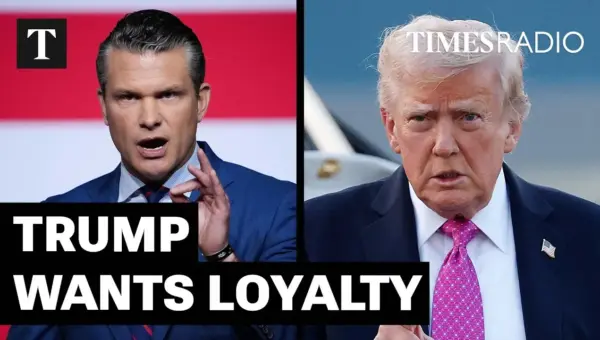
Pentagon Becomes ‘King Donald’s Court’ Amid Military Firings
The U.S. Pentagon is reportedly transforming into a 'loyalist organization' under President Trump, marked by the dismissal of numerous senior military officials, including the Navy Secretary. Meanwhile, the conflict with Iran shows no signs of resolution, with analysts suggesting time favors Tehran due to differing 'pain thresholds' between the two nations.
Pundits Claim Trump Shows Cognitive Decline, Urge Removal
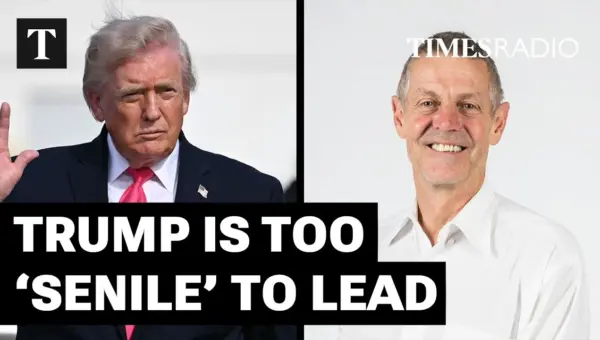
Political commentators are raising concerns about Donald Trump's cognitive state, with some likening his behavior to King Lear and suggesting he is 'deranged.' Analysts debate whether his recent policy statements, particularly regarding Iran, reflect strategic bluffing or a genuine cognitive decline. Meanwhile, China's perspective on global conflicts highlights its relative energy independence and a pragmatic, non-ideological foreign policy.
Is the American Dream Dying? Tariffs, Trump, and Political Distractions
Americans are growing disillusioned as political distractions overshadow real economic struggles. Tariffs burden small businesses, while foreign policy debates obscure domestic needs like affordable healthcare. The promise of the American dream fades as politicians prioritize blame over solutions.