Pentagon Becomes ‘King Donald’s Court’ Amid Military Firings
The U.S. Pentagon is reportedly transforming into a 'loyalist organization' under President Trump, marked by the dismissal of numerous senior military officials, including the Navy Secretary. Meanwhile, the conflict with Iran shows no signs of resolution, with analysts suggesting time favors Tehran due to differing 'pain thresholds' between the two nations.

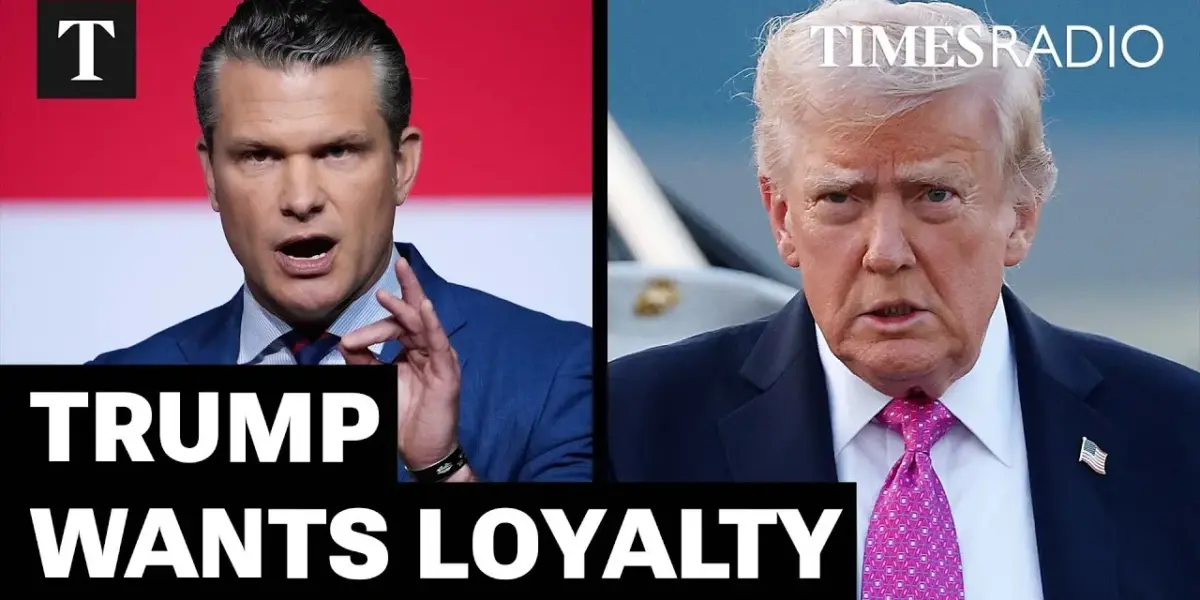
Pentagon Undergoes Loyalism Shake-Up Under ‘King Donald’
The U.S. Department of Defense is increasingly resembling a royal court, according to critics, with President Donald Trump demanding personal loyalty from military leaders. This shift has led to a series of high-profile firings and resignations, fundamentally altering the Pentagon’s traditional apolitical stance.
The latest casualty is the Secretary of the Navy, John F. Lehman, removed at a critical time when the U.S. Navy is involved in enforcing a blockade in the Strait of Hormuz.
This situation raises serious questions about the military’s role in a democracy and the potential consequences of prioritizing personal allegiance over established protocols. The trend suggests a departure from the principle that the military should remain separate from domestic politics, a cornerstone of U.S. governance.
Mass Firings Shake Senior Military Ranks
Pete Hegseth, identified as a key figure in the Department of Defense, has reportedly overseen the dismissal of numerous senior military officials. These include the Army Chief of Staff, Randy George, along with two other Army generals.
In total, over a dozen senior officers have been removed from their posts under Hegseth’s influence. This has led to the Pentagon being described as a ‘loyalist organization’ rather than a professional military body.
The interim replacement for the Navy Secretary, Thomas Modly, has also been noted for his close ties to President Trump. His past remarks at a rally, advocating for military members who would ‘rip out their own guts, eat them, and ask for seconds,’ have drawn criticism for their aggressive and unconventional tone. Such rhetoric suggests a preference for a specific type of aggressive, unquestioning loyalty over traditional military expertise.
Iran Conflict: No End in Sight, Time Favors Tehran
Meanwhile, the conflict with Iran remains a complex and unresolved issue, with no clear timeline for its conclusion. President Trump has indicated there is no deadline for ending the hostilities, and the White House has confirmed no set date for extending a ceasefire. This prolonged uncertainty creates a strategic advantage for Iran, according to former diplomat Matthew Gould.
Gould explained that Iran has demonstrated a high tolerance for enduring hardship, especially for its population, to achieve its strategic goals. In contrast, the American public, facing upcoming elections, has a lower appetite for sustained conflict. This difference in ‘pain thresholds’ means that as time passes, Iran’s position strengthens, not America’s.
Strategic Blunders and Negotiation Difficulties
The strategy of targeting Iranian leadership, described as ‘decapitation,’ has made the situation more complex and harder to resolve. Removing known leaders for unknown successors creates a lack of visibility into Iran’s internal dynamics, making negotiations even more difficult. This approach has led to a situation where President Trump appears to be hoping Iran will eventually concede, despite extending ceasefires himself.
Iran’s leadership is adept at sensing weakness in their adversaries. They likely view the ongoing cycle of threats, ceasefires, and unilateral extensions as evidence that President Trump is not fully committed. However, the U.S. military’s blockade of Iranian ships leaving ports is seen as a smart move, applying economic pressure where it hurts Iran the most.
Divergent Objectives Between U.S. and Israel
Despite being close allies, the motivations of President Trump and Israeli Prime Minister Benjamin Netanyahu in the conflict with Iran may differ. While both seek to achieve similar outcomes, Netanyahu has precise, career-long objectives. President Trump’s objectives appear more fluid, shifting with each conversation, and the conflict is less existential for him than it is for Israel.
The primary danger for Israel is that the U.S., facing domestic pressures like midterm elections and public discontent, might agree to a deal or end the conflict prematurely. This could leave the situation unresolved or even worse than before, failing to meet Israel’s critical security needs.
Vetting Processes Under Scrutiny
Separately, concerns have been raised about the integrity of security vetting processes in the UK government. Matthew Gould, a former British ambassador, commented on the importance of keeping vetting separate from political interference. He stated that it would have been inconceivable for Number 10 to pressure his office on security vetting during his tenure.
Gould expressed dismay at recent events where vetting files have reportedly become subjects of parliamentary debate and media speculation. He argued that such actions undermine the confidentiality essential for the vetting process. If individuals fear their sensitive information will be made public, they may be less willing to participate in the process, weakening its effectiveness.
The Future of Ambassadorial Appointments
The discussion also touched upon the role of political appointees in ambassadorial positions. Gould believes there is nothing inherently wrong with having occasional political appointees, citing his American counterpart in Israel as an example of an effective outsider. The issue arises not with the principle itself, but with attempts to bypass or rush the vetting process to install these appointees.
The current situation in Washington, with the Pentagon seemingly transformed into a loyalist organization, and the ongoing, undefined conflict with Iran, highlights a period of significant change and uncertainty in U.S. foreign and defense policy. What unfolds next regarding military leadership and diplomatic engagement with Iran will be closely watched.
Source: Pentagon Now ‘Court Of King Donald’ After Hegseth Fires Another US Military Boss (YouTube)

Related Articles

Iran Standoff: Trump’s War Strategy Under Fire
Iran fired on ships and seized two in the vital Strait of Hormuz, escalating tensions despite a fragile cease-fire. Critics argue President Trump's advisors, not historical strategy, led to the current dangerous standoff. The effectiveness of the U.S. naval blockade is now being questioned as global economic impacts loom.

Trump’s Chaotic Exit: Firings, Fury, and National Security Fears
President Trump's final months are marked by rapid firings and aggressive foreign policy, including an order to shoot Iranian boats. Reports reveal chaotic dismissal processes and raise concerns about national security due to alleged personal misconduct and divisive rhetoric. The administration's term appears to be imploding under intense pressure.


Trump Orders Navy to ‘Shoot and Kill’ Boats Laying Mines
President Trump has ordered the U.S. Navy to use lethal force against any boats laying mines, emphasizing "shoot and kill" with no hesitation. Diplomatic talks with Iran are stalled as the U.S. waits for Iran to clarify its negotiating authority amid internal leadership struggles. The directive comes as a naval blockade continues and concerns over global energy prices remain high.