Trump’s Conflicting Iran War Statements Fuel Global Uncertainty
President Trump's conflicting statements on the Iran war, ranging from an imminent end to vows of massive escalation, are creating global uncertainty. The shifting rationales and potential geopolitical divergences, particularly between the U.S. and Israel, raise questions about the conflict's true objectives and long-term implications.

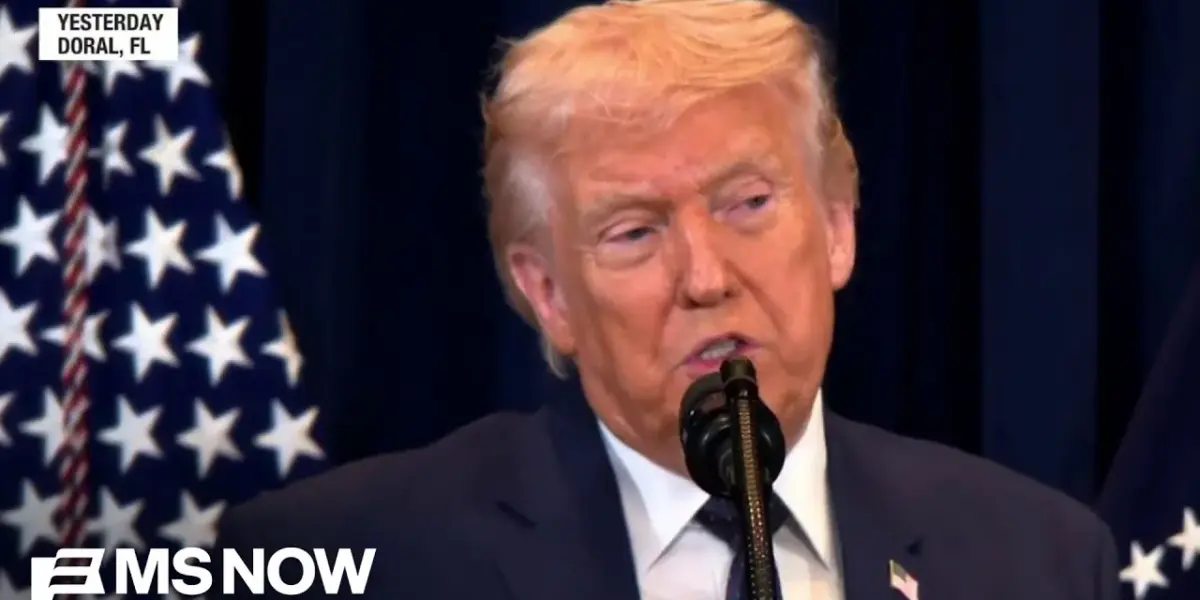
Conflicting Signals Emerge from President Trump on Iran Conflict
President Donald Trump has issued a series of contradictory statements regarding the ongoing conflict with Iran, sparking concern over American strategy and its potential ripple effects on global military operations and the world economy. In remarks made recently, Trump offered divergent timelines for the war’s conclusion, describing the mission as both short-term and nearing its end, while simultaneously vowing to escalate military action significantly.
‘Very Soon’ vs. ‘Death, Fire, and Fury’: A Strategic Paradox
During a period of intense diplomatic and military activity, President Trump’s public pronouncements have oscillated between conciliatory and aggressive tones. At one point, he characterized the conflict as a “little excursion that was close to finishing.” However, in seemingly direct opposition, he also pledged to “rain down death, fire and fury” upon Iran, threatening to strike “20 times harder than he has already.” This juxtaposition of messages has led to widespread confusion about the administration’s objectives and the ultimate endgame of the military engagement.
“So, you know, you could look at that statement. We could call it a tremendous success right now as we leave here.
I could call it or we could go further, and we’re going to go further. But the big risk on that war has been over for three days.”
When pressed by reporters about the war’s imminent end, Trump reiterated, “soon. I think soon.” This assertion of a rapid conclusion contrasts sharply with a social media post from the Department of Defense, which stated, “We’ve only just begun to fight.” The conflict, now in its eleventh day, has seen significant developments, including the downing of Iranian drones over Saudi Arabia and Kuwait, and the deployment of Pakistani warships to escort merchant vessels through the Middle East amidst fears of interrupted energy supplies.
Shifting Rationales and Economic Stakes
The rationale behind the U.S. military action has also seen shifts. Secretary of State Marco Rubio recently outlined the mission’s goals, emphasizing the need to “destroy the ability of this regime to launch missiles, both by destroying their missiles and their launchers, destroy the factories that make these missiles and destroy their Navy.” This explanation follows President Trump’s earlier statement that he ordered the initial strike based on a “feeling” that Iran was preparing to attack, a justification that appeared to contradict earlier comments from Secretary Rubio regarding preemptive self-defense against Iranian retaliation.
The unpredictable nature of these statements has had a tangible impact on global markets. Nancy Youssef, a staff writer at The Atlantic covering national security, noted the correlation between Trump’s remarks and market fluctuations. “He gave an interview to CBS News while the markets were opening…
And said that the war would end soon. And you immediately saw a response. Brent Crude was headed towards $110, immediately dropped afterwards.
But then he has a press conference. The markets had closed at the time that the press conference started.
And he said the war could continue. And so I think there was an effort potentially to try to shape the markets as there are rising fears of where this could take the global economy.”
The dual incentives of calming economic fears and signaling resolve to Iran create a complex messaging challenge. While stating the war is ending soon can alleviate global economic anxieties, particularly concerning oil prices potentially reaching $150 a barrel, it may also inadvertently signal to the Iranian regime that it only needs to withstand a few more strikes. This could embolden a leadership potentially seeking retribution, especially after significant familial losses, leading to a cycle of escalating vengeance.
Geopolitical Alignments and the New Iranian Leadership
The conflict’s trajectory is further complicated by the recent succession in Iran. Following the death of Ayatollah Ali Khamenei, his son, Mostafa Khamenei, has been identified as the new Supreme Leader.
Reports from The Wall Street Journal, citing U.S. officials, suggest that President Trump has indicated a willingness to support the killing of the new leader if he proves unwilling to concede to U.S. Demands. Israeli officials have also cryptically responded to questions about the new leader being a target, stating, “You have to wait and see.”
Mostafa Khamenei, described as a hard-liner and seen as a continuation of the existing regime, has no prior government experience but was reportedly involved in the crackdown on 2009 protests and maintains close ties with the Islamic Revolutionary Guard Corps. However, the inherent complexities of Iranian succession, with multiple lines of leadership, raise questions about the long-term effectiveness of targeting specific individuals. As Youssef observed, “The Iranian regime has multiple lines of succession.
So even if he is assassinated, it is safe to assume that they will continue to try to bring in new leadership that continues the regime as it is. And so the question becomes, does the campaign continue until we go through the second, the third, the fourth person? And if not, what is an alternative?”
Divergent Interests: U.S. Vs. Israel
A potential fissure exists between U.S. and Israeli objectives. While both nations are aligned in their actions against Iran, Israel’s ultimate goal appears to be the complete collapse of the Iranian regime. The U.S., on the other hand, may prioritize weakening Iran’s nuclear capabilities enough to prevent the rebuilding of its program, a goal that does not necessarily require regime change.
This divergence could become more pronounced if economic pressures mount. For the United States, particularly in a midterm election year, rising domestic energy prices could influence decisions regarding the conflict’s duration. Israeli Prime Minister Benjamin Netanyahu has historically leveraged regional conflicts to strengthen his domestic political standing, potentially leading to differing timelines and strategic patience compared to the U.S.
Looking Ahead: An Uncertain Path
The conflicting statements, shifting rationales, and divergent geopolitical interests surrounding the Iran conflict paint a picture of profound uncertainty. The immediate challenge lies in clarifying U.S. Objectives to the American public and the international community, which in turn shapes expectations for military outcomes and potential pathways to de-escalation. As the conflict continues, the world watches closely to see if a clear strategy will emerge, or if the contradictory signals will lead to a prolonged and potentially more dangerous engagement.
Source: Trump says war with Iran could end 'very soon' (YouTube)

Related Articles
Trump Claims Iran Lacks Clear Leadership Amid War
President Trump claims Iran lacks clear leadership amid ongoing war, a statement disputed by experts. Meanwhile, economic pressures mount globally and domestically, creating a complex situation for the White House. The effectiveness of current strategies and the president's focus remain subjects of debate.


Trump’s Shadow: Did He Halt Epstein File Release?
New claims suggest Donald Trump actively worked to block the release of Jeffrey Epstein files. Accounts point to direct orders from Trump to his administration, contradicting narratives that blame others like Pam Bondi.

UAE’s Billions to Trump Spark Bailout Outrage
The United Arab Emirates reportedly seeks U.S. financial aid after investing billions in Trump-linked ventures. Critics question why a wealthy nation needs a bailout while Americans face economic hardship, highlighting concerns over money's influence in politics.