Trump Signals Iran War Nears End Amidst Escalating Oil Crisis
President Trump announced the Iran conflict is nearing an end, citing U.S. military success in degrading Iranian forces and missile capacity. However, the war has triggered a severe global oil crisis, with gas prices soaring and the Strait of Hormuz effectively closed to shipping. The conflict's true timeline and ultimate economic consequences remain uncertain.


Trump Signals Iran War Nears End Amidst Escalating Oil Crisis
WASHINGTON D.C. – President Trump announced a new timeline for the conflict with Iran on March 9th, signaling that the deadly war could be nearing its conclusion. Speaking to reporters, the President stated he expects the war to finish “pretty quickly,” asserting that the U.S. military has “wiped out Iranian forces,” significantly reducing their missile capacity to just 10%. The U.S. has reportedly struck over 5,000 targets and is ahead of schedule, according to the President.
This optimistic outlook comes amid escalating hostilities and significant global economic repercussions, particularly in the oil market. The conflict has sent the national average price for a gallon of gas soaring by approximately $0.50 in the past week alone, with California now averaging $5.20 per gallon. President Trump acknowledged that he anticipated price surges due to the conflict.
Escalating Military Actions and Retaliation
The current phase of the war follows a series of intense military actions. Israel recently destroyed an oil depot in Tehran, which erupted into a massive fireball, blanketing the city of 10 million in smoke and fumes.
Iran retaliated by targeting an oil refinery in Bahrain and a government building in Kuwait, which were engulfed in flames after a reported drone strike. Security footage captured the moment an Iranian missile struck a street in central Israel, and another blast in Beirut turned a building into rubble, as Israeli forces ramp up attacks against Hezbollah.
President Trump, speaking from Doral, Florida, justified the war retroactively, citing an “imminent threat” that prompted preemptive strikes. He claimed that Iran was weeks away from developing a nuclear weapon and could have potentially used it, leading to a “nuclear Armageddon.” However, NBC News correspondent Richard Engel, reporting from Tel Aviv, noted the lack of intelligence or analysis supporting the claim that Iran was on the verge of attacking or possessing a nuclear weapon when the U.S. and Israel launched their offensive. Engel also pointed out that the U.S. and Iran were in the midst of negotiations, with progress being made and Iran reportedly at its weakest stage in decades.
“We took a little excursion because we felt we had to do that to get rid of some evil, and I think you’ll see it’s going to be a short term excursion.”
– President Trump
New Leadership and International Concerns
The conflict unfolds just a day after Iran announced its new Supreme Leader, Ayatollah Khamenei’s son, following the assassination of the elder Ayatollah on the first day of the war. The new leader is described as a hardliner with fewer religious credentials than his father.
Beyond the immediate military theater, the war has brought other significant issues to the forefront. The Iranian women’s soccer team gained international attention for refusing to sing the national anthem at a match in Australia, with state TV branding them “traitors.” Five members of the team have since been granted asylum in Australia after reportedly flashing a sign for help on their team bus.
Economic Fallout: Oil Prices and Market Volatility
The targeting of oil infrastructure by both sides has created significant chaos in the global oil industry. While Israel claims its strikes on oil depots were against legitimate tactical targets, including storage facilities for the Revolutionary Guard, a U.S. Official expressed unhappiness, stating that it “legitimized making oil a target.” Iran’s strategy, according to Arab officials, is to drive up oil prices to pressure for a ceasefire.
The Strait of Hormuz, a critical thoroughfare for 20% of the world’s oil, is effectively closed to shipping. Energy analysts warn that oil prices could hit $150 a barrel, with some calling this conflict the biggest oil supply disruption in history. Crude oil prices have spiked dramatically, impacting not only gasoline but also jet fuel and diesel, leading to higher costs for transportation and goods, as over 70% of U.S. Goods move by truck.
Major Lyons, a retired U.S. Army Major and military analyst, cautioned that air campaigns can last for weeks, and significant military targets likely remain. He also highlighted the use of advanced technology like the “Compass Call” system, an airborne electronic warfare weapon designed to disrupt enemy communications and drone operations.
Regarding the potential for ground troops, Major Lyons suggested that while a full-scale invasion is unlikely, U.S. troops may eventually be needed on the ground to ensure the destruction of nuclear facilities, a scenario that could lead to “regime compliance” rather than outright regime change from the air.
Looking Ahead
As the conflict continues, the world watches closely for any signs of a de-escalation or further escalation. The economic impact, particularly on energy prices, remains a critical concern for consumers worldwide.
The differing perspectives on the war’s justification and timeline between U.S. and Israeli officials, and the lack of clear intelligence supporting the immediate threat narrative, suggest a complex and potentially prolonged geopolitical situation. The coming days will reveal whether President Trump’s prediction of a swift end holds true or if the conflict deepens, further impacting global stability and markets.
Source: Top Story with Tom Llamas – March 9 | NBC News NOW (YouTube)

Related Articles


Trump, Putin Share Ukraine Worldview, Kuleba Claims
Ukrainian Foreign Minister Dmytro Kuleba claims former U.S. President Donald Trump and Russian President Vladimir Putin share a similar worldview. Both, he suggests, believe smaller nations should submit to the demands of greater powers. This perspective could significantly alter U.S. policy toward the Ukraine conflict.
Iran’s Nuclear Program Not Obliterated Despite Attacks, Expert Warns
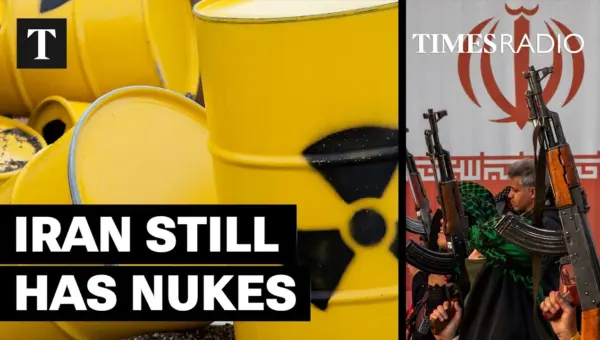
A U.S. nuclear expert believes Iran's nuclear program has not been destroyed by recent attacks, with the country still possessing enriched uranium and demanding the right to enrich more. This stance, driven by geopolitical concerns, makes a better nuclear deal than the 2015 agreement highly unlikely. Tensions also remain high with recent incidents involving shipping in the Gulf and a journalist's death in Lebanon.


War’s Impact: Moderate Women Feel Pinch, Seek Change
A new survey by Galvanize Action reveals that moderate white women are significantly impacted by rising gas prices, directly linking them to the war in Iran. This economic strain is fueling a strong motivation to vote in the upcoming midterms, with many still undecided on their choice.