Iran Appoints Hardliner’s Son as New Supreme Leader
Iran has appointed Mojtaba Khamenei, son of the former Supreme Leader, as its new spiritual and political leader. The move is seen as a message of defiance to adversaries and signals continuity in hardline policies, though it raises concerns about hereditary rule and dims hopes for internal reform.

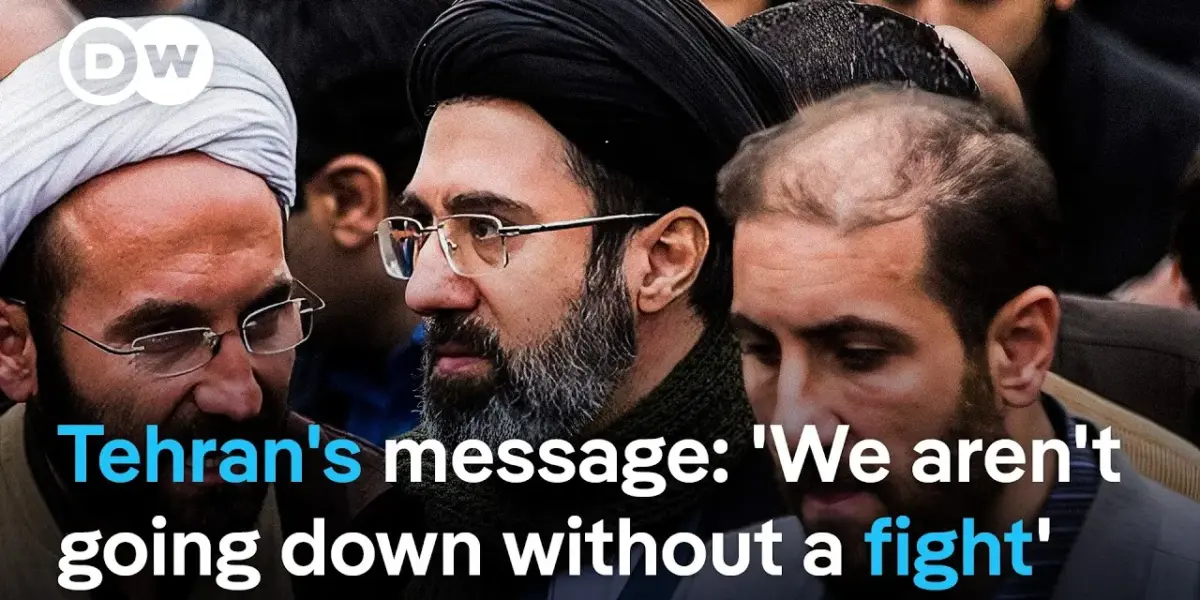
Iran Selects New Supreme Leader Amidst Defiance and Grief
TEHRAN – In a move signaling both continuity and defiance, Iran has appointed Mojtaba Khamenei, the son of the former Supreme Leader Ayatollah Ali Khamenei, as the country’s new spiritual and political leader. The announcement follows the death of Ayatollah Khamenei and his wife in alleged US-Israeli airstrikes at the end of February, an event that also claimed the lives of Mojtaba Khamenei’s own wife and other family members. The 56-year-old Mojtaba Khamenei, a mid-ranking cleric with deep ties to Iran’s political and military establishment, steps into the nation’s most powerful role, shaping its war strategy and internal policies.
A Message of Defiance to the World
The appointment of Mojtaba Khamenei is widely interpreted as a strong message of defiance to Iran’s adversaries, including the United States and Israel. Supporters have lauded the decision, expressing confidence that the new leader will seek retribution for his father’s death and maintain a firm stance against American influence. “Thank God someone became the leader who we are confident will avenge the blood of his father and will not compromise with America,” stated one supporter.
Another added, “He is the rightful successor to the late leader. I’m honored to support him and to make this country proud.”
Dr. Rojin Mukrian, a specialist in Middle East politics at University College Cork, noted that while the succession itself was not entirely unexpected among political insiders, the timing and the choice sent a clear signal. “The discussion or the question of succession for a long time has shaped Iranian politics,” she explained. “To look at Mojtaba Khamenei’s like announcement like as a supreme leader, this is not a huge like surprise for many people.
However, what is surprising and what is significant… They were expecting a collapse within the command and control structures… But it seems that there were some expectation and some like already plan within the command and control structure how to like manage war without a supreme leader.”
Hereditary Succession Sparks Controversy
The elevation of Mojtaba Khamenei to the position of Supreme Leader has drawn parallels to a hereditary monarchy, a system the 1979 Islamic Revolution was fundamentally opposed to. This dynastic element is seen by some as a potential point of contention for the Iranian populace in the long term.
“It does sound like a hereditary monarchy, which is the very thing that the Islamic Republic fought against or was established after,” commented Simon Mayaban, a lecturer in international relations at Lancaster University. “So now to be at a point where Ali Khamenei’s son has been being anointed as the supreme leader seems to be the re-implementation of a system of dynastic rule which is obviously something that that goes against the teachings of the Islamic Republic.”
Mayaban further elaborated on the implications of this choice, stating, “It sends a very strong, very clear message. A message of defiance, a message that says the Islamic Republic will live long and a message that says we will not go down without a fight.” He characterized Mojtaba Khamenei as a hardliner with close ties to the Revolutionary Guard Corps (IRGC), suggesting a continuation of the regime’s established power structures.
Implications for Reform and Regional Stability
For Iranians hoping for systemic change and reforms, Mojtaba Khamenei’s appointment is seen as a significant blow. His background suggests a continuation of the hardline policies that have led to the repression of dissent. “I think that’s going to be taken really badly by those that were in any way hoping for some type of change,” Mayaban observed.
“It’s pretty clear that Mojtaba has been the power behind the the robes… And in that role he’s sort of overseen the repression that many Iranians have faced.”
The new leader’s ascent is also expected to influence Iran’s war strategy. Given the personal losses he has sustained, a more confrontational and visible approach is anticipated. “I would imagine that there will be a more hands-on approach taken by Mojtaba and I think he will be more visible in one way, shape or form granted given the context and given that the Israelis have already said that he will be a target,” Mayaban predicted.
“So I think we’ll see a more belligerent form being taken by Mojtaba. I think we’ll see a more defiant tone taken.”
The regional implications are also profound. Iran’s missile strikes on neighboring Gulf states, while framed as retaliation, risk alienating allies and provoking a unified response from regional powers like Saudi Arabia. Dr. Mukrian described this as a “double-edged sword,” noting that these actions undermine recent efforts to normalize relations and could force countries like Saudi Arabia, under leaders like Crown Prince Mohammed bin Salman, to act decisively to protect their infrastructure.
A More Hands-On and Belligerent Leadership?
The age and health of the previous Supreme Leader, Ayatollah Ali Khamenei, meant he was rarely seen in public in his final years. In contrast, Mojtaba Khamenei, being significantly younger, is expected to adopt a more active and visible role.
“I would imagine that there will be a more hands-on approach taken by Mojtaba,” Mayaban stated. “I think we’ve also got to factor in the personal dynamics in his position right now that he’s lost his both his father and his mother in the same strike from the US against whom he has held very very strong views very deep-seated anger animosity if not hatred over the past few decades.” This personal vendetta, coupled with his hardline ideology, suggests a potentially more volatile leadership.
The structure of Iranian politics, with a Supreme Leader at the apex but with power distributed horizontally among various institutions, means that the leader’s ability to unify these disparate elements is crucial, especially during wartime. “He’s going like who’s going to be next leader?
Of course it matters in many way to bring all these diverse institution behind the supreme leader together to hold them together,” Dr. Mukrian explained. The recent emergence of disputes between the presidential office and military officials highlights the challenge Mojtaba Khamenei faces in maintaining coherence within the system.
Looking Ahead
The appointment of Mojtaba Khamenei marks a key moment for Iran, solidifying a hardline trajectory and potentially increasing regional tensions. The international community, particularly the United States and Israel, will be closely monitoring his actions and pronouncements.
For the Iranian people, the move dims hopes for internal reform and raises questions about the long-term sustainability of a leadership perceived by some as moving towards dynastic rule. The coming months will reveal whether Mojtaba Khamenei can effectively consolidate power and navigate the complex geopolitical landscape, or if the regime’s defiant stance will lead to further instability.
Source: Iran's new choice of leader shows "a message of defiance" | DW News (YouTube)

Related Articles
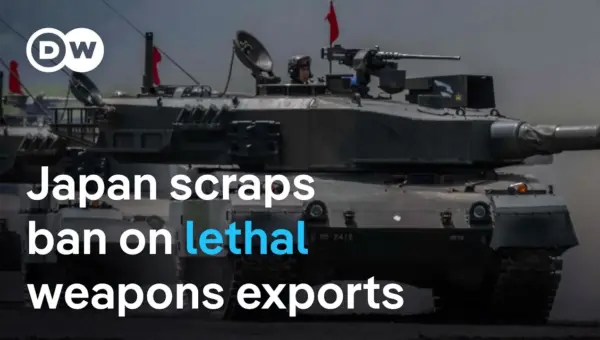
Japan Eases Arms Export Rules Amid China Concerns
Japan has significantly eased its defense export rules, allowing the sale of weapons like warships and missiles to allied nations. This move, aimed at strengthening global partnerships and countering regional threats, has drawn sharp criticism from China, which views it as a potential return to militarism. Experts suggest the policy shift is a pragmatic response to a changing geopolitical landscape and growing regional anxieties.
Iran’s ‘New Cards’ Threat Risks Further Global Isolation
Iran's parliament speaker has threatened to reveal 'new cards,' but former Pentagon officials believe this will further isolate the regime. These potential moves, likely involving proxies or sleeper cells, are seen as a familiar but ineffective tactic. Investors are watching for potential escalation and its impact on regional stability and energy markets.
Trump’s Iran Claims Under Scrutiny After False Statements
MSNBC anchor Stephanie Ruhle has called attention to several untrue statements made by President Trump regarding Iran over the past week. Ruhle's report fact-checked the President's claims, highlighting discrepancies and questioning the accuracy of information presented on a critical international issue. The segment stressed the importance of reliable information for public trust and informed decision-making.