Oscars’ Biggest Blunders: Top 20 Academy Award Fails
The Academy Awards have a history of baffling decisions. From overlooking masterpieces to awarding questionable films, we count down the 20 most egregious Oscar blunders that left audiences and critics stunned. Discover which iconic movies and performances were snubbed and which undeserving films took home the gold.

Oscars’ Biggest Blunders: Top 20 Academy Award Fails
The Academy Awards, the pinnacle of cinematic achievement, has a long and storied history. Yet, for all its glamour and prestige, the Oscars have also been a stage for some truly bewildering decisions, leaving audiences and critics scratching their heads for decades. From questionable acting wins to overlooked masterpieces, the Academy has frequently stumbled, making “severe miscalculations regarding the movies they awarded, the movies they didn’t, and the ones they forgot to nominate altogether.” Watch Mojo’s latest countdown digs into the 20 most egregious Oscar blunders, highlighting moments when the Academy seemed to be living on a different planet.
20. Gwyneth Paltrow Wins Best Actress (1999)
The 71st Academy Awards saw a unique situation where two actresses, Judi Dench and Cate Blanchett, were nominated for playing the same historical figure, Queen Elizabeth I, in separate films. While Dench’s supporting win for a role that was essentially a cameo is debatable, Blanchett losing Best Actress to Gwyneth Paltrow for Shakespeare in Love is considered a major misstep.
Paltrow’s performance, while pleasant, hardly reached Oscar-winning heights, often characterized as a one-dimensional rom-com role. The win is often attributed to an aggressive awards campaign rather than sheer merit.
19. No Nomination for The Lego Movie (2015)
Before Phil Lord and Christopher Miller gifted us Spider-Man: Into the Spider-Verse, they proved their innovative genius with The Lego Movie. The film’s unique blend of CGI with a stop-motion aesthetic, coupled with sharp humor and a surprisingly poignant story, made it a critical darling and a box office hit. It was even recognized by the National Board of Review as one of the year’s best films.
Yet, inexplicably, it was shut out of the Best Animated Feature category at the 87th Academy Awards. The omission was widely seen as “not awesome” and a clear sign of the Academy’s traditional bias against more unconventional animated fare.
18. Amy Adams Snubbed for Arrival (2017)
Science fiction films and their actors have historically faced an uphill battle at the Oscars. Despite Amy Adams being an Academy favorite with five previous nominations, her transformative performance in Denis Villeneuve’s cerebral sci-fi drama Arrival was shockingly overlooked.
As linguist Louise Banks, Adams delivered a performance of remarkable humanity and depth, grounding the complex narrative about first contact. Her subtle yet powerful portrayal was widely considered her best work, making its exclusion from the Best Actress category at the 89th Academy Awards a profound surprise, even more so than the film’s own mind-bending twist.
17. The Greatest Show on Earth Wins Best Picture (1953)
The 25th Academy Awards, celebrating the Oscars’ silver anniversary and broadcast live for the first time, were marred by the decision to award Cecil B. DeMille’s The Greatest Show on Earth Best Picture.
While a box office success, the ensemble circus drama was widely panned for its incoherence and lack of artistic merit. The Academy’s choice is often seen as a safe, crowd-pleasing option during a turbulent time for Hollywood, overshadowed by critically acclaimed films like High Noon and Singin’ in the Rain, neither of which even secured a Best Picture nomination.
16. James Dean Loses Best Actor Twice (1956 & 1957)
James Dean’s tragically short career left an indelible mark on cinema. The Academy recognized his talent with two posthumous Best Actor nominations for East of Eden (1956) and Giant (1957).
However, he went home empty-handed both times. The losses are compounded by the fact that the actors who beat him, Yul Brynner for The King and I and Anthony Quinn for Lust for Life, delivered performances that haven’t aged as gracefully. Giant itself lost Best Picture to the problematic Around the World in 80 Days, adding to the era’s questionable choices.
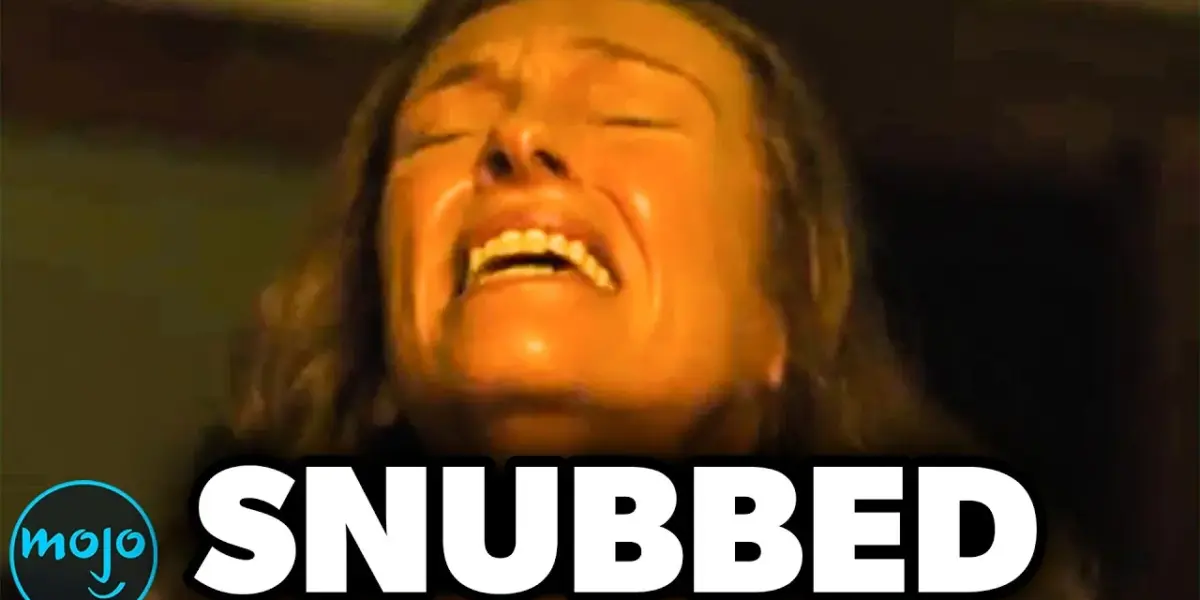
15. Toni Collette Overlooked for Hereditary (2019)
Horror films often struggle for Oscar recognition, but Toni Collette’s performance in Ari Aster’s Hereditary was a tour de force that defied genre expectations. Her portrayal of a mother descending into madness was a harrowing, deeply affecting, and physically demanding feat.
Despite horror films like Misery and Black Swan having previously earned their lead actresses Oscars, Collette’s powerhouse performance at the 91st Academy Awards was completely ignored. This snub highlighted the Academy’s persistent bias against the horror genre, even when faced with such undeniable talent.
14. Roberto Benigni Wins Best Actor (1999)
Roberto Benigni’s exuberant win for Best Actor at the 71st Academy Awards for Life Is Beautiful was a moment of pure, heartwarming joy. However, in hindsight, the decision to award his performance over more nuanced contenders like Ian McKellen in Gods and Monsters or Edward Norton in American History X is highly questionable.
Benigni’s comedic performance, while undeniably charming, was criticized for its broadness and for its potentially problematic use of humor in depicting the Holocaust. Many felt the Academy missed an opportunity to honor more profound dramatic performances.
13. The Dark Knight Denied Best Picture Nomination (2009)
Christopher Nolan’s The Dark Knight was a cultural phenomenon, a critical and commercial juggernaut that redefined the superhero genre. Despite earning eight Oscar nominations, including a posthumous win for Heath Ledger’s iconic portrayal of the Joker, the film was controversially snubbed in the Best Picture category at the 81st Academy Awards. This glaring omission, especially for a film with such immense impact and critical acclaim, was so widely condemned that it directly led to the Academy expanding the Best Picture field in subsequent years.
12. Whoopi Goldberg Loses Best Actress (1986)
The 58th Academy Awards were a night of notable snubs, including Akira Kurosawa’s omission for Ran and Steven Spielberg’s lack of a directing nomination for The Color Purple. The latter film famously tied the record for most nominations (11) without a single win.
One of its most egregious losses was Whoopi Goldberg’s breakout performance as Celie. Her portrayal was deeply moving, imbued with resilience and hope, yet she lost Best Actress to Geraldine Page for The Trip to Bountiful, a film many at the time hadn’t even heard of.
11. Apocalypse Now Loses Best Picture (1980)
While Kramer vs. Kramer was a deserving winner of Best Picture at the 52nd Academy Awards, capturing the zeitgeist of changing family dynamics, its legacy has been overshadowed by Francis Ford Coppola’s epic war film, Apocalypse Now. Considered one of the greatest war films ever made, Coppola’s descent into the madness of the Vietnam War was a monumental artistic achievement. Despite its profound exploration of the human spirit, the Academy ultimately favored the more conventional drama, leaving Apocalypse Now’s nightmarish brilliance unrewarded in the top category.
10. Al Pacino Wins Best Actor for Scent of a Woman (1993)
Al Pacino’s Best Actor win for Scent of a Woman at the 65th Academy Awards was long overdue, but arguably for the wrong role. Many believed he should have won years earlier for The Godfather Part II.
His performance in Scent of a Woman, while memorable, was considered by many to be inferior to Denzel Washington’s powerful portrayal of Malcolm X. This win is often cited as an example of the Academy finally rewarding a beloved actor, but doing so for a less impactful performance while overlooking a truly monumental one.
9. The King’s Speech Beats The Social Network for Best Picture (2011)
In 2010, David Fincher’s The Social Network was lauded by critics and fellow filmmakers, with many calling it the best film of the decade. Quentin Tarantino famously declared it “number one because it’s the best.
It just crushes all the competition.” Yet, at the 83rd Academy Awards, the Academy saw fit to award Best Picture to Tom Hooper’s The King’s Speech. While a competent film, it was widely considered a far less significant and artistically groundbreaking work than Fincher’s dissection of the digital age.
8. Spielberg Denied Best Director Nomination for Jaws (1976)
Steven Spielberg practically invented the modern blockbuster with 1975’s Jaws. The film was nominated for Best Picture, but Spielberg himself was surprisingly left out of the Best Director category at the 48th Academy Awards. While 1975 was a stacked year for directing talent, featuring nominees like Fellini and Kubrick, the omission of the man who helmed such a groundbreaking and financially successful film was a significant oversight, possibly reflecting an old-guard reluctance to fully embrace the blockbuster phenomenon.
7. Green Book Wins Best Picture (2019)
In the wake of the #OscarsSoWhite controversy, the Academy made efforts to increase diversity. While Green Book’s Best Picture win at the 91st Academy Awards appeared to be a step in the right direction, many viewed it as a regressive choice.
The film, dealing with race relations, was criticized for its simplistic and at times offensive portrayal of complex issues. Critics noted that a film like BlacKkKlansman, also nominated, offered a more nuanced and powerful exploration of race in America.
6. Raging Bull Loses Best Picture (1981)
Martin Scorsese’s Raging Bull is a cinematic masterpiece, frequently cited as one of the greatest films ever made. Despite its critical acclaim and enduring legacy, it lost Best Picture to Robert Redford’s directorial debut, Ordinary People, at the 53rd Academy Awards. This marked the first of several high-profile Best Picture losses for Scorsese, setting a frustrating precedent.
5. Dances with Wolves Beats Goodfellas for Best Picture (1991)
A decade after Raging Bull’s loss, Scorsese faced a similar fate when his arguably superior film, Goodfellas, was beaten for Best Picture by Kevin Costner’s Dances with Wolves at the 63rd Academy Awards. Both films were directed by actors making their directorial debuts, but the Academy’s preference for the sweeping Western over Scorsese’s gritty mob epic remains a point of contention for many cinephiles.
4. Crash Beats Brokeback Mountain for Best Picture (2006)
The 78th Academy Awards are infamous for awarding Best Picture to Crash over the critically acclaimed and culturally significant Brokeback Mountain. Even Paul Haggis, the writer and director of Crash, admitted he didn’t think it was the best film of the year. A later poll of Academy voters revealed that a majority would have preferred Brokeback Mountain, highlighting the shock and disappointment surrounding this decision.
3. Do the Right Thing Denied Best Picture and Director Nominations (1990)
Spike Lee’s seminal film Do the Right Thing, a powerful and provocative examination of race relations, was only nominated for Best Original Screenplay at the 62nd Academy Awards. It was snubbed in the Best Picture and Best Director categories, which went to the far tamer Driving Miss Daisy. This decision was seen as a major failure to recognize a film that was culturally relevant and critically lauded, especially compared to the more palatable mainstream choice.
2. Citizen Kane Loses Best Picture (1942)
Widely regarded as the greatest film ever made, Orson Welles’s Citizen Kane was surprisingly beaten for Best Picture by How Green Was My Valley at the 14th Academy Awards. This loss is considered one of the biggest upsets in Oscar history, especially given the enduring legacy and critical consensus surrounding Citizen Kane. The Maltese Falcon’s nomination in the same category further highlights the Academy’s baffling choices that year.
1. Saving Private Ryan Loses Best Picture (1999)
The 71st Academy Awards remain a sore spot for many, particularly with the Best Picture decision. While Steven Spielberg was rightly awarded Best Director for his harrowing war epic Saving Private Ryan, the Best Picture Oscar went to the romantic comedy-drama Shakespeare in Love. This win is often attributed to a massive studio marketing campaign rather than pure cinematic merit, and is frequently cited as one of the Academy’s most egregious errors, forever altering the awards landscape.
Source: Top 20 Times the Oscars Got It Wrong (YouTube)

Related Articles
Deleted Scenes Too Dark, Weird for the Big Screen
Many films feature scenes cut for being too dark, disturbing, or out of place. From Zootopia's 'taming parties' to Terminator 2's too-happy ending, these moments reveal the challenges of filmmaking. These deleted scenes highlight why some ideas are best left on the cutting room floor.

Shocking Films That Faced Global Bans Revealed
From graphic horror to religious satire, some films have been deemed too extreme for public viewing. This countdown reveals shocking movies that faced bans worldwide, sparking debates on censorship and artistic freedom.
Movie Buff Knows Every Release Year!
Scott Mantz, known as 'Scott Movie Mance,' has gone viral for his astonishing ability to recall the exact release year of nearly any movie instantly. From blockbusters to obscure films, his cinematic memory appears flawless, impressing viewers with his deep knowledge of film history.