Trump’s Memory Lapse Fuels Dementia Fears: A Family Tradition?
Donald Trump's recent misstatement about his father's birthplace has reignited concerns about his cognitive fitness, drawing parallels to how similar incidents involving Joe Biden have been handled. The author argues this points to a concerning pattern and a media double standard, urging public discussion on the matter.

Trump’s Fatherland Fumble: A Slip of the Tongue or Sign of Deeper Issues?
In the often-turbulent arena of American politics, a recent gaffe by former President Donald Trump has ignited a firestorm of speculation regarding his cognitive fitness. During a meeting with German Chancellor Olaf Scholz, Trump reportedly misidentified the birthplace of his own father, stating he was born in Germany when, in fact, his father, Fred Trump, was born in Queens, New York.
This seemingly minor error, however, has been amplified by critics who see it as symptomatic of a larger concern: potential cognitive decline. The incident has inevitably drawn comparisons to how similar potential gaffes by President Joe Biden have been treated by conservative media, raising questions about media bias and the public’s perception of presidential competence.
The Genesis of the Gaffe: A Father’s Roots Misplaced
The transcript highlights a specific moment where Donald Trump, while addressing German Chancellor Olaf Scholz, stated, “My father was born. He knows all about my father. My father was born there.” The immediate correction followed: “Fred Trump was born in the Bronx.
He was not not born in Germany.” This factual inaccuracy, confusing his father’s birthplace with his grandfather’s, has become the focal point of the discussion. Trump’s paternal grandfather, Friedrich Trump, emigrated from Bavaria, Germany, to the United States in 1885. The transcript further notes that Friedrich Trump left Germany to evade mandatory military service, a detail the author connects to a perceived pattern of avoiding conflict or duty within the Trump family, even drawing a parallel to the recent discourse surrounding Barron Trump’s potential military enlistment.
The Double Standard Debate: Biden vs. Trump
A significant portion of the analysis centers on the perceived disparity in media coverage and public reaction to perceived cognitive slips between Donald Trump and President Joe Biden. The transcript quotes a social media user, Erica Jones, who articulates a common sentiment: “Imagine if Biden didn’t know where his father was born and confused his father with grandfather. This bozo does it.” This sentiment highlights the argument that similar mistakes made by Biden have been relentlessly scrutinized by conservative outlets, often leading to calls for invoking the 25th Amendment.
The author points to instances where Biden has momentarily confused leaders of different countries, which were then amplified by outlets like Fox News for days, framed as evidence of cognitive impairment. In contrast, Trump’s misstatement about his father’s birthplace, according to the author, has been met with relative silence from mainstream media and a defense from his supporters, highlighting what is presented as a stark double standard in political discourse.
Dementia Diagnosis: A Layman’s Observation
The core assertion made in the transcript is that Trump’s memory lapse, particularly confusing his father with his grandfather and misidentifying a birthplace he has likely known his entire life, is indicative of dementia. The author states unequivocally, “This man has dementia, confusing very basic things that he has known his entire life, but no longer knows them. Yeah, that is dementia.” This is presented not as a medical diagnosis, but as a conclusion drawn from observable behavior, amplified by the perceived lack of critical coverage from major news organizations.
Media Silence and the Call to Action
A critical theme is the alleged complicity of corporate media in downplaying or ignoring concerns about Trump’s cognitive health. The author expresses frustration, stating, “We have to keep talking about it because the corporate media is not going to talk about it.” Specific media outlets are called out: CNN, CBS, and ABC, with reasons ranging from potential ownership by “MAGA billionaires” to fear of legal repercussions from Trump. NBC is also mentioned, though the reason is less defined.
This perceived media blackout, according to the author, necessitates a public outcry and a concerted effort to keep the issue in the public consciousness. The argument is that the public has a right to know and discuss the potential fitness of a presidential candidate, and that silence on such matters is a disservice to democratic principles.
The 25th Amendment: A Constitutional Recourse
The discussion culminates in a strong advocacy for the use of the 25th Amendment. The author posits that “there has never been a more poignant time in American history when the 25th Amendment has been needed as much as it is now.” This amendment, designed to address presidential disability, is presented as the constitutional mechanism to address a president who is unable to faithfully execute the duties of the office.
While acknowledging that invoking it may be unlikely, the author stresses that the current situation, in their view, precisely exemplifies the scenarios for which the amendment was created. The call to action extends beyond mere discussion, implying a need for political and public pressure to consider such measures if concerns about cognitive fitness are deemed sufficiently grave.
Why This Matters
The allegations surrounding Donald Trump’s cognitive state, fueled by specific incidents like the birthplace gaffe, touch upon fundamental questions of leadership, public trust, and the role of media in a democracy. The perceived double standard in reporting on potential cognitive issues between political figures raises concerns about partisan influence on news coverage and its impact on public perception. If voters are presented with biased information or if significant concerns are systematically downplayed, it undermines the electorate’s ability to make informed decisions.
The debate over the 25th Amendment highlights the constitutional mechanisms in place for addressing presidential incapacity, and the current discourse suggests these mechanisms are being seriously considered, albeit controversially, in the context of a highly polarized political environment. The author’s impassioned plea for public discussion underscores a belief that transparency and open dialogue about a candidate’s fitness are paramount for the health of democratic institutions.
Historical Context and Trends
Concerns about the age and cognitive abilities of political leaders are not new. Throughout history, leaders have faced scrutiny regarding their physical and mental health. However, the advent of 24/7 news cycles, social media, and the intense polarization of modern politics have amplified these discussions.
The way such issues are framed, reported, and debated has become a critical battleground. The current emphasis on cognitive fitness, particularly in the context of presidential elections, reflects a broader societal trend of increased awareness and concern about aging and neurodegenerative diseases. This has led to a more intense public examination of candidates’ mental acuity than perhaps seen in previous eras.
Future Outlook
The ongoing debate surrounding cognitive fitness in political leaders is likely to persist, especially in closely contested elections. As candidates age and public discourse becomes more critical, the scrutiny of their mental faculties will intensify. The way media outlets and the public engage with these issues—whether through balanced reporting, unsubstantiated accusations, or calls for constitutional remedies—will shape future political narratives and potentially influence electoral outcomes.
The effectiveness of mechanisms like the 25th Amendment in practice, beyond theoretical discussions, will also remain a point of interest. Ultimately, the discourse initiated by incidents like Trump’s birthplace gaffe highlights the delicate balance between political commentary, the public’s right to know, and the ethical responsibilities of both the media and the electorate.
Source: Dementia Alert! Trump Forgets Vital Detail About His Own Dad (YouTube)

Related Articles
Trump Warns Iran: Bombing Could Start ‘Tomorrow’
President Trump has signaled a tough stance on Iran, warning that he expects to be "bombing tomorrow" if a satisfactory deal isn't reached, with the current cease-fire set to expire. Despite the escalating rhetoric, financial markets have remained measured, seemingly pricing in a future resolution and a potential "peace dividend."
Warren Questions Fed Nominee’s Independence from Trump
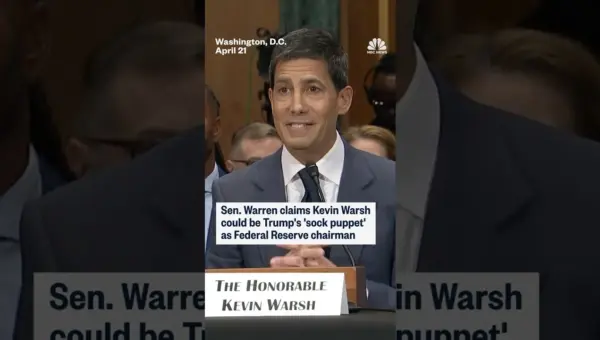
Senator Elizabeth Warren questioned Federal Reserve nominee Kevin Warsh's independence from President Trump, suggesting he might act as a "sock puppet." Warren cited Trump's alleged remarks about controlling interest rates through his chosen nominee. Warsh attempted to distance himself from political questions during the hearing.
Trump’s Iran Claims Under Scrutiny After False Statements
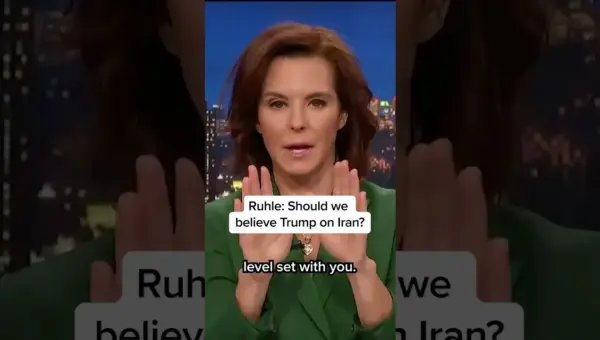
MSNBC anchor Stephanie Ruhle has called attention to several untrue statements made by President Trump regarding Iran over the past week. Ruhle's report fact-checked the President's claims, highlighting discrepancies and questioning the accuracy of information presented on a critical international issue. The segment stressed the importance of reliable information for public trust and informed decision-making.