Jeffries Defends Harris’ Relevancy Amidst Primary Challenges
House Minority Leader Hakeem Jeffries has rebuffed claims that Vice President Kamala Harris has lost political relevance. He emphasized the Democratic Party's focus on the upcoming 2026 midterm elections and its core agenda of lowering living costs, fixing healthcare, and combating corruption.

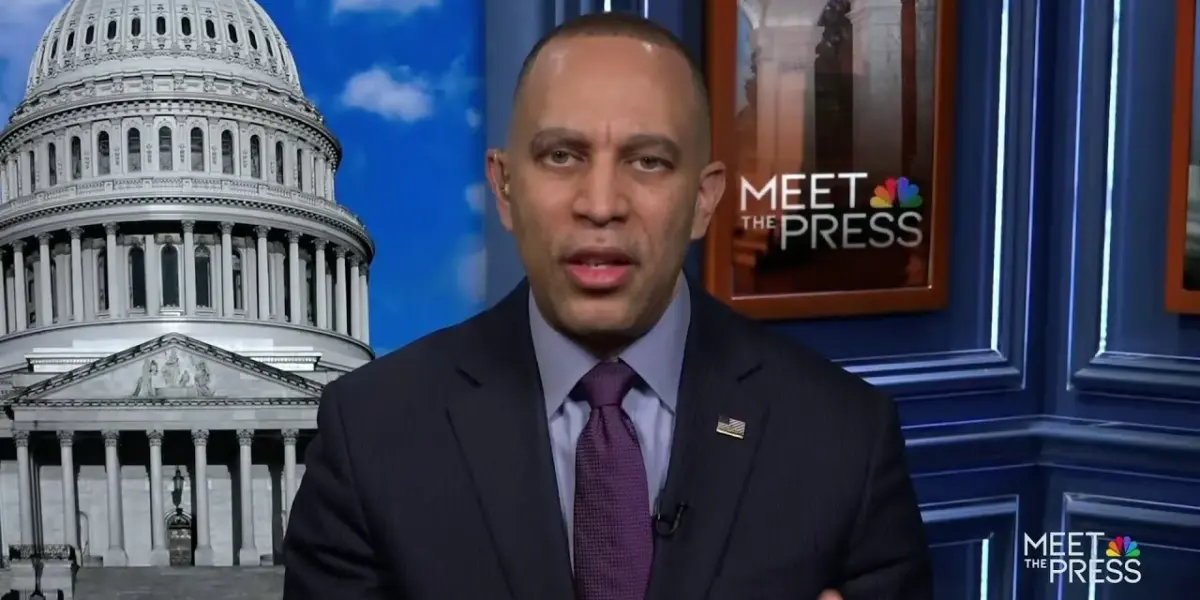
House Minority Leader Hakeem Jeffries Dismisses Concerns Over Vice President Harris’ Political Standing
Washington D.C. – House Minority Leader Hakeem Jeffries has firmly rejected the notion that Vice President Kamala Harris has lost political relevancy, addressing recent criticisms that emerged following a contested primary endorsement. The Democratic leader emphasized the party’s unified focus on upcoming midterm elections and its commitment to core policy objectives.
Context of the Controversy: The Crockett Endorsement
The discussion surrounding Vice President Harris’ political standing was ignited by comments made by Jasmine Crockett, a former Biden-Harris staffer, regarding her own primary race. Crockett reportedly stated that the former Vice President’s “rapidly declining polling numbers are a lagging [indicator] and her lack of political relevancy is a leading one.” These remarks, made in the context of an endorsement process, led to questions about Harris’ influence and position within the party.
Jeffries’ Strong Rebuttal
When pressed on whether Vice President Harris had indeed lost her political relevancy, Jeffries responded with a clear and unequivocal “No, I don’t think so.” He pivoted the conversation to the immediate priorities of the Democratic Party, stating, “But look, we are focused right now on the 2026 midterm elections and we will do everything we can to make sure that we take back control of the House.” This response underscores a strategic effort to steer the narrative away from internal party debates and towards electoral success.
Democratic Party’s Core Agenda
Jeffries reiterated the Democratic Party’s commitment to addressing key issues that resonate with voters. He outlined an agenda centered on:
- Lowering the High Cost of Living: Acknowledging the economic pressures faced by American families, the party aims to implement policies designed to alleviate financial burdens.
- Fixing the Broken Healthcare System: Addressing systemic issues within healthcare remains a top priority, with a focus on improving access, affordability, and quality of care.
- Combating Corruption: Jeffries strongly condemned what he termed the “Trump cartel,” vowing to clean up perceived corruption and hold those responsible accountable.
The party’s strategy, as articulated by Jeffries, involves uniting its base and presenting a cohesive front against Republican opposition, particularly in the upcoming electoral cycles.
Broader Implications for the Democratic Party
The exchange highlights the internal dynamics and external pressures facing the Democratic Party as it prepares for future elections. Vice President Harris, as the current Vice President and a potential future presidential candidate, remains a significant figure whose political capital is constantly under scrutiny. Jeffries’ defense serves not only to protect Harris but also to project an image of party unity and confidence.
The comments from Crockett, while perhaps intended to address specific campaign dynamics, inadvertently opened a door for broader speculation about Harris’ standing. Such discussions, especially in the lead-up to critical elections, can be detrimental if not effectively managed. Jeffries’ swift and direct rebuttal suggests a deliberate strategy to preemptively counter any narrative that could undermine the Vice President or the party’s electoral prospects.
The emphasis on the 2026 midterms signals a long-term strategic outlook. The Democratic Party aims to build momentum and secure victories not just in presidential elections but across all levels of government. This includes regaining control of the House of Representatives, a key objective that requires significant mobilization and strategic campaigning.
Looking Ahead
As the 2026 midterm elections draw closer, the Democratic Party will undoubtedly continue to focus on its policy platform and electoral strategies. The performance and public perception of Vice President Harris will remain a subject of interest, but Leader Jeffries’ remarks indicate a concerted effort to project strength and unity. The party’s ability to effectively communicate its achievements and future plans, while navigating internal discussions and external criticisms, will be crucial for its success in the upcoming electoral battles.
Source: Hakeem Jeffries: ‘No, I don’t think’ Kamala Harris has lost relevancy after Crockett endorsement (YouTube)

Related Articles

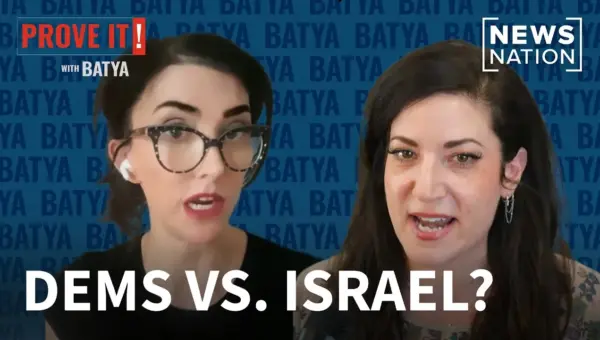
Democrats Divided: Israel’s Role Sparks Fierce Party Battles
A debate between Batya Ungar-Sargon and Brianna Wu explores the shifting stance of the Democratic Party on Israel. While some see a growing anti-Israel sentiment fueled by progressive elements, others believe mainstream voters remain supportive and that the party can course-correct by emphasizing national security and moral clarity.
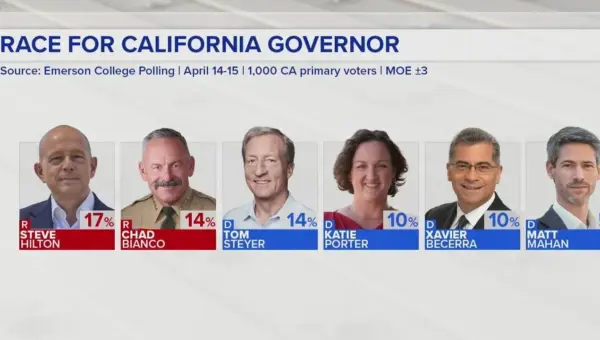
California’s Blue Wall Cracks: GOP Leads Governor Race
California's Democratic stronghold is facing a surprising challenge, with Republicans leading the polls for governor. The state's unique "jungle primary" system and a fragmented Democratic field are key factors. The upcoming debate is crucial as voters remain largely undecided.

Trump Allies Panic Over Polls, Try Damage Control
Top Trump allies are reportedly panicking over falling poll numbers and are holding secret meetings to strategize damage control. This comes as the party grapples with unpopular legislation and rising gas prices, while legal challenges and Democratic investigations add to the pressure.