Iran’s Regime Change: Experts Doubt Uprising’s Success
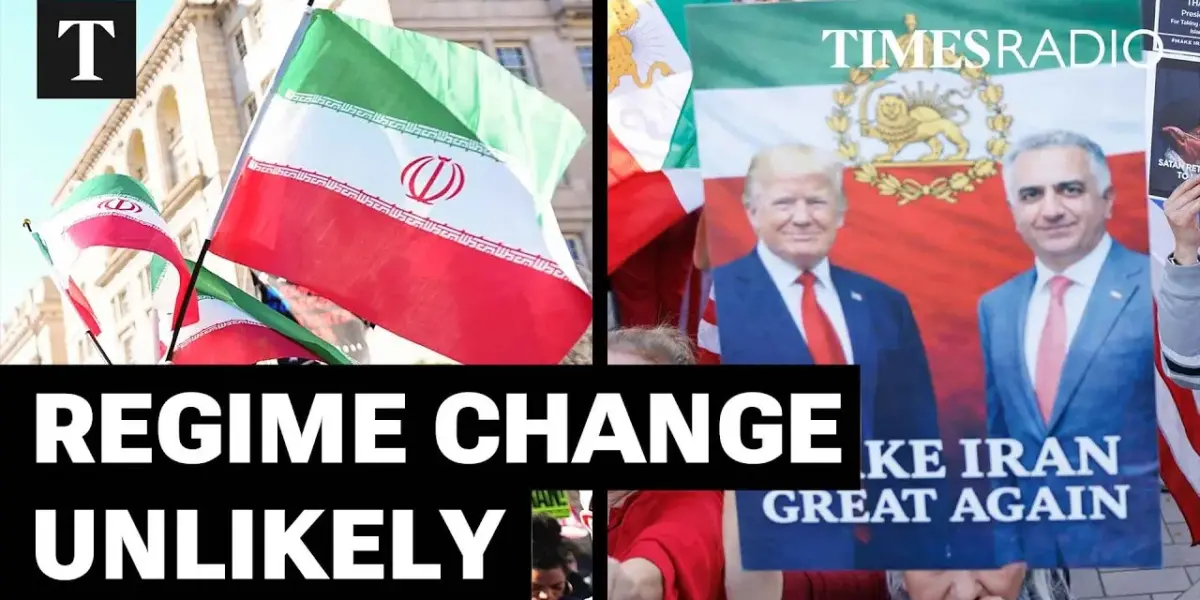
Experts believe a large-scale uprising for regime change in Iran is unlikely due to a lack of organization and a coherent political alternative. While 80% of Iranians desire change, the path forward remains challenging, with internal organization being key.

Iran’s Internal Dynamics: A Complex Picture
Recent discussions surrounding potential regime change in Iran highlight a complex internal landscape, with experts expressing skepticism about the likelihood of a large-scale popular uprising successfully seizing power. While the desire for democratic transition is widespread among a significant portion of the Iranian population, the absence of organized networks and a coherent political alternative are seen as major impediments to a classic revolution.
Iranian President Ebrahim Raisi recently dismissed U.S. Demands for unconditional surrender as a “dream they should take to their grave.” He also offered an apology for any Iranian missiles that may have hit neighboring countries, stating that Iran would cease such actions and that the issues should be resolved through diplomacy. However, reports of a drone strike at Dubai airport shortly after these statements, attributed to falling debris from an interception, highlight the volatile regional context.
Shifting Public Sentiment: Beyond a Monolithic View
Suzanne Cayanus, an American-Iranian journalist, shared insights from sources within Iran, suggesting a significant divide in public opinion. “The people who are more being seen allowed to be seen mourning the killing death of the supreme leader are about 20% of the country,” Cayanus stated. “The rest of the country are people who are very angry at the Islamic Republic and don’t want them to be leading anymore.” This sentiment, she argued, was significantly impacted by the “Woman, Life, Freedom” movement of 2022, which marked a turning point where the regime began to lose power after losing control over women’s rights protests.
Arash Azizi, an American-Iranian academic and author of “What Iranians Want,” largely concurred with this assessment. “I think it’s right that about there’s the regime has about 20% core supporters and you know, the other 80%.
Um, they don’t want the status quo,” Azizi said. He emphasized that while the majority desires change, the crucial question remains what they wish to replace it with and how they envision that transition.
Obstacles to Revolution: Lack of Organization and Alternatives
Both experts pointed to the significant challenges facing any potential uprising. Azizi articulated that a “classic revolution” is unlikely due to a “lack of organizing networks, a coherent political alternative to the regime, all the stuff that gets to a successful revolution.” He elaborated, “The proponents of democracy are not organized.
Their ranks are not organized. The regime’s ranks are very organized.” the absence of a “coherent, credible, clear political alternative that would be accepted by the mass of Iranians and that would have the kind of leadership that would be able to do the difficult task of leading them into battle and winning against the regime” makes a successful overthrow improbable in the near term.
Cayanus added a critical perspective on the lack of organized leadership, explaining that potential leaders are often imprisoned. “The future of Iran is inside Iran.
It is inside Evin prison,” she stated. “What needs to happen is they need to be busted out of prison.” This bold suggestion implies a need for external intervention, such as special forces, to release imprisoned opposition figures, who could then potentially galvanize an uprising.
The Question of Leadership: Reza Pahlavi and the Future
The discussion also touched upon the role of potential future leaders, including Reza Pahlavi, the son of the last Shah. While “Javid Shah” (Long Live the Shah) has been chanted on the streets, Cayanus suggested this was often more a symbolic expression of a desire for modernity and opposition to the Islamic Republic than a direct endorsement of Pahlavi himself.
Pahlavi has positioned himself as a transitional figure who could facilitate a democratic process. However, concerns persist among some Iranians about the possibility of “more of the same” and the emergence of another dictatorship.
Cayanus highlighted the aggressive rhetoric of some Pahlavi supporters, who equate not supporting him with supporting the current regime. “That’s just not correct,” she asserted, emphasizing the need for Pahlavi to address these fears and rein in his more extreme followers.
A Grim Outlook? The Likelihood of Internal Succession
When asked about how the situation might realistically end, Azizi offered a sobering prediction. “Unfortunately, you know, all my life I wanted a democratic transition, but as I said, I don’t see it as quite likely,” he stated. He drew a parallel to the 1979 revolution, noting that it had both external leadership and robust organizing networks, elements he believes are currently missing for proponents of democracy in Iran.
“I think it’s much more likely that the next iteration of leadership in Iran, unfortunately, will be figures that are currently inside the regime,” Azizi concluded. He suggested that in a more optimistic scenario, these might be figures with a history of being more pro-democratic, but even this is considered unlikely. The more probable outcome, he fears, involves figures from within the existing regime who can consolidate power and manage external relations, particularly with the United States.
Worst-Case Scenarios and the Fear of Futility
The conversation turned to the potential for a devastating war and its aftermath. Cayanus voiced the fears of many within Iran: “They’re terrified that all of this sacrifice is going to be made and it’ll end up being for nothing.” This sentiment of “if they have to finish the job” reflects a deep-seated anxiety that despite potential conflict and loss, the fundamental situation for the Iranian people, especially women, might not significantly change.
The idea of external military intervention, or “boots on the ground,” was met with apprehension, particularly given the historical experiences of countries like Iraq and Afghanistan. The concern is that such involvement could be exploited by the Iranian regime to rally nationalist sentiment and that protracted conflicts, as seen in Syria, often leave nations in fragile states.
Moving Forward: The Need for Internal Organization
The experts underscored the critical need for proponents of democracy within Iran to organize their own ranks and build power internally. “You need to build power if you want to come to power, and we haven’t done that.
We can’t do it by the statements,” Azizi stressed. The focus must shift from external hopes to internal mobilization and the strategic release and empowerment of imprisoned opposition leaders.
The discussion concluded by emphasizing the non-simplistic nature of the situation in Iran, cautioning against Western optimism bias that often overestimates the ease of popular uprisings. The path to meaningful change remains arduous, requiring sustained internal organization and a clear, unified vision for the future.
Source: There Isn’t A ‘Serious Chance’ Of Regime Change In Iran (YouTube)

Related Articles
Iran’s ‘New Cards’ Threat Risks Further Global Isolation
Iran's parliament speaker has threatened to reveal 'new cards,' but former Pentagon officials believe this will further isolate the regime. These potential moves, likely involving proxies or sleeper cells, are seen as a familiar but ineffective tactic. Investors are watching for potential escalation and its impact on regional stability and energy markets.

Trump’s Iran Claims Under Scrutiny After False Statements
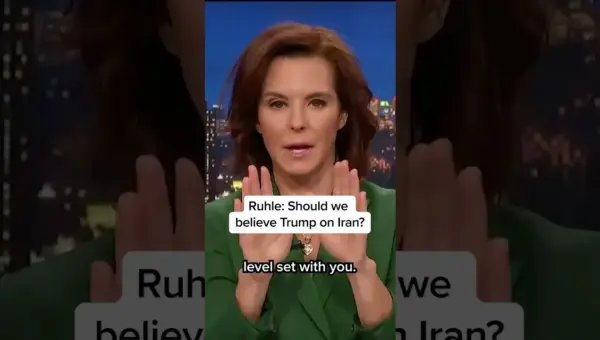
MSNBC anchor Stephanie Ruhle has called attention to several untrue statements made by President Trump regarding Iran over the past week. Ruhle's report fact-checked the President's claims, highlighting discrepancies and questioning the accuracy of information presented on a critical international issue. The segment stressed the importance of reliable information for public trust and informed decision-making.

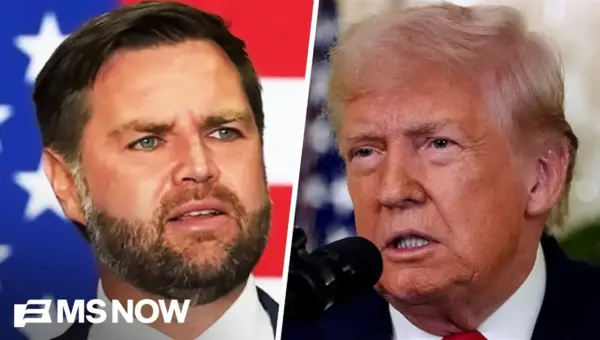
Iran Talks Stall as US Vice President Awaits Flight
US-Iran diplomatic talks are stalled, with Iran reportedly refusing U.S. proposals related to its nuclear program. Experts suggest Iran is strategically leveraging the situation, believing its 'clock' ticks slower than the U.S. The standoff raises questions about the effectiveness of U.S. strategy amidst rising defense spending.