Oman’s Neutrality Tested by Middle East War
Oman's long-held neutrality is facing its greatest test amid escalating Middle East conflict, straining its role as a key mediator with Iran. The Sultanate's unique Ibadhi identity and historical ties have positioned it as a crucial diplomatic channel, but current geopolitical pressures are diminishing its leverage.

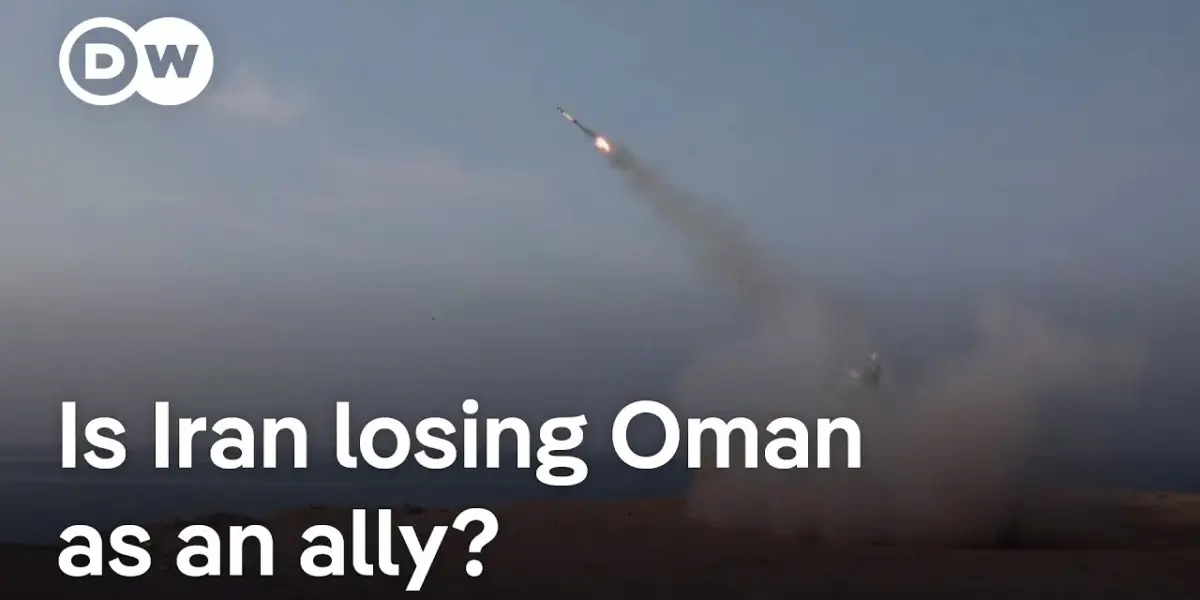
Oman’s Neutrality Tested by Middle East War
In the midst of escalating regional tensions and the looming threat of wider conflict, Oman, a nation renowned for its diplomatic neutrality, finds itself at a critical juncture. The ongoing war in the Middle East is placing unprecedented pressure on the Sultanate’s long-standing policy of “all friends, no foe,” forcing a re-evaluation of its unique position as a mediator and a key channel for communication with Iran.
The ‘Switzerland of the Middle East’ Under Strain
Oman, strategically located on the southeastern tip of the Arabian Peninsula, shares borders with regional heavyweights Saudi Arabia and the United Arab Emirates, as well as Yemen. Across the narrow waters of the Strait of Hormuz lies Iran, a relationship that has historically been complex yet constructive.
For years, Oman has cultivated the image of the “Switzerland of the Middle East,” a moniker reflecting its commitment to neutrality, diplomacy, and an “all friends, no foe” foreign policy. However, the current geopolitical climate is severely challenging this delicate balance.
“Oman’s neutrality has routinely been under threat. There are a number of regional and international players that have disliked Oman’s stance as a neutral actor and its relentless push for diplomacy and its open reluctance to not just join operations but also support operations including by its partners and allies.”
Chinsia Biano, an expert specializing in the Gulf region, highlights that Oman’s steadfast commitment to diplomacy and its refusal to align with any particular bloc has often drawn criticism from various regional and international actors. This, she notes, has made its neutral stance a consistent target.
Religious Harmony as a Foreign Policy Pillar
Oman’s distinct foreign policy is significantly shaped by its unique religious identity. As the only Ibadhi-majority country in the region, its religious practice occupies a middle ground between Sunni Islam, dominant in other Arab Gulf monarchies, and Shiism, prevalent in Iran. This “third way” of Ibadism inherently promotes reconciliation and understanding, a tenet that has proven instrumental in Oman’s diplomatic endeavors, particularly during periods of heightened geopolitical and sectarian tensions between Arab powers and Iran.
“The religious factor in Oman plays a role in their foreign policy although that is um it’s only part of the story but it is an important part of the story,” Biano explains. “The fact that Oman is the only Ibadhi majority country in the region… That sort of has an impact because Ibadism is a third way in between Sunnism…
And Shiism… And that sort of third way Ibadism has really, you know, it has in itself the idea that you can reconcile these different positions.”
A Unique Relationship with Iran
The geographical proximity across the Strait of Hormuz, a critical chokepoint for global oil trade, has necessitated a working relationship between Oman and Iran. This relationship, however, runs deeper than strategic necessity.
Historically, Iran has been a stabilizing force for Oman. Iran provided operational support to Sultan Qaboos bin Said Al Said in quelling an insurgency in Oman’s southern Dhofar region, a crucial act that solidified a bond of trust.
“Oman and Iran have always had constructive positive relations both under the Shah and then after the Islamic Revolution with the Islamic regime,” Biano states. “Iran has also supported operationally Sultan Qaboos has it killed an insurgency in the southern part of Oman, a region called Zofar, which threatened the very being of his rule. So, that historical precedence sort of really sets the tone for the relationship between the two.”
This historical precedent has fostered a unique geopolitical alignment. Oman is the only Gulf monarchy that shares oversight of the Strait of Hormuz with Iran, leading to an inevitable working relationship, particularly between their naval forces and at the political level.
Oman as a Crucial Diplomatic Conduit
The constructive political channel between Oman and Iran has been invaluable to the United States and other international actors seeking dialogue with Tehran. Oman has repeatedly served as a vital intermediary, facilitating negotiations on Iran’s nuclear program, prisoner exchanges, and de-escalation of regional conflicts.
“And this positive political channel has been used by the United States as well as regional players and other international actors to basically create a channel with Iran and negotiate on Iran’s nuclear program as well as other issues for example, you know, exchange of political prisoners or freeing of political prisoners from Iran,” Biano elaborates. “Because Iran really only trusts deeply Oman as a mediator or a facilitator, even more than they would trust Switzerland, which has also been working in that sense.”
Oman’s mediation was instrumental in the lead-up to the now-defunct Joint Comprehensive Plan of Action (JCPOA), the 2015 Iran nuclear deal. Even after the US withdrawal from the deal, Oman continued to support efforts for a potential revival or a new agreement.
Current Pressures and Future Implications
However, the current conflict has significantly undermined Oman’s capacity to act as an effective mediator. With neither Iran nor the United States actively seeking diplomatic channels, Oman’s leverage is diminished. As a smaller state with less military might compared to some of its neighbors, it finds itself in a position of passive observation, despite being significantly impacted by regional instability.
“At a time when neither Iran nor the United States are interested in this diplomatic channel, then Oman has no leverage on Iran. And it has also no capabilities to force the opening of the Strait of Hormuz,” Biano observes. “So, as a relatively smaller state with less military capabilities than even some of its neighbors such as the United Arab Emirates, I guess it really has no choice than being a passive bystander of what is going on despite the fact that they are also much affected.”
Oman’s priority remains finding diplomatic off-ramps to avert a potentially catastrophic scenario, such as the collapse of Iran as a state. Yet, the question remains: at what cost to its international standing and its role as a trusted neutral mediator?
Looking Ahead
As the conflict continues to unfold, Oman’s diplomatic efforts will be closely watched. Its ability to navigate these treacherous waters and maintain its neutrality, or at least its role as a facilitator, will be crucial not only for its own stability but also for the broader prospects of peace in the Middle East. The world waits to see if the “Switzerland of the Middle East” can weather this storm and continue to serve as a vital bridge between adversaries.
Source: Oman under pressure: Could Iran lose a key ally in the Middle East? | DW News (YouTube)

Related Articles

US Navy Blasts Iranian Ship Near Hormuz
U.S. naval forces seized the Iranian cargo ship Motor Vessel Touska near the Strait of Hormuz after a six-hour standoff. The USS Spruance disabled the ship with gunfire, and Marines from the 31st MEU took custody. This action escalates regional maritime tensions as a ceasefire deadline nears.

Trump Won’t Rush Iran Deal, May End Ceasefire
President Trump stated he is in no rush to finalize a deal with Iran and is unlikely to extend the current ceasefire. Experts suggest this signals desperation, while conflicting messages from the administration add to the uncertainty surrounding the ongoing negotiations.

Trump’s Iran Standoff: A Risky Bet for Global Stability?
Libertarian journalist Robby Soave and host Batya debate President Trump's Iran strategy. Soave questions the long-term benefits versus the costs, while Batya highlights market confidence and strategic gains. The discussion covers military power, diplomatic goals, and the potential risks of nuclear proliferation.