Ex-MI6 Chief: UK Faces Iran Threats, Starmer Lacks Churchill’s Conviction
Former MI6 chief Sir Richard Dearlove discusses the threat of Iranian intelligence operations on UK soil following recent arrests. He also draws a stark comparison between current political leadership and historical figures, suggesting a lack of conviction in figures like Keir Starmer.

Iran’s Shadow Looms: Spy Arrests and Geopolitical Tensions Grip UK
London – In a significant development underscoring escalating international tensions, four individuals have been arrested in the UK on suspicion of acting for Iran’s intelligence agency. The arrests, made by counterterrorism police, are linked to alleged spying on individuals and locations associated with London’s Jewish community. The Home Secretary, James Cleverly, has assured that police and security services will act decisively against such threats.
Adding crucial context to the unfolding situation, Sir Richard Dearlove, former head of MI6, joined broadcaster Cathy Newman to discuss the nature of the threat posed by Iran to the UK and its interests, drawing parallels and distinctions with past conflicts, and offering a stark assessment of current political leadership.
Assessing the Iranian Threat: Beyond Military Confrontation
Sir Richard Dearlove articulated that while a direct military threat to the UK mainland from Iran is unlikely, the danger to British interests in the Middle East remains substantial. He highlighted the vulnerability of military bases within range of Iranian capabilities and the potential risk to British citizens, including soldiers, stationed in Iraq and other regional outposts.
“The Iranians are sort of lashing out trying to widen the conflict and drag in, you know, even some of their Arab allies,” Dearlove observed, suggesting a strategy of expansive retaliation.
The recent arrests in London, targeting alleged espionage against the Jewish community, indicate a concerning level of Iranian-backed plotting on British soil. While Dearlove cautioned against exaggerating the immediate danger, he confirmed that certain Shia mosques in London have shown sympathy towards the current Iranian regime. He posited that the arrests likely stem from an ongoing investigation by MI5, where the decision to intervene was prompted by the heightened risk of direct conflict with Iran.
The phrase “ongoing investigation” used by the police suggests a prolonged period of surveillance by security services. The targets appear to have been potential Jewish community sites, raising serious concerns about the scope and intent of these operations.
The Case for Banning the IRGC: A Long-Standing Call
A significant point of discussion was the long-standing call for the UK to proscribe the Islamic Revolutionary Guard Corps (IRGC), a designation already implemented by the EU and the US. Sir Richard Dearlove stated his advocacy for this measure for several years, characterising the IRGC as the primary instrument for state-sponsored terrorism by Iran.
Legality of Strikes and UK’s Entanglement
The conversation turned to the potential legality of striking missile sites within Iran to preempt attacks, a stance echoed by Justice Secretary David Lammy. While not an international lawyer himself, Dearlove suggested that any such assertion by Lammy would likely be backed by advice from the Attorney General, indicating a potential legal interpretation under international law. Dearlove opined that if Iran has attacked a sovereign base area or possesses plans to strike other British interests, such retaliatory strikes could be deemed legal.
However, he acknowledged the inherent risk of the UK becoming further embroiled in the conflict, drawing a parallel with the fallout from the Iraq War, which led to long-lasting resentment. Dearlove stressed that the UK has been in a state of confrontation with Iran for a considerable time, exacerbated by its close alliance with the United States, which has historically characterized the UK as “little Satan.”
“It’s very hard to make these separations. And, you know, bear in mind that the UK’s strategic interest, its national security is very, very closely linked with the United States. So inevitably when they go to war we’re faced with difficult decisions,” he explained.
Dearlove suggested that the UK government likely had little choice but to support American actions, a sentiment reflected in recent policy shifts allowing the use of US air force bases in Fairford and Diego Garcia.
Keir Starmer’s Leadership: A Comparison with Tony Blair
The discussion then pivoted to the leadership of Keir Starmer, the Leader of the Opposition. Dearlove noted that Starmer’s hesitation regarding the use of UK bases for potential strikes against Iran damaged the UK’s reputation. He argued that supporting allies through base usage should have been a clear commitment from day one, a stance that proved challenging for the Labour Party, seemingly haunted by the mistakes of the Iraq War.
When prompted to compare Starmer’s approach to that of Tony Blair during the Iraq War, Dearlove contrasted Blair as a “conviction politician” with a clear sense of purpose. Dearlove controversially stated that while he disagreed with aspects of the Chilcot Report on Iraq, he believed the critical error was the disbandment of the Iraqi military post-invasion, which created a power vacuum and fueled subsequent uprisings.
He drew a potential parallel regarding Iran, suggesting that the Iranian military, being more nationalistic than the current theocratic regime, might play a role in governmental change. He also critiqued Starmer’s leadership style:
“Keir Starmer is a human rights lawyer and he thinks like a human rights lawyer rather than like a politician. I mean, he vacillates between these two poles, and I think one sees that in a lot of his policies and changes of policy.”
This perceived indecisiveness, Dearlove implied, has consequences for the country’s standing and foreign policy direction. He concluded that while the current government’s foreign policy has improved, it could have been stronger from the outset.
No Churchillian Conviction?
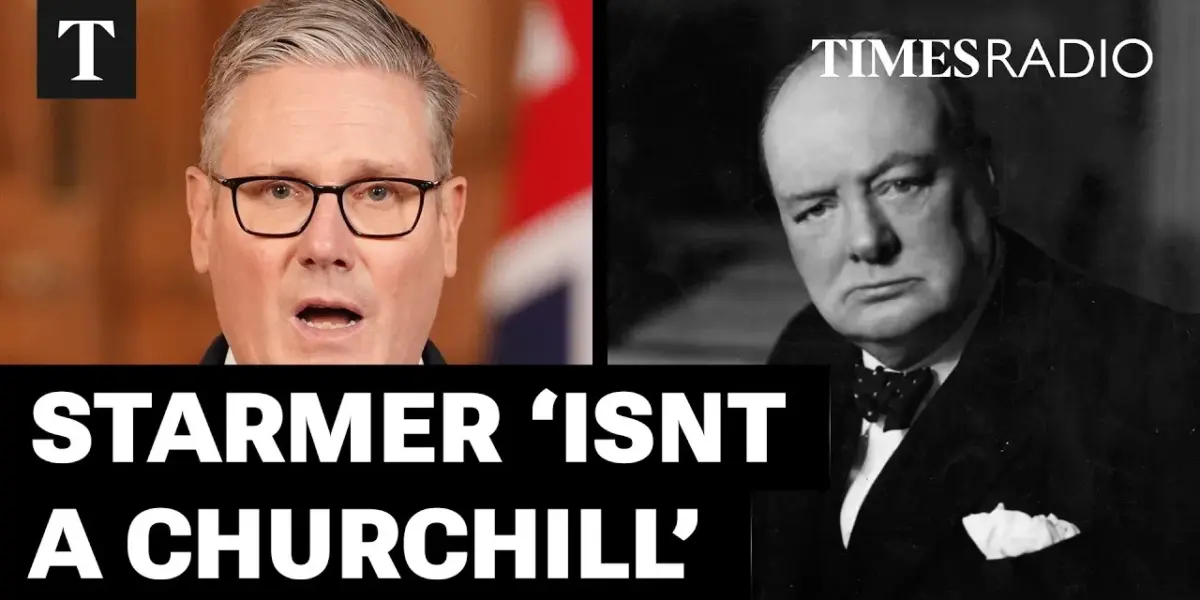
Echoing Donald Trump’s earlier assessment, Sir Richard Dearlove agreed that Keir Starmer does not possess the qualities of Winston Churchill.
“Well, of course he isn’t a Churchill,” Dearlove stated plainly.
The former MI6 chief concluded his remarks by emphasizing the complex geopolitical landscape and the critical decisions facing the UK in its relationship with Iran and its allies, highlighting the need for strong, decisive leadership in navigating these turbulent times.
Looking Ahead: Iran’s Strategic Future
As the UK grapples with the immediate threat of espionage and the broader geopolitical implications of regional conflicts, attention will remain fixed on the effectiveness of international pressure on Iran. The potential for internal political shifts within Iran, influenced by economic and military strategies, will be a key area to monitor. The UK’s ability to balance its alliance commitments with domestic political considerations, particularly in light of past foreign policy missteps, will continue to be a defining challenge for its leadership.
Source: Starmer and Iran: “Of Course He Isn’t A Churchill” | Sir Richard Dearlove (YouTube)

Related Articles
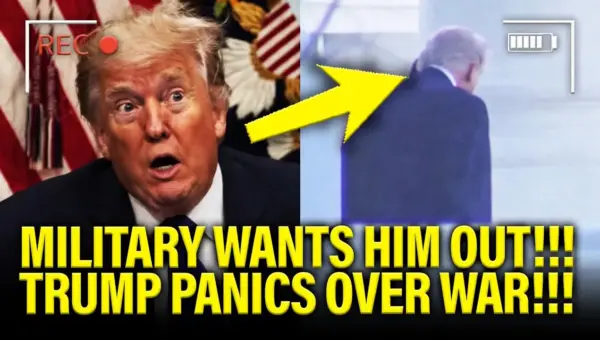
Military Leaders Try to Block Trump’s War Escalation
Military leaders are reportedly trying to sideline Donald Trump from war discussions due to his erratic behavior. Meanwhile, Trump issues escalating threats against Iran, while Iran rejects his claims and refuses to negotiate under current conditions. Upcoming talks in Pakistan face an uncertain future.

US Warns Iran on Strait of Hormuz Actions
The U.S. military has issued a strong warning to Iran regarding actions in the Strait of Hormuz. Following IRGC attacks on merchant ships, Washington signaled potential precision strikes on Iranian infrastructure if diplomatic efforts fail. Advanced drones are providing real-time intelligence, underscoring readiness for escalation.

Generals Blocked Trump from Briefings Amidst War Fears
Top Pentagon officials reportedly excluded former President Donald Trump from critical briefings due to fears his erratic behavior could jeopardize a mission. This decision stemmed from Trump's volatile state after Iran shot down a U.S. airman, leading to threats and obsession with political fallout. The situation highlights concerns about leadership judgment and trust within the administration.