AI Disruption: 50% of White-Collar Jobs at Risk
Up to 50% of white-collar jobs could be automated in the next 1-5 years, posing significant risks to the debt-based economic system. Markets are showing signs of caution, with gold rallying as investors seek safe havens amidst growing uncertainty.


AI Disruption: 50% of White-Collar Jobs at Risk
The accelerating pace of artificial intelligence development is poised to fundamentally reshape the global labor market, with projections indicating that up to 50% of white-collar jobs could be automated within the next one to five years. This seismic shift carries profound implications for the existing economic framework, particularly concerning workforce participation, consumer spending, and the sustainability of debt-fueled growth.
The Automation Wave and Its Economic Ripple Effects
The potential displacement of half of all white-collar roles represents a significant challenge to the current economic model, which relies heavily on a robust workforce to fuel consumption and contribute to social security and pension systems. A substantial reduction in the number of employed individuals could lead to a decrease in tax revenues and a diminished capacity for individuals to service existing debt, potentially stalling economic expansion.
The core of this concern lies in the traditional economic engine of growth, which has largely been driven by the concept of leverage, or ‘other people’s money.’ This system thrives on continuous borrowing and investment to expand economic activity. However, as the workforce shrinks and the ability to generate income diminishes, the foundation of this debt-based system becomes increasingly precarious.
Volatility and Deleveraging: A Growing Concern
The prospect of widespread job automation intensifies the risks associated with leverage. In an environment where economic uncertainty looms large and the future earning potential of a significant portion of the population is in question, the appetite for borrowing and investing in riskier assets is likely to wane. This sentiment can trigger a cascade of selling, a phenomenon known as deleveraging, as investors and consumers alike seek to reduce their exposure to assets perceived as volatile or potentially worthless in a rapidly changing economic landscape.
When uncertainty about the future of employment and economic stability rises, market participants tend to become risk-averse. This aversion can lead to a sharp decline in asset prices, as individuals and institutions rush to exit positions, fearing they might be the last to sell in a rapidly depreciating market. This dynamic can create significant market volatility, making it difficult for businesses to plan and for individuals to manage their finances.
The Evolving Definition of ‘Money’
In this evolving economic paradigm, the very definition and perceived value of money may come under scrutiny. If traditional income streams are disrupted by automation and the underlying economic structure shifts, the traditional anchors of monetary value could be challenged. This uncertainty could lead to a re-evaluation of what constitutes a reliable store of value and a medium of exchange.
Market Signals: A Rally in Safe Havens
The recent performance of certain assets, such as gold, can be interpreted as a signal of market sentiment. The rally observed in gold prices suggests that investors are increasingly seeking refuge in traditional safe-haven assets. This indicates a growing impatience with the current economic trajectory and a desire for stability amidst the anticipated disruptions.
Gold, historically viewed as a store of value during times of economic uncertainty and inflation, has seen increased demand as investors hedge against potential downturns and the erosion of fiat currency values. This trend underscores a broader market sentiment of caution and a search for tangible assets that can withstand economic shocks.
Market Impact and Investor Considerations
The potential for widespread AI-driven job displacement necessitates a re-evaluation of investment strategies. Investors may need to consider the long-term implications of automation on various sectors and asset classes. Industries that are less susceptible to automation or those that benefit from AI integration could present opportunities, while sectors heavily reliant on traditional human labor may face headwinds.
The increased volatility associated with potential deleveraging cycles means that risk management will become paramount. Diversification across asset classes, including those considered safe havens, might become a more critical component of portfolio construction. Understanding the evolving role of technology and its impact on productivity and consumer behavior will be key to navigating the future economic landscape.
The sustainability of current debt levels in the face of a potentially shrinking workforce is a significant concern. Investors should monitor trends in consumer and corporate debt, as well as government fiscal policies, to gauge the stability of the financial system. The transition to an economy with a different labor dynamic will likely require significant adjustments in policy and financial instruments.
Conclusion
The impending wave of AI-driven automation presents both unprecedented challenges and potential opportunities. The economic system, built on a foundation of human labor and leverage, faces a critical juncture. As markets signal a growing demand for safety, investors and policymakers alike must prepare for a future where the nature of work, the value of money, and the stability of the global economy may be fundamentally redefined.
Source: When AI Replaces Jobs, the Economy Breaks (YouTube)

Related Articles


Iran War Costs Mount, Deal Prospects Dim
The war in Iran is costing the U.S. billions daily, impacting inflation and healthcare costs. While military gains are noted, concerns remain about Iran's nuclear ambitions and the lack of a clear diplomatic path. A "grand bargain" is sought, but the economic and human costs at home are rising.


AI Reshapes Economy: New Wealth Opportunities Emerge
Artificial intelligence is set to dramatically reshape the global economy within five years, creating both challenges and significant wealth-building opportunities. Experts emphasize the need to adapt by learning AI skills, drawing parallels to how past technological shifts democratized access to knowledge and investment strategies.

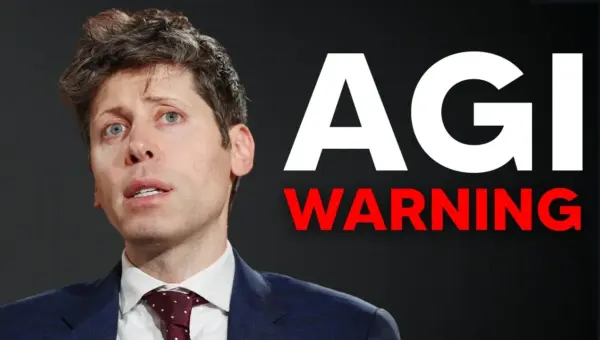
OpenAI Warns of Post-AGI World, Proposes Economic Overhaul
OpenAI has released a paper warning of massive job losses and societal upheaval following the advent of Artificial General Intelligence (AGI). The company proposes an overhaul of economic policy, including public wealth funds and robot taxes, to manage the transition. Concerns remain about OpenAI's leadership and its commitment to safety as AI development accelerates.