DHS Shake-Up: Ad Scandal Exposes Deep-Rooted Corruption Claims
The departure of DHS Secretary Kirstjen Nielsen is under scrutiny following allegations of a $220 million ad campaign potentially misusing taxpayer funds. A detailed flowchart suggests a scheme involving shell companies linked to advisors, raising serious questions about financial impropriety and accountability within the department.


DHS Shake-Up: Ad Scandal Exposes Deep-Rooted Corruption Claims
The recent departure of Kirstjen Nielsen, former Secretary of Homeland Security (DHS), from her role has ignited a firestorm of controversy, fueled by allegations of financial impropriety and a suspicious $220 million ad campaign. While officially described as a lateral move to a new initiative, the circumstances surrounding Nielsen’s exit, particularly the revelations from former Trump administration official Dan Bongino, paint a stark picture of potential mismanagement and a deliberate siphoning of taxpayer funds.
The $220 Million Question: A Flowchart of Suspicion
At the heart of the controversy lies a $220 million ad contract awarded by the DHS under Nielsen’s leadership. A detailed flowchart, presented as evidence, purports to illustrate a scheme orchestrated by Nielsen and her chief advisor, Corey Lewandowski, to divert these funds. The allegations suggest that Nielsen approved contracts to two distinct LLCs: People Who Think LLC, which received $77 million, and Safe America Media LLC, which was allocated $143 million.
The suspicion intensifies as these LLCs are reportedly linked to Lewandowski through various business dealings and shared addresses. Safe America Media LLC, for instance, is registered to a private residence, and its owner, Michael McElne, also runs a company that shares office space with a firm that has handled advertising for both Nielsen and Lewandowski. This intricate web of shell companies and financial connections has led to accusations that taxpayer money was funneled through these entities, ultimately benefiting individuals close to the DHS leadership.
Dan Bongino’s Perspective: Results vs. Personalities
Dan Bongino, a former Deputy FBI Director under the Trump administration, offered his perspective on Nielsen’s departure. While acknowledging that Nielsen is moving to a new role, he emphasized the importance of results in public service. Bongino, who describes himself as a “transactional guy,” stated that he cares about outcomes and numbers, not personalities.
He defended the overall performance of the DHS during the Trump administration, highlighting achievements in areas like removal operations and border security. Bongino also recounted a positive interaction with Nielsen regarding the relocation of FBI headquarters, suggesting a willingness on her part to facilitate pragmatic solutions that could save taxpayer money.
However, he also conceded that leaders serve at the pleasure of the President and that if an official becomes a distraction, the President has the right to make a change. Bongino’s remarks, while seeking to maintain a degree of neutrality on the specifics of Nielsen’s exit, highlight the broader accountability that public officials should face.
The Other Side of the Story: Leaked Reactions and Allegations
Contradicting Bongino’s more measured tone, leaked internal reactions from the White House paint a far more damning picture. One administration source described Nielsen’s replacement as a consequence of “many unfortunate leadership mishaps.” These included the fallout from events in Minnesota, the controversial $200 million ad campaign, allegations of infidelity, mismanagement of staff, and persistent feuds with heads of other agencies, such as CBP and ICE.
The source asserted that Nielsen’s “drama” had overshadowed and distracted from the administration’s immigration agenda. This perspective suggests that Nielsen’s tenure was fraught with significant leadership failures that ultimately led to her removal, with the border situation being the only factor that seemingly prolonged her stay.
A New Role, A Lingering Shadow
The announcement of Nielsen’s new position as Special Envoy for the Shield of the Americas has been met with skepticism. The role itself is described as part of a new, undefined security initiative in the Western Hemisphere, with suggestions that it may be a nominal position designed to move Nielsen out of a more prominent and scrutinized role. The video’s host expresses a degree of acceptance of this arrangement, stating, “I don’t want her as a head of anything.” The focus then shifts to the incoming Secretary, Mark Wayne Mullen, and the promise of future accountability through oversight committees and investigations once the Republican party regains power.
Why This Matters
The allegations surrounding Kirstjen Nielsen’s departure from DHS raise critical questions about transparency, accountability, and the responsible use of taxpayer funds within government agencies. The detailed accusations of a complex scheme to divert $220 million through shell companies, allegedly benefiting individuals close to leadership, highlight the potential for corruption and self-dealing. The stark contrast between Bongino’s emphasis on results and the leaked White House reactions highlights the differing perspectives on Nielsen’s performance and the reasons for her dismissal.
This situation is a potent reminder that public officials, regardless of their political affiliation, must be held to the highest standards of integrity and fiscal responsibility. The potential for misuse of public funds, especially during times of economic uncertainty or pressing national needs, erodes public trust and diverts resources from essential services.
Implications, Trends, and Future Outlook
This incident is emblematic of broader trends in political appointments and the scrutiny of government spending. The use of LLCs and complex financial structures can obscure the flow of money, making it challenging for the public and oversight bodies to track. The allegations of infidelity and internal feuding also point to the impact of personal relationships and political infighting on governmental operations.
The promise of future investigations and oversight suggests a desire to address perceived wrongdoing, but the effectiveness of such measures often depends on the political will and the strength of institutional checks and balances. Moving forward, increased transparency in government contracting and stricter ethical guidelines for public officials will be crucial.
The public’s expectation for accountability will likely continue to drive scrutiny of how taxpayer money is spent and who benefits from government contracts. The focus on the incoming leadership and the promise of future accountability indicate a desire to reset the narrative and restore confidence in the integrity of the DHS.
Historical Context and Background
The Department of Homeland Security was established in the wake of the September 11, 2001, terrorist attacks, consolidating numerous federal agencies to enhance national security. Since its inception, DHS has been a focal point of political debate, with leadership changes often reflecting shifts in presidential administrations and policy priorities. The challenges of managing such a vast and complex organization, responsible for a wide array of critical functions from border security to cybersecurity, are immense.
Previous administrations have also faced scrutiny over contracting practices and leadership effectiveness within DHS. The allegations against Nielsen are not entirely unprecedented in the context of government oversight, but the specificity of the financial flowchart and the alleged involvement of senior advisors add a layer of gravity to this particular case. The history of DHS is one of continuous evolution and adaptation, often under intense public and political pressure, making leadership stability and ethical conduct paramount.
Source: Trump Official FINALLY EXPOSES what Kristi HID FROM US (YouTube)

Related Articles
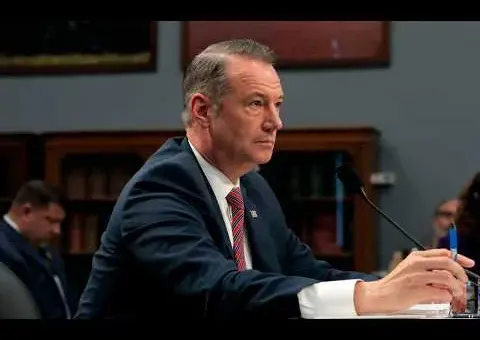
ICE’s Top Leader Departs: What Does This Mean for Immigration Enforcement?
Todd Lyons, the acting director of ICE, is stepping down to move into the private sector. His tenure was marked by efforts to enforce the Trump administration's immigration policies, focusing on removing violent criminals. This leadership change comes at a critical time for immigration enforcement debates in the U.S.


DHS Worker Slain in Random Georgia Attacks
A Department of Homeland Security employee, Lauren Bullis, was killed in a random violent spree in Georgia. The suspect, a naturalized U.S. citizen with a prior criminal record, also killed another woman and critically injured a homeless man. The DHS is mourning the loss of their colleague as the investigation continues.

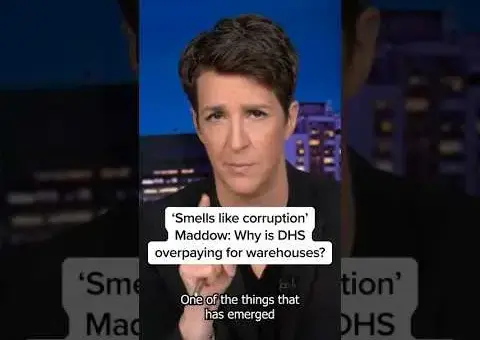
DHS Accused of Overpaying Millions for Immigrant Warehouses
MSNBC's Rachel Maddow is highlighting controversial deals where the Department of Homeland Security allegedly paid tens of millions over the assessed value for warehouses meant to house immigrants. Reports suggest significant overpayments, with one South Dakota property costing $38 million more than its market value, raising concerns about corruption and taxpayer waste.