Putin’s Grip Weakens: Internal Strife Rises Amidst Geopolitical Tensions
Vladimir Putin's regime faces unprecedented internal pressure as economic strain and elite infighting escalate. The Russian President is reportedly manufacturing external threats and domestic fear to consolidate power, while geopolitical maneuvers and crackdowns on dissent signal a weakening grip. Despite these efforts, Russia's ongoing losses in Ukraine cast doubt on the long-term stability of Putin's leadership.

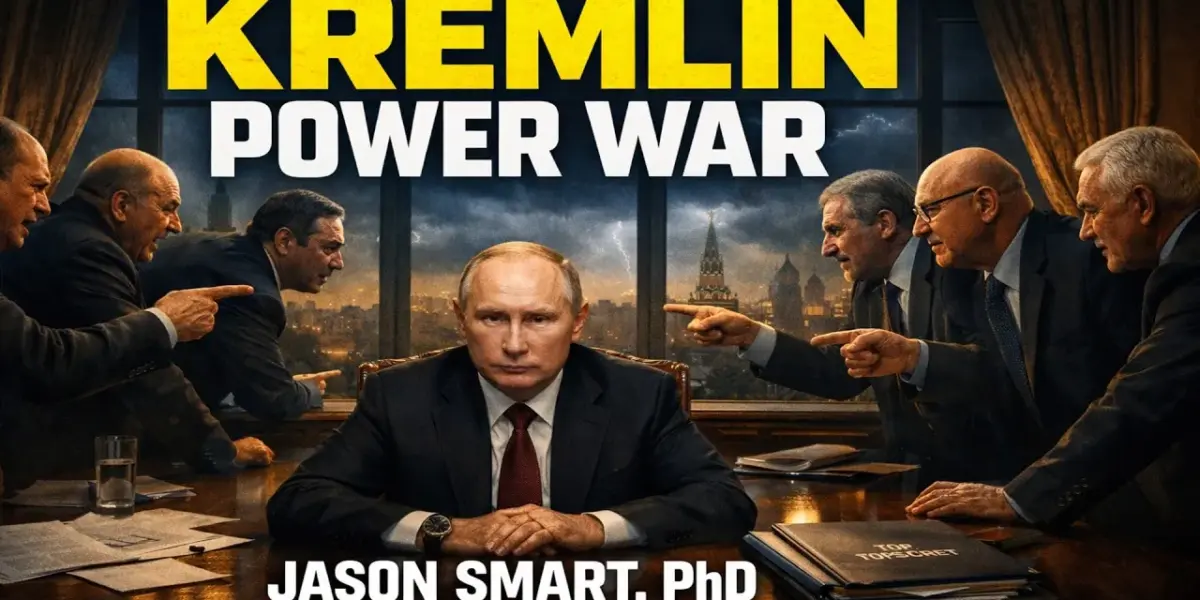
Kremlin Under Pressure as Economy Falters and Allies Flee
In what is being described as perhaps the most perilous period of his 26-year rule, Russian President Vladimir Putin faces mounting internal pressures that threaten the stability of his regime. The Russian economy is showing significant signs of strain, while the nation’s international standing appears to be eroding, with a noticeable decrease in its global allies. However, the most critical developments are unfolding within the Kremlin itself, where escalating tensions among the elite are beginning to surface, according to analysis from Dr. Jason Smart, a special correspondent and national security advisor.
Internal Divisions and Asset Seizures Plague Russian Elites
A significant source of internal friction stems from the oligarchal classes, who are reportedly no longer in accord with one another. This discord is exacerbated by issues within the Federal Security Service (FSB), which has allegedly been involved in seizing assets from elites. The scarcity of funds has led to a situation where there is “simply not enough money for everybody,” creating a climate of distrust and infighting among those at the top.
Putin’s Strategy: Manufacturing Fear to Consolidate Power
The stress on Russian society is not solely attributable to economic woes or external conflicts. Dr. Smart posits that the primary stressor is Vladimir Putin himself, who understands that his regime is under threat.
To counteract this perceived danger, Putin is employing a strategy of manufacturing a sense of crisis to solidify his control. This is evidenced by the widespread implementation of civil air raid alerts across Russia’s eleven time zones.
“Why across 11 time zones should they do these air raid alerts? It’s because they want the population to fear. They want the population to believe that they too could soon be under attack.”
This tactic, Dr. Smart explains, is part of a broader historical pattern employed by Russian leadership. “If in doubt, consolidate control. Always use the justification of an external enemy and internal traitors,” he stated, describing Putin’s current approach to maintaining power.
Geopolitical Maneuvering: Iran, Nuclear Threats, and Military Expansion
The Kremlin appears to be actively creating its own external challenges to justify internal crackdowns and strengthen its geopolitical standing. The situation involving Iran is a prime example.
Despite public attempts to distance itself, Russia is reportedly providing assistance to Iran, a claim corroborated by Iran’s Foreign Minister in an interview on NBC. Evidence of this support includes the discovery of drones with Russian components used in attacks on American and European facilities in the Middle East.
Putin continues to leverage the threat of nuclear war as a potent tool. This long-standing tactic preys on Western anxieties and provides him with a justification for significant military build-ups.
A recent decree has expanded the Russian armed forces to 2,400,000 personnel, including 1,500,000 military members. While this expansion could facilitate large-scale conflict, Dr. Smart suggests an alternative motive:
“Or is it because Vladimir Putin wants to pick up young men from the streets to make sure there’s nobody to rebel against him?”
Censorship and Crackdowns: Silencing Dissent
In parallel with military expansion and external posturing, the Putin regime is intensifying domestic censorship and crackdowns on communication. The blocking of Telegram, a platform widely used by Russian units for communication due to the unreliability and insecurity of Soviet-era radios, highlights this trend. Dr. Smart questions the official reasoning behind this move:
“So what was the real reason for that? Was that really though because they care about what the population of Russia thinks? Or is it because they fear the soldiers could coordinate with each other against the government?”
This crackdown is framed as a security measure to root out “enemies” and “threats,” drawing parallels to Soviet propaganda of the 1920s and 1930s that normalized the idea of a nation besieged by external enemies and internal saboteurs.
Historical Narratives and Population Control
Putin’s regime draws heavily on historical narratives to shape public perception and control the population. The emphasis on World War II, particularly Victory Day on May 9th, is a constant reminder of past sacrifices and potential future threats. This narrative, Dr. Smart argues, is intended to make the population contemplate the possibility of their own cities being attacked, thereby making them more amenable to government control.
The government’s actions, such as branding individuals as “foreign agents,” are described not as security measures but as purges designed to eliminate dissent. The increasing difficulty for citizens to live normal lives, coupled with the encouragement for non-conformists to leave the country, indicates a deliberate effort to create a more compliant populace.
Shifts in the Inner Circle: Purges and Paranoia
Recent high-profile personnel changes within the Kremlin suggest a heightened state of paranoia and internal purges. The replacement of Patrushev, a long-time Putin associate, and the arrests of top deputies of former Defense Minister Sergey Shoigu, a personal friend of Putin’s, have sent ripples of fear throughout the elite. The implication is clear: if even those close to Putin are not safe, then no one is secure.
“If somebody who is a personal friend like Shuygo is no longer safe, his top deputies are no longer protected. Everybody understands that is open hunting and nobody is going to be safe inside of Russia.”
Regional Conflicts as Distraction and Strategic Advantage
Putin appears to be strategically leveraging regional conflicts, such as those in the Caucasus involving Armenia and Azerbaijan, to divert international attention away from Russia’s actions and internal issues. These volatile regions, where Russia and Iran hold significant influence, could serve as powder kegs that draw global focus elsewhere. Ongoing attacks within Iran may indirectly benefit Russia by potentially limiting the supply of weapons to Ukraine, prolonging a war that Putin calculates is increasingly advantageous for Russia as Western supplies dwindle.
Questions Surrounding Putin’s Health and Disconnection
Recent observations have fueled speculation about Vladimir Putin’s health and his direct involvement in the ongoing crisis. Videos of his public appearances have raised questions due to apparent distortions and his infrequent public presence, leading to theories ranging from him living in fear in a bunker to his potential absence from public life. Dr. Smart suggests a more likely scenario: Putin’s increasing detachment from the day-to-day realities of the situation, delegating responsibilities to his deputies while remaining physically distant from Moscow.
The Future: A Reactive Regime and Lingering Weakness
The current trajectory indicates a Russian regime that is becoming increasingly reactive rather than proactive. The manufactured crises, civil defense measures, and military mobilizations are all aimed at conditioning the public and normalizing a heavily militarized society.
While these actions are presented as measures to ensure security, they are more indicative of a society becoming increasingly closed and controlled. Despite Putin’s assertions and actions, the fundamental reality remains that Russia is losing the war in Ukraine, a fact that highlights the inherent weakness of his increasingly brittle regime.
Source: Putin’s Inner Circle Fracturing (YouTube)

Related Articles

Bitcoin Drops Amid Geopolitical Tensions, DeFi Hack
Bitcoin has fallen below $78,000 due to escalating geopolitical tensions in the Middle East and a major DeFi hack. The market faces uncertainty as traditional exchanges prepare to open, with regulatory news also adding to concerns.

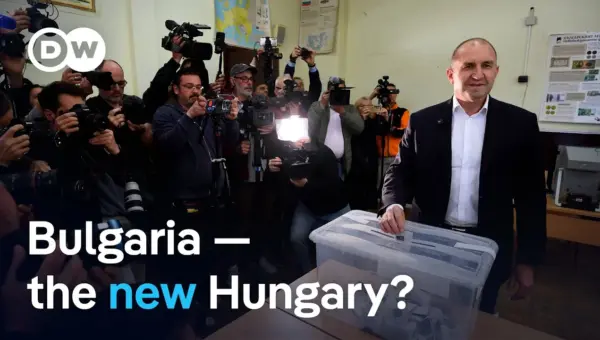
Bulgaria Votes: EU’s Poorest Nation Faces Moscow vs. Brussels Choice
Bulgarians are voting in a critical election that could redefine their country's ties with Russia and the West. With a pro-Russian former president leading the polls, concerns are rising in Brussels and NATO about the nation's geopolitical future and its susceptibility to Russian influence. Domestic issues like corruption and economic hardship also play a significant role in voters' decisions.

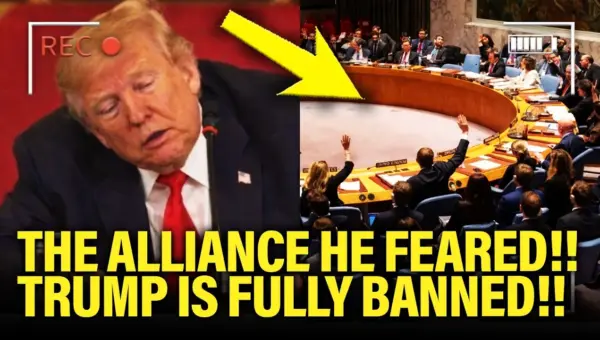
Global Leaders Shun Trump, Forge New Alliances Abroad
World leaders are increasingly excluding Donald Trump from international conferences, signaling a global pushback against his movement. Nations are exploring new alliances and security frameworks independent of the U.S., driven by concerns over American reliability and the rise of right-wing ideologies.