MAGA Fractures: War Divides Trump Loyalists and Fuels Rebellion
Donald Trump's public attacks on Tucker Carlson over the Iran conflict have exposed deep fissures within the MAGA movement. Influential figures are rallying behind Carlson, questioning Trump's "America First" credentials and prioritizing domestic economic concerns over foreign intervention. This internal rebellion signals a potential ideological realignment within the conservative base.

MAGA Fractures: War Divides Trump Loyalists and Fuels Rebellion
The political landscape surrounding Donald Trump and his MAGA movement is experiencing a seismic shift, not from external pressures, but from internal dissent ignited by the specter of war. In a dramatic turn of events, Trump himself has launched a sharp, public critique against some of his most prominent allies, including conservative firebrand Tucker Carlson, over their stance on a potential conflict with Iran. This intra-MAGA conflict signals a growing ideological fissure, with implications that could reshape the movement’s future and its appeal to its core base.
Trump vs. Carlson: A Clash of Ideologies
The catalyst for this internal strife appears to be the escalating tensions with Iran. Tucker Carlson, a highly influential figure within the MAGA ecosystem, has vocally condemned any military engagement, describing it as “absolutely disgusting and evil.” In response, Donald Trump, in an interview with ABC’s Jonathan Karl, not only dismissed Carlson’s views but questioned his intelligence and loyalty to the MAGA agenda. Trump asserted that MAGA stands for “saving our country,” “making our country great again,” and “America First,” implicitly arguing that Carlson’s anti-war stance deviates from these core tenets.
Trump’s public repudiation of Carlson is a bold move, given Carlson’s significant reach and influence among the very base Trump seeks to mobilize. This public spat suggests a deeper divergence: while Trump may be signaling a willingness to engage in military action, Carlson and a segment of his audience appear to prioritize an isolationist, non-interventionist foreign policy, a stance often associated with traditional conservative and libertarian thought, but now finding traction within parts of the MAGA movement.
The MAGA Base Reacts: Support for Carlson, Scrutiny for Trump
The fallout from Trump’s criticism has been swift and significant. Marjorie Taylor Greene, a prominent MAGA congresswoman, has publicly sided with Tucker Carlson, directly challenging Trump’s leadership and his understanding of the MAGA movement. Greene’s critique is particularly pointed, accusing Trump of abandoning the “America First” principle in favor of “donor first” interests and suggesting that the movement has shifted from “Make America Great Again” to “Make Israel Great Again.”
Her statements highlight a growing concern among some MAGA supporters about the financial implications of foreign entanglements. Greene points to the staggering cost of a potential war with Iran—estimated at $1 billion per day—contrasting it with domestic economic anxieties such as the impending bankruptcy of Social Security, the unaffordability of healthcare, and the struggle of families to make ends meet on a single income. This framing suggests a re-evaluation of MAGA priorities, where domestic economic well-being is being pitted against costly overseas military interventions.
This sentiment is echoed by other MAGA-aligned figures and influencers. Podcasters like Andrew Scholes and Tim Pool have voiced skepticism and criticism, questioning Trump’s rhetoric about the nation’s missile capabilities and the efficacy of military actions.
Scholes points out the potential depletion of crucial missile defense systems, raising concerns about national security and the sustainability of such conflicts. Pool, while acknowledging the need to address Iran’s nuclear program, questions the narrative of a swift, decisive victory, suggesting that the current conflict signifies a failure of initial objectives and a slide into a protracted engagement.
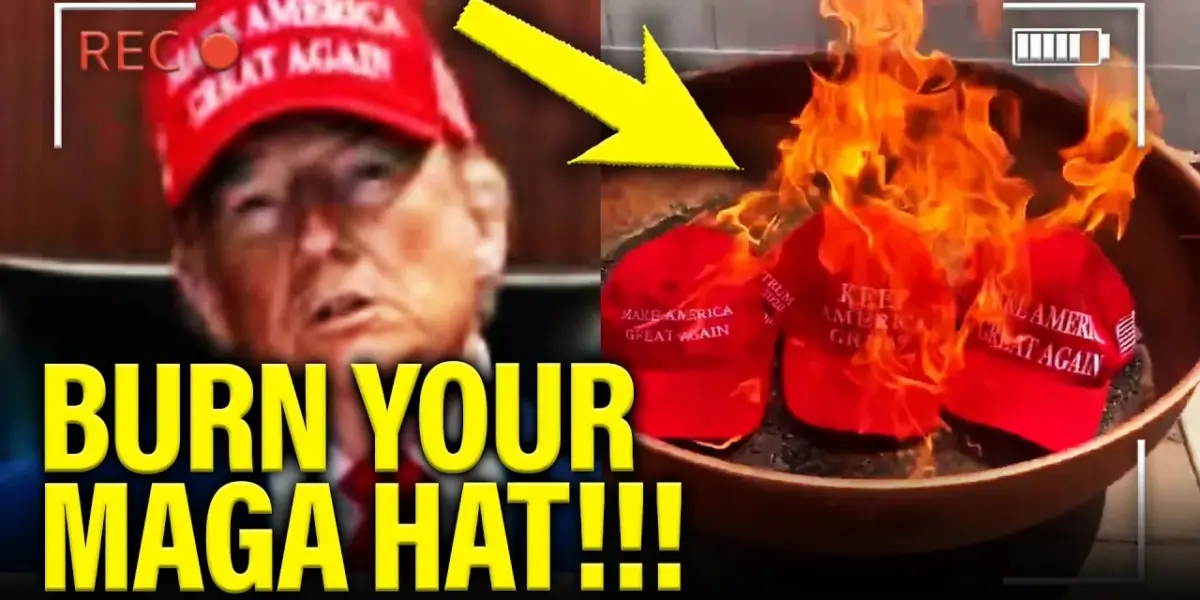
The visual of “three-time Trump voters” removing their Trump stickers and expressing frustration over rising gas prices, as mentioned in the transcript, further underscores this disconnect. It suggests that for a portion of the base, economic pain and a perceived lack of tangible benefit from foreign policy decisions are beginning to outweigh loyalty to the former president.
Media Echoes and Economic Anxieties
The narrative of economic hardship and public dissatisfaction is also being amplified by media outlets, including Fox News, which, despite its general alignment with conservative viewpoints, has reported on concerning economic indicators. Polls cited indicate that a significant majority of Americans, including Trump supporters, feel he is focused on the wrong issues.
Data showing a record number of people tapping into their 401(k)s and a large percentage of the population viewing their financial situation as “fair or poor” provides a stark backdrop to discussions of war spending. This economic anxiety creates fertile ground for anti-war sentiment, especially when juxtaposed with the perceived neglect of domestic needs.
Historical Context and the “Predatory Hegemon”
The current internal debate within MAGA can be contextualized by a broader historical pattern of American foreign policy and its domestic reception. For decades, debates have raged over interventionism versus isolationism, with significant segments of the populace often expressing war-weariness and skepticism about the costs and benefits of overseas military commitments. The MAGA movement, at its inception, tapped into a vein of this sentiment, promising to prioritize “America First” and questioning the value of global entanglements.
However, the transcript touches upon a more critical perspective, describing the U.S. As a “predatory hegemon” that seeks to extract maximum benefit from every relationship, leading to international backlash. This view suggests that the current foreign policy, regardless of who is in power, is perceived by global actors as self-serving and exploitative, further alienating allies and potentially pushing middle powers to unite against American dominance. This framing challenges the very notion of “America First” if it leads to global isolation and perpetual conflict.
The War’s Human and Strategic Costs
Beyond the political and economic arguments, the transcript raises deeply disturbing ethical and strategic concerns. Reports of potential war crimes, such as U.S. forces possibly striking an Iranian girls’ elementary school, highlight the devastating human cost of conflict. The mention of AI’s potential role in such strikes introduces a chilling new dimension, raising questions about accountability and the ethical implications of autonomous weapons systems in warfare.
Strategically, the conflict is depicted as indirectly benefiting Russia by depleting U.S. Missile stocks that could otherwise support Ukraine. This raises questions about the efficacy and coherence of U.S. Foreign policy objectives, suggesting that actions taken in one theater may inadvertently undermine crucial efforts in another. The apparent failure to replenish strategic oil reserves before engaging in a Middle Eastern conflict is cited as a significant oversight, leaving the U.S. Exposed to rising energy prices and economic instability.
Why This Matters
The internal schism within the MAGA movement over the war in Iran is more than just a political spat; it represents a potential ideological realignment. It challenges the monolithic image of Trump’s base and reveals deep-seated anxieties about economic security, the role of the U.S. In the world, and the very definition of “America First.” If a significant portion of the MAGA base begins to prioritize domestic well-being over interventionist foreign policy, it could force a re-evaluation of political platforms and priorities across the spectrum. The conflict also highlights the persistent tension between military engagement and the economic realities faced by ordinary Americans, a tension that has historically been a powerful force in shaping public opinion and political outcomes.
Implications, Trends, and Future Outlook
The current internal dissent within MAGA suggests a trend toward greater scrutiny of foreign policy decisions by segments of the conservative base. This could lead to a more pronounced isolationist or non-interventionist wing within the Republican party, potentially challenging traditional hawkish stances. The focus on economic hardship as a reason to oppose war could become a more prominent talking point, resonating with voters who feel left behind by globalist policies.
The future outlook for the MAGA movement hinges on how this ideological battle is resolved. If Trump can reassert his dominance and rally his base behind his foreign policy, the movement might weather this storm.
However, if voices like Carlson and Greene continue to gain traction, it could signal a fracturing of the movement, with different factions pulling in opposing directions. This could lead to a less predictable and more internally conflicted Republican party, with significant implications for future elections and U.S. Foreign policy.
The transcript’s concluding sentiment—that MAGA is turning against the current regime—highlights a critical juncture. The movement, built on a promise of radical change and a rejection of established norms, now faces its own internal crisis of identity and purpose, driven by the age-old debate of war versus peace and its tangible impact on the lives of everyday Americans.
Source: Trump LOSES IT as MAGA COLLAPSES over WAR!! (YouTube)

Related Articles
Trump’s ‘No Tax on Tips’ Policy Born from Waitress’s Plea
A waitress's simple plea to not tax her tips inspired a popular policy that continues to benefit working Americans. Stephen Moore highlights this and other tax measures, alongside strong market fundamentals and potentially falling gas prices, as key drivers of economic strength. Meanwhile, a nomination for the Federal Reserve faces partisan opposition.
Ex-Officer Slams Trump’s Jan 6 Pardon Moves as Rule of Law Insult
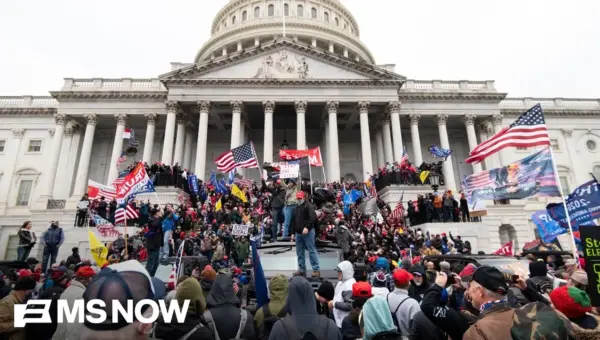
Former D.C. police officer Michael Fanone strongly criticized the Justice Department's decision to drop convictions for 12 Proud Boys and Oath Keepers involved in the January 6th Capitol attack. He called the move an "insult" and accused Donald Trump of "spitting in the face of the rule of law" and law enforcement. Fanone warned that pardoning political violence normalizes it, making the country less safe.
Trump’s J.D. Vance Game: Humiliation or Strategy?
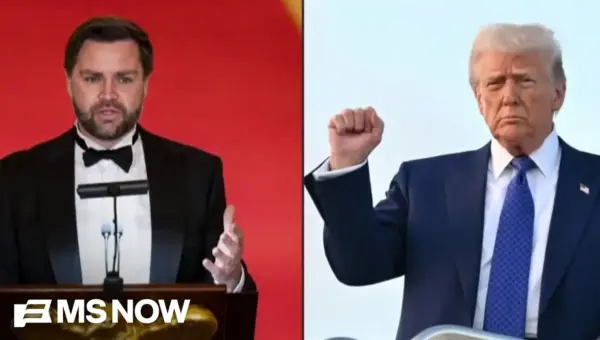
Conflicting reports about J.D. Vance's involvement in Iran talks created significant confusion, with Donald Trump initially excluding him, only for officials to later confirm Vance's leadership role. Commentators speculate this is part of a strategy by Trump to test Vance or potentially humiliate him, while also elevating Jared Kushner. Vance's own public statements suggest anxiety about aligning with the war, possibly to protect future political ambitions.