Trump’s Iran Gambit: War as a Distraction Tactic?
An analysis scrutinizes Donald Trump's escalation of military action against Iran, questioning if it served as a strategic distraction from domestic issues like the Epstein files. The piece contrasts his actions with his peace pledges and highlights concerns over unpredictable leadership and potential insider trading.

Trump’s Iran Gambit: War as a Distraction Tactic?
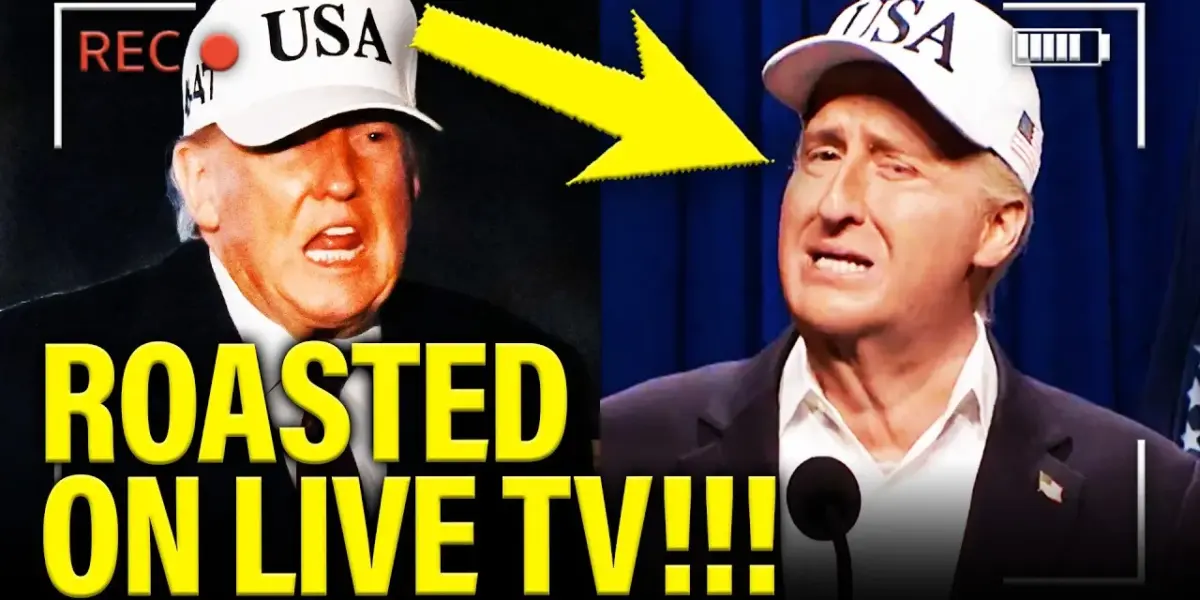
The political landscape is a theater of the absurd, and sometimes, the most biting satire isn’t found in a comedy sketch but in the stark reality of political pronouncements. A recent analysis, drawing parallels with a Saturday Night Live cold open, suggests that former President Donald Trump’s sudden escalation of military operations against Iran was less about national security and more about a calculated move for damage control. This perspective argues that the timing of the military action, coinciding with renewed attention on the Epstein files, points towards a deliberate strategy to divert public attention from inconvenient truths.
The ‘Bored of Peace’ Paradox
SNL’s satirical portrayal captured a core criticism: Trump’s rhetoric often positions him as a peacemaker, yet his actions, like announcing major combat operations with the fanfare of a pay-per-view event, seem contradictory. The sketch humorously highlights this by having a Trump-esque character declare he was “bored of peace,” a line that, while comedic, unnervingly reflects a potential perception of stability as a mere lull in the action, rather than a desired state. This sentiment echoes the historical pattern of leaders using external conflicts to unify domestic support or distract from internal vulnerabilities.
The Ever-Present ‘Two Weeks Away’ Timeline
A recurring justification for military action against Iran, as noted in the analysis, has been the imminent threat of nuclear proliferation. The phrase “two weeks away from developing a nuclear weapon” has been a persistent talking point for years, often attributed to figures like Israeli Prime Minister Benjamin Netanyahu.
The transcript highlights the absurdity of this protracted timeline, suggesting it has been recycled for so long it’s practically “qualify for social security.” This repeated, yet seemingly never-realized, threat raises questions about the genuine urgency versus its utility as a pretext for military engagement. The analysis posits that this familiar narrative, when deployed during politically sensitive moments, is a convenient smokescreen.
Campaign Promises vs. Presidential Actions
The analysis draws a sharp contrast between Trump’s campaign promises of ending foreign wars and his administration’s approach to new military engagements. His pledge to avoid “new foreign wars” is dissected as a promise that, under scrutiny, appears to have an asterisk. The idea of being “allowed to do one” war, or even “wars plural,” transforms a clear commitment into a malleable disclaimer.
This perceived shift from an anti-war candidate to one initiating military action underscores a broader trend in political communication where campaign rhetoric can diverge significantly from governing actions. The transcript points to Trump’s own past statements: “I’m not going to start a war. I’m going to stop wars,” and “No more wars.
No more disruptions. We will have prosperity and we will have peace.” The current situation is framed as a direct challenge to these very promises.
The ‘It Is What It Is’ Management Style
A significant critique leveled against Trump’s leadership style is its apparent unpredictability and casual approach to serious matters. The analysis highlights a dismissive attitude towards potential casualties, characterized by the phrase “That’s the way it is.” This sentiment, when juxtaposed with the gravity of military conflict, suggests a detachment from the human cost of war. The SNL sketch humorously, yet pointedly, suggests that this approach is not a deviation from Trump’s character but rather a core aspect of it, intended to inform his supporters that “this is who he is.” The comparison to a “box of chocolates” or a “snow globe” illustrates a perceived chaotic and unpredictable governing style that, while appealing to some as a disruptive force, becomes dangerous when coupled with actual power.
The Specter of Insider Trading
Beyond the geopolitical implications, the analysis brings to light concerning financial activities surrounding the Iran escalation. The transcript points to suspicious insider trading on betting markets, with significant profits made on bets placed just minutes before the news of the military operation broke publicly.
The involvement of Donald Trump Jr. On the advisory board of the platform and his firm’s substantial investment further fuels these suspicions. This alleged insider trading adds another layer of complexity, suggesting that not only might the war have been initiated for political distraction, but it may have also presented financial opportunities for those close to power.
Scapegoating as Policy
The role of then-Secretary of Defense Pete Hegseth is presented as emblematic of Trump’s management style. The act of handing off blame to Hegseth, as suggested by the transcript, is characterized as the most honest sentence in the cold open.
This illustrates a pattern: launch a reckless initiative, claim credit if successful, and then point to a subordinate if it fails. The analysis describes Hegseth’s persona as a caricature of aggressive, unthoughtful action, embodying the “tailgate energy” over “we’ve thought this through energy.” The naming of the operation, “Epic Fury,” and its association with potential knuckle tattoos, further underscores a perceived unseriousness and a focus on bravado over strategy.
The GameCube Defense and Unpredictability
Even amidst discussions of war and international conflict, Trump’s tendency to pivot to his personal opinions and tangential interests is highlighted. His defense of the Nintendo GameCube, a seemingly random interjection during a discussion about military operations, is cited as a prime example of his “on brand” unpredictability.
This ability to derail serious moments with personal anecdotes or opinions, as demonstrated in the transcript, reflects a governing style that is more stream-of-consciousness than strategic. The admitted fear and uncertainty expressed by a character representing the administration (“I am scared and I don’t know what I’m doing”) highlights the anxiety that such unpredictability can generate, particularly when dealing with matters of life and death.
Accountability and Externalizing Blame
The analysis concludes by examining the selective application of justice and accountability. While the administration is quick to condemn and act against “horrendous, horrible leaders” oppressing their people, the transcript notes Trump’s apparent reluctance to have the same logic applied to himself. The rhetoric of justice is embraced when it points outward, but when accountability at home is suggested, the focus shifts to “overreach.” This selective application of principles raises concerns about a leadership that externalizes blame and avoids introspection, particularly in high-stakes situations like military conflict.
Why This Matters
The core of this analysis is the unsettling proposition that significant geopolitical decisions, such as initiating military action, may be driven by internal political calculations and the need to manage public perception rather than purely by strategic necessity. The repeated use of the “two weeks away” narrative, the apparent contradiction with campaign promises, and the financial entanglements all suggest a complex web of motivations.
The analysis is a critical examination of how political leaders might leverage conflict for personal or party gain, a practice that carries profound implications for international stability, democratic accountability, and public trust. The casual dismissal of casualties and the embrace of unpredictability, while perhaps entertaining in a satirical context, are deeply concerning when they manifest in real-world policy decisions with potentially devastating consequences.
Implications, Trends, and Future Outlook
The trend of using external conflicts for internal political advantage is not new, but the analysis suggests it is being executed with a heightened awareness of media cycles and public distraction. The ease with which certain narratives are deployed, the speed at which blame can be shifted, and the potential for financial impropriety all point to a mature, albeit cynical, understanding of political maneuvering.
The future outlook suggests a continued tension between the need for clear, strategic foreign policy and the allure of using international crises to shape domestic narratives. Voters and observers are left to discern between genuine threats and manufactured emergencies, a task made increasingly difficult by the sophisticated use of media and political messaging.
Historical Context
Throughout history, leaders have often turned to foreign policy adventures to strengthen their standing at home. From the “rally around the flag” effect during times of international tension to the use of external enemies to unify a divided populace, the strategy is well-documented. However, the current era, with its 24/7 news cycle, social media amplification, and sophisticated data analytics, allows for a more rapid and targeted deployment of such tactics.
The analysis implicitly references this history by framing Trump’s actions not as entirely novel, but as a contemporary iteration of an age-old political playbook, adapted for the digital age. The reference to the “Epstein files” specifically taps into a contemporary zeitgeist of conspiracy and hidden truths, making the distraction argument particularly potent.
Source: Trump Faces ULTIMATE HUMILIATION on TV over WAR (YouTube)

Related Articles
Trump’s Iran Claims Fizzle Amidst Reality Check
Donald Trump's announcement of a deal to open the Strait of Hormuz has been met with skepticism, as evidence suggests the situation remains under Iranian control. Shipping data and Iranian officials contradict claims of a fully open passage, raising questions about misinformation and market manipulation.
Media Ignores Iran Win, Favors Fear Over Facts
Recent reports highlight media's tendency to downplay significant diplomatic wins, like Iran's uranium deal, while focusing on market impacts. This selective coverage, coupled with ongoing debates about surveillance laws like FISA and the rise of progressive politics, raises questions about how crucial information is presented and perceived by the public.
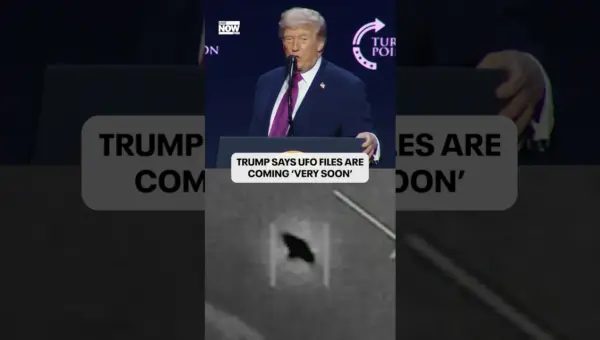
Trump Promises UFO Files Release ‘Very Soon’
Former President Donald Trump announced that government files on UFOs and unexplained aerial phenomena will be released "very, very soon." The review process, initiated during his presidency, has uncovered "very interesting documents." The upcoming disclosures are expected to offer the public a closer look at information previously kept classified.