Nikole Hannah-Jones: Trump’s Vision Echoes Founding Fathers’ Intent
Pulitzer Prize winner Nikole Hannah-Jones argues that Donald Trump's definition of American identity aligns with the original vision of the nation's white founders. Speaking on "Clock It with Symone and Eugene," she suggests this historical continuity challenges notions of Trump's politics being a radical departure from American tradition.

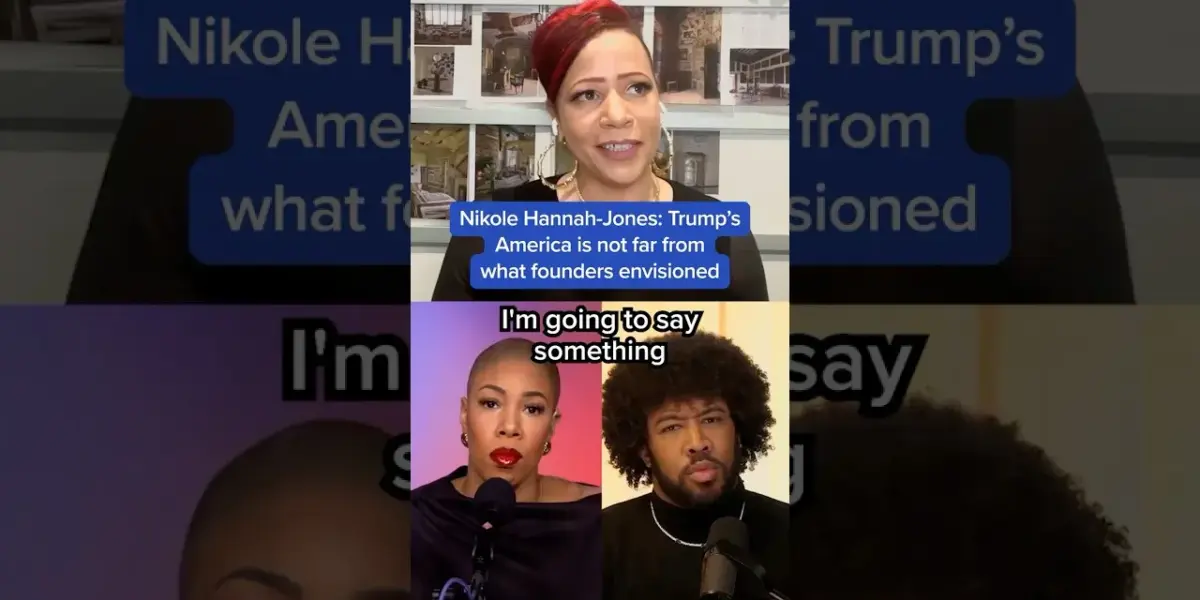
Hannah-Jones: Trump’s America Aligns with Founders’ Vision
Pulitzer Prize-winning journalist Nikole Hannah-Jones has asserted that the current political climate under Donald Trump is not a radical departure from, but rather an unsettling echo of, the vision held by the United States’ founding fathers. Speaking on the latest episode of “Clock It with Symone and Eugene,” Hannah-Jones, renowned for her work on “The 1619 Project,” argued that the Trump administration’s definition of American identity bears a striking resemblance to the intentions of the nation’s founders.
Defining the American Identity
During the discussion, Hannah-Jones directly addressed the way the Trump administration has sought to define who an “American” is. She posited that this definition, often characterized by appeals to a specific historical and cultural narrative, would find significant agreement with the original architects of the nation. “The official white founders would not be in disagreement with Donald Trump and how Donald Trump is defining who Americans are,” Hannah-Jones stated, suggesting a continuity in exclusionary ideals that have persisted throughout American history.
This perspective challenges the common notion that Trump’s political rhetoric and policies represent a complete break from American tradition. Instead, Hannah-Jones suggests a more complex and perhaps more disturbing reality: that these ideas are deeply embedded in the nation’s origins. Her argument implies that the founders’ vision was not universally inclusive but was, in fact, predicated on a specific, often racialized, understanding of citizenship and belonging.
“The 1619 Project” and Historical Context
Hannah-Jones’s remarks draw directly from the core tenets of “The 1619 Project,” which reframes American history by placing the consequences of slavery and the contributions of Black Americans at the center of the national narrative. The project argues that many of the nation’s foundational ideals, while espoused as universal, were initially conceived within a framework that excluded large segments of the population, particularly enslaved Africans and their descendants.
By drawing this parallel between Trump’s rhetoric and the founders’ vision, Hannah-Jones is not merely criticizing a contemporary political figure. She is engaging in a broader critique of American historiography and the selective memory that often sanitizes the nation’s past. Her work consistently seeks to confront the uncomfortable truths about America’s founding and the enduring legacy of its original sins.
Broader Implications and Historical Debate
The assertion that Trump’s America is not far from what the founders envisioned has significant implications for understanding contemporary political divisions and the ongoing debates surrounding national identity. It suggests that the tensions and conflicts we witness today are not entirely new but are, in part, a manifestation of unresolved historical grievances and foundational contradictions.
This perspective invites a deeper examination of the historical context in which the United States was formed. The founders, while articulating ideals of liberty and equality, simultaneously established a society built upon the institution of slavery and the subjugation of indigenous peoples. The “official white founders,” as Hannah-Jones refers to them, operated within a worldview that did not extend full personhood or citizenship to all inhabitants of the new nation.
“The official white founders would not be in disagreement with Donald Trump and how Donald Trump is defining who Americans are.”
– Nikole Hannah-Jones
Hannah-Jones’s argument encourages a critical re-evaluation of historical narratives that often emphasize progress and exceptionalism while downplaying or ignoring the persistent struggles for inclusion and justice. By linking Trump’s approach to identity with the founders’ original intent, she compels audiences to confront the possibility that certain exclusionary impulses have been present from the nation’s inception and continue to shape its present.
Audience and Reception
The discussion took place on “Clock It with Symone and Eugene,” a platform that engages with pressing social and political issues. The show, available on YouTube and various podcast platforms, provides a space for in-depth conversations with prominent figures like Hannah-Jones. Her participation highlights the platform’s commitment to exploring complex topics with nuance and intellectual rigor.
The reception to such arguments often sparks vigorous debate. Critics of “The 1619 Project” and similar historical interpretations argue that they are overly critical of American history and undermine national unity. Conversely, supporters contend that these perspectives are essential for a more honest and complete understanding of the nation’s past and its ongoing challenges.
Looking Ahead
Nikole Hannah-Jones’s latest commentary is a powerful reminder of the ongoing relevance of historical interpretation in understanding contemporary American politics. As political discourse continues to grapple with issues of identity, belonging, and the very definition of what it means to be American, her insights offer a critical lens through which to view these debates. The connection she draws between the Trump era and the founders’ vision suggests that the struggle to reconcile America’s founding ideals with its lived realities remains a central and defining characteristic of the nation’s journey.
Source: Nikole Hannah-Jones: Trump's America is not far from what founders envisioned (YouTube)

Related Articles

Trump’s Economy: Vegas Gamble or Real Recovery?
President Trump's economic message faces headwinds as polls show most Americans feel the economy is struggling, despite stock market highs. A "K-shaped" economy and global conflicts like the Iran war add to the challenges. Meanwhile, debates rage over accountability in Congress and shifting US public opinion on foreign policy.


Trump’s Iran Claims Crumble Under Scrutiny
Recent claims by Donald Trump about a deal with Iran have been met with direct contradictions from Iranian officials and observations of the Strait of Hormuz. Suspicions of market manipulation have also arisen due to large oil trades preceding Trump's announcement.


Trump’s Iran Claims Fizzle Amidst Reality Check
Donald Trump's announcement of a deal to open the Strait of Hormuz has been met with skepticism, as evidence suggests the situation remains under Iranian control. Shipping data and Iranian officials contradict claims of a fully open passage, raising questions about misinformation and market manipulation.