Trump’s Texas Gambit Signals GOP’s Deepening Crisis
Donald Trump's intervention in the Texas Senate primary reveals a GOP grappling with internal divisions and the evolving power of his brand. The potential endorsement of a less MAGA candidate signals a desperate attempt to secure victory, exposing the liabilities of Trumpism as Republicans face critical elections.

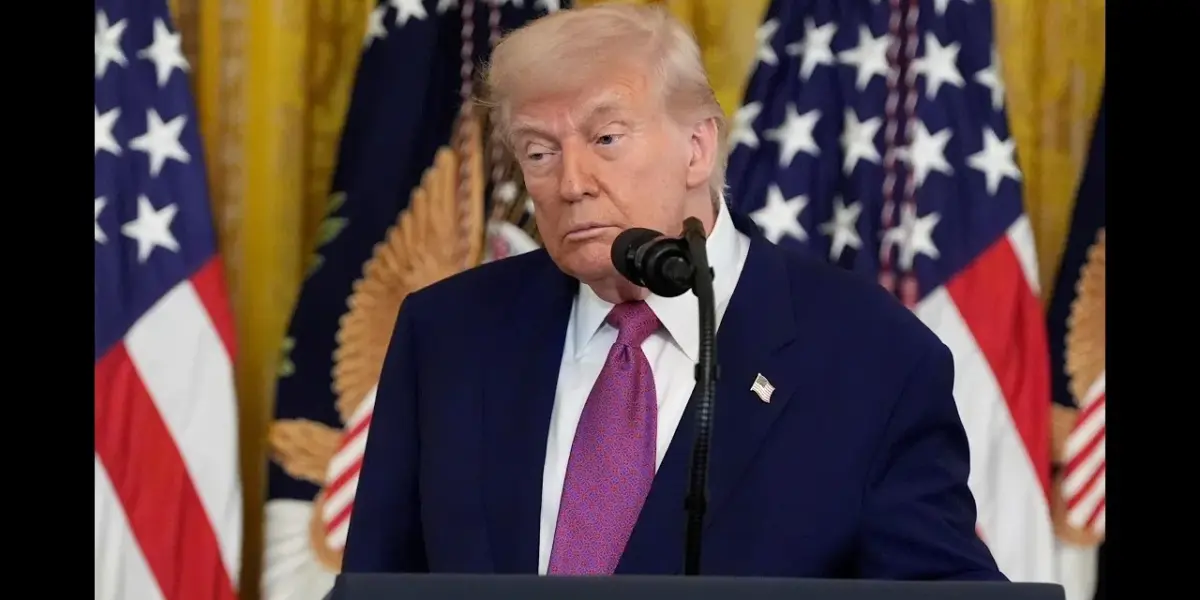
Trump’s Texas Gambit Signals GOP’s Deepening Crisis
In a dramatic intervention that highlights the growing anxieties within the Republican party, Donald Trump has issued a forceful directive aimed at consolidating power and mitigating perceived threats to GOP electoral success. Following the failure of both John Cornyn and Ken Paxton to secure a majority in the Texas Senate Republican primary, forcing a runoff, Trump took to Truth Social to declare the race must end. His announcement reveals a complex and perhaps desperate strategy, one that could expose the vulnerabilities of his own brand and the broader Republican establishment as they head into critical upcoming elections.
A Party Divided, A Leader’s Gamble
The situation in Texas is more than just a local primary contest; it’s a microcosm of the internal struggles plaguing the Republican party. The runoff between Cornyn and Paxton, two prominent figures within the state’s GOP, has already cost tens of millions of dollars and promises to further inflame divisions among the party’s base. The prospect of a protracted, expensive battle is a significant concern, especially with a formidable Democratic opponent, James Telerico, emerging as a potentially strong contender.
Telerico’s candidacy has sent ripples of concern through Republican circles. Described as potentially dangerous and capable of significant fundraising, he presents a challenge that has even seasoned Republicans like Cornyn admitting apprehension. The fact that Telerico is polling neck-and-neck with Paxton, the candidate widely considered the more extreme, MAGA-aligned figure, is particularly telling.
This dynamic has led to the most surprising element of Trump’s intervention: his stated intention to endorse one candidate and demand the other immediately withdraw. The irony, as noted, is that Trump is likely to endorse Cornyn, the less overtly MAGA candidate, over Paxton, the self-proclaimed MAGA champion.
The Shifting Sands of Trump’s Influence
This potential endorsement of Cornyn over Paxton is being interpreted not as a strategic masterstroke, but as a public capitulation. It suggests that Trump himself recognizes his brand, while still potent, is becoming a liability. In an effort to secure a broader majority in November, Trump may be forced to work against his own movement’s perceived extremism, a stark acknowledgment that the MAGA ideology, and by extension Trump himself, is alienating a significant portion of the electorate.
The transcript posits that Trump’s actions are not about unifying the party or serving the electorate, but about self-preservation and reinforcing his image as a kingmaker. However, the author argues this is a flawed strategy.
Instead of a win, it will be a public admission that his acolytes and the broader MAGA movement are a burden. This is seen as a consequence of a “devil’s bargain” struck by Republicans seeking Trump’s favor, a bargain that now saddles them with immense baggage as they face voters.
Historical Context: The Perils of Loyalty
The current predicament echoes historical instances where political figures have become so dominant that their personal brand eclipses the party’s broader platform. The Republican party, particularly in its embrace of Trump, has elevated loyalty to the individual above traditional party tenets. This has created a situation where candidates often find themselves tethered to Trump’s approval ratings and controversies, regardless of their own merits or the specific needs of their constituents.
The midterms, often a referendum on the sitting president, are increasingly becoming a referendum on Donald Trump, even when he is not in office. This trend places Republican candidates across the country in a precarious position. The narrative suggests that many Republicans are beginning to understand that blindly supporting Trump’s agenda and persona is no longer a viable path to victory, and in fact, may be the primary reason for their potential downfall.
The Albatross of Trumpism
The author draws a parallel to other Republican figures, like Kristi Noem, suggesting that the issues plaguing their candidacies—be it perceived incompetence, controversial policies, or simply association with the Trump administration—are all part of a larger pattern. The rising costs of living, the rollback of social programs, and the divisive rhetoric associated with Trump are all burdens that Republican candidates must carry. As Democrats have demonstrated in recent elections, voters are increasingly responding to messages that contrast with the perceived failures and excesses of the Trump era.
The transcript highlights a growing sentiment among Republicans that continuing to defend Trump’s actions and policies is counterproductive. With Democrats outperforming expectations and Trump’s own poll numbers reportedly declining, the political calculus is shifting.
The fear is no longer about alienating Trump, but about being dragged down by him. This realization is particularly acute for those facing re-election in a few months, where the stakes are their own political careers.
Telerico’s Contrast: A Beacon of Hope?
The analysis pivots to James Telerico’s victory speech, presenting it as a stark contrast to Trump’s pronouncements. Telerico’s message is one of grassroots empowerment, inclusivity, and a rejection of the “broken, corrupt political system.” His campaign, built on small-dollar donations and volunteer mobilization, has attracted unprecedented numbers of young voters, new voters, and even independent and Republican voters. This approach, focused on “the people” and a desire to “fundamentally change our politics,” offers a vision that is diametrically opposed to the top-down, personality-driven politics often associated with Trump.
Telerico’s speech, filled with optimism and a call for collective action, is a potent counter-narrative to the internal strife and perceived desperation within the GOP. His emphasis on voter access and representation, even in the face of challenges, further distinguishes his campaign from the often combative and exclusionary rhetoric of Trump and his allies. The implication is clear: while Republicans are embroiled in internal power struggles and relying on endorsements, Democrats are building movements that resonate with a broader, more engaged electorate.
Why This Matters
Trump’s intervention in the Texas Senate race is a critical indicator of the Republican party’s strategic challenges. It reveals a leader grappling with the waning, or at least evolving, power of his personal brand.
The need to potentially distance himself from the most extreme elements of his movement, even while demanding loyalty, highlights a deep internal contradiction. For other Republicans, this moment forces a reckoning: is loyalty to Trump a winning strategy, or a political death sentence?
The broader implication is that the Republican party may be at a crossroads. The embrace of Trump has brought significant gains in certain demographics but has also created deep fissures and alienated potential voters.
The success of candidates like Telerico, who offer a message of hope and broad appeal, suggests that there is an appetite for political alternatives. The coming elections will be a crucial test of whether the Republican party can adapt to these changing dynamics or remains beholden to a strategy that increasingly appears to be a liability.
Implications, Trends, and Future Outlook
The trend illuminated by this event is the increasing polarization within the GOP and the growing challenge of unifying the party around a single message or leader. Trump’s perceived weakening position, forcing him to make difficult strategic choices, suggests a potential shift in political power dynamics.
The future outlook for Republicans hinges on their ability to either successfully navigate these internal divisions or to find a new unifying vision that transcends the Trump era. The rise of grassroots movements and alternative political narratives, as exemplified by Telerico, indicates a potential for significant electoral disruption.
The author’s core argument—that Trump’s actions are driven by self-interest rather than genuine concern for the country or his party—suggests a bleak outlook for those who remain loyal. The “albatross” of Trumpism is unlikely to disappear soon, and its weight will continue to be felt by Republicans on the ballot. The question remains whether the party can shed this burden or if it will continue to sink under its own weight.
Source: Trump makes SURPRISE announcement as PANIC sets in (YouTube)

Related Articles

Trump’s Power Play: Humiliating Allies to Cement Control
Donald Trump's strategy of publicly pressuring allies like JD Vance and criticizing figures like the Pope is analyzed as a method to ensure absolute loyalty. This tactic aims to consolidate power by forcing public displays of subservience and preventing any perception of challenge to his authority.

Trump’s Lawsuit Backfires, Exposing Epstein Ties
Donald Trump's lawsuit against the Wall Street Journal over a letter to Jeffrey Epstein has been dismissed, but his decision to refile may backfire. The refiled case could force Trump into a deposition, exposing his controversial ties to Epstein.

Judge Blocks Trump’s Ballroom Dream at White House
A federal judge has ruled against Donald Trump's plan to build a 90,000-square-foot ballroom at the White House. While underground construction for security facilities is permitted, the above-ground ballroom has been blocked due to lack of congressional approval. The case highlights the balance of power between the president and Congress regarding federal property.