2026: A Year of Cosmic Spectacles for Earth Gazers
2026 is set to be a banner year for celestial events, featuring a potentially naked-eye comet, a close conjunction of Venus and Jupiter, a total solar eclipse across Europe and North America, and two spectacular meteor showers.

2026: A Year of Cosmic Spectacles for Earth Gazers
The year 2026 promises to be a celestial treat for skywatchers around the globe, offering a dazzling array of astronomical events from naked-eye comets to spectacular eclipses and prolific meteor showers. As humanity continues to push the boundaries of space exploration, our own cosmic neighborhood will put on a show, reminding us of the dynamic and awe-inspiring universe we inhabit.
Comet C/2025 R3 (Pan-STARRS): A Potentially Dazzling Visitor
Kicking off the year’s most anticipated events in late April 2026, Comet C/2025 R3 (Pan-STARRS) is poised to make a close approach to the Sun. On April 20th, the comet will reach its perihelion, the point in its orbit closest to our star. While its precise brightness remains a subject of scientific prediction, initial forecasts suggest it might become visible to the naked eye, a rare and magical occurrence.
Comets, famously unpredictable celestial bodies, are often likened to cats: they have tails, and they do what they want. Their luminosity can vary dramatically, with some comets becoming brilliant beacons in the night sky, while others remain faint, requiring binoculars or telescopes for observation.
Predictions for C/2025 R3 range from being as dim as the planet Neptune, requiring optical aid, to shining as brightly as the stars in the constellation Cassiopeia, making it easily observable without any equipment. Astronomers and enthusiasts alike will be eagerly watching to see which prediction holds true, hoping for a celestial spectacle that requires no special equipment to appreciate.
Venus and Jupiter: An Intimate Celestial Dance
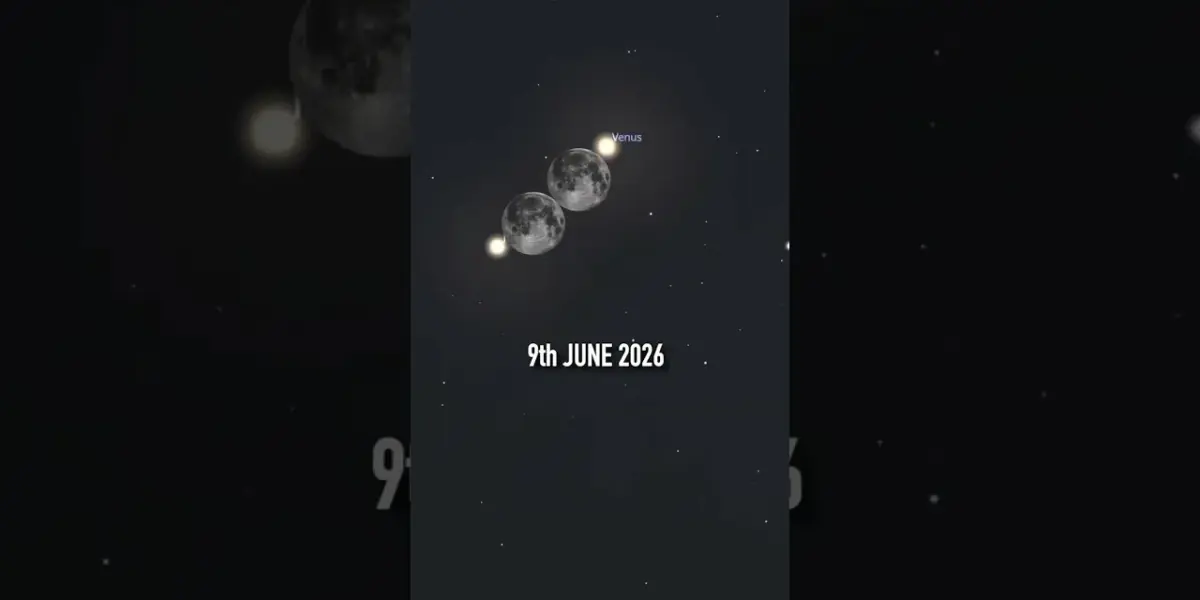
As spring transitions into summer, June 2026 will host a beautiful conjunction of two of our solar system’s most prominent celestial bodies: Venus and Jupiter. Occurring in early June, these two exceptionally bright planets will appear to converge in the sky, coming within a mere degree of each other. For perspective, one degree is roughly equivalent to the width of two full moons placed side-by-side.
This close alignment will be visible in the western sky shortly after sunset, offering a stunning visual treat for observers worldwide. Such conjunctions, while not uncommon, are always a reminder of the intricate orbital ballet our planets perform.
A Solar Eclipse and the Perseids: A Twin August Spectacle
August 2026 is set to be a standout month, commencing with a total solar eclipse on August 12th, observable across large swathes of Europe and northern Canada. The path of totality, where the Moon will completely obscure the Sun, will traverse Greenland, Iceland, and northern Spain. For the rest of Europe, the eclipse will present as a partial event, with a significant portion of the Sun appearing to be bitten away by the passing Moon.
This dramatic celestial event will be amplified by its timing, coinciding with the peak of the Perseid meteor shower. The Perseids, one of the most reliable and prolific meteor showers of the year, are expected to be particularly spectacular in 2026. This is due to the eclipse occurring near a new moon, ensuring exceptionally dark skies free from the Moon’s natural light pollution.
Under these ideal conditions, astronomers predict up to 150 meteors per hour could streak across the sky, averaging almost three shooting stars per minute. This presents a phenomenal opportunity for coordinated skywatching events and for individuals to witness a truly breathtaking natural phenomenon.
Blood Moon Over Three Continents
The celestial wonders of August continue with a total lunar eclipse, often referred to as a ‘Blood Moon,’ visible on the night of August 27th. This phenomenon occurs when the Moon passes through the Earth’s shadow. As sunlight is filtered and refracted by Earth’s atmosphere, the Moon takes on a distinct reddish or coppery hue.
This particular eclipse will be observable from parts of Europe, Africa, and the Americas, offering a widespread audience a chance to witness this atmospheric marvel. Unlike a solar eclipse, a lunar eclipse is a safe and easily observable event for anyone with a clear view of the Moon.
The Geminids: A December Meteor Shower Finale
Concluding the year’s astronomical highlights, the Geminid meteor shower returns with full force on December 14th, 2026. The Geminids are renowned for their brightness and the sheer number of meteors they produce. Much like the Perseids earlier in the year, the Geminids will benefit from near-ideal viewing conditions, as the peak of the shower aligns closely with the new moon phase.
This will result in dark, pristine skies, potentially allowing observers to witness up to 120 meteors per hour in optimal locations. The Geminids are unique as they are associated with the asteroid 3200 Phaethon, rather than a comet, providing a different cosmic origin story for these dazzling streaks of light.
Looking Ahead: The Enduring Allure of the Cosmos
The astronomical events of 2026 serve as a powerful reminder of the wonders that lie beyond our everyday lives. From the unpredictable nature of comets to the precise mechanics of eclipses and the dazzling display of meteor showers, these occurrences inspire awe and foster a deeper connection to the universe. They encourage us to look up, to question, and to explore.
As technology advances, allowing us to peer further into the cosmos with missions like the James Webb Space Telescope and future endeavors, our understanding of celestial phenomena continues to grow. Yet, the simple act of observing these events from Earth remains a profoundly human experience, connecting us to generations past who have looked up at the same stars with wonder and curiosity. The events of 2026 offer a perfect opportunity for everyone, from seasoned astronomers to casual observers, to partake in this timeless tradition and witness the grandeur of the cosmos firsthand.
Source: The biggest astronomy events of 2026 (YouTube)

Related Articles
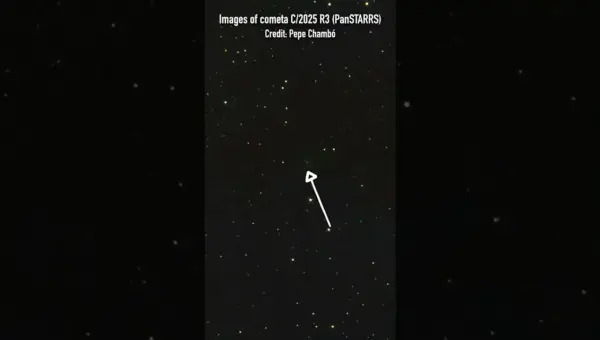
New Comet Could Dazzle Skies With Naked-Eye Visibility
Comet C/2025 R3 (PanSTARRS) is expected to make its closest approach to Earth on April 19th, with predictions suggesting it could become bright enough to be seen with the naked eye. This icy visitor from the outer solar system offers a rare and potentially dazzling celestial display.

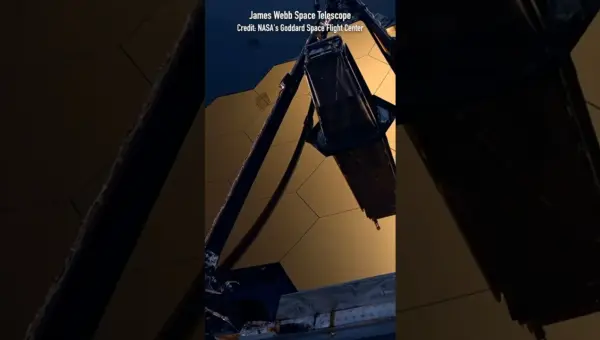
Webb Telescope Reveals New Cosmic Secrets
The James Webb Space Telescope has selected its next batch of scientific projects, promising new insights into alien worlds and the early universe. Researchers will use Webb to study exoplanet atmospheres, investigate distant galaxies, and explore objects within our own solar system.
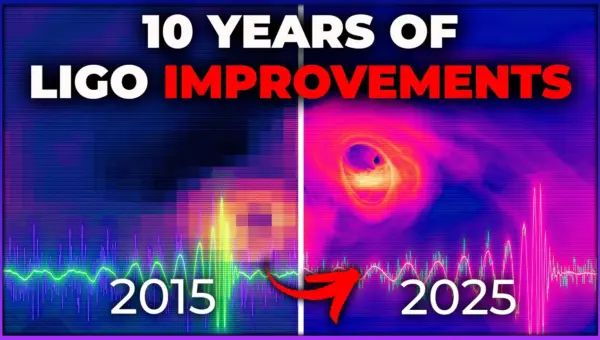
Gravitational Waves Reveal Universe’s Deepest Secrets
Humanity's ability to detect gravitational waves has advanced dramatically, with observatories now capturing nearly one black hole merger daily. These cosmic events are not only spectacular but also crucial for testing Einstein's theories and understanding the universe's fundamental nature. Future upgrades promise even greater insights.