Congress Challenges Trump’s Iran War: A Constitutional Showdown
Congress is challenging President Trump's military actions in Iran with a bipartisan War Powers Resolution, aiming to reclaim its constitutional authority. The administration's use of 'special military operation' rhetoric and shifting justifications have intensified the debate over war powers and accountability.

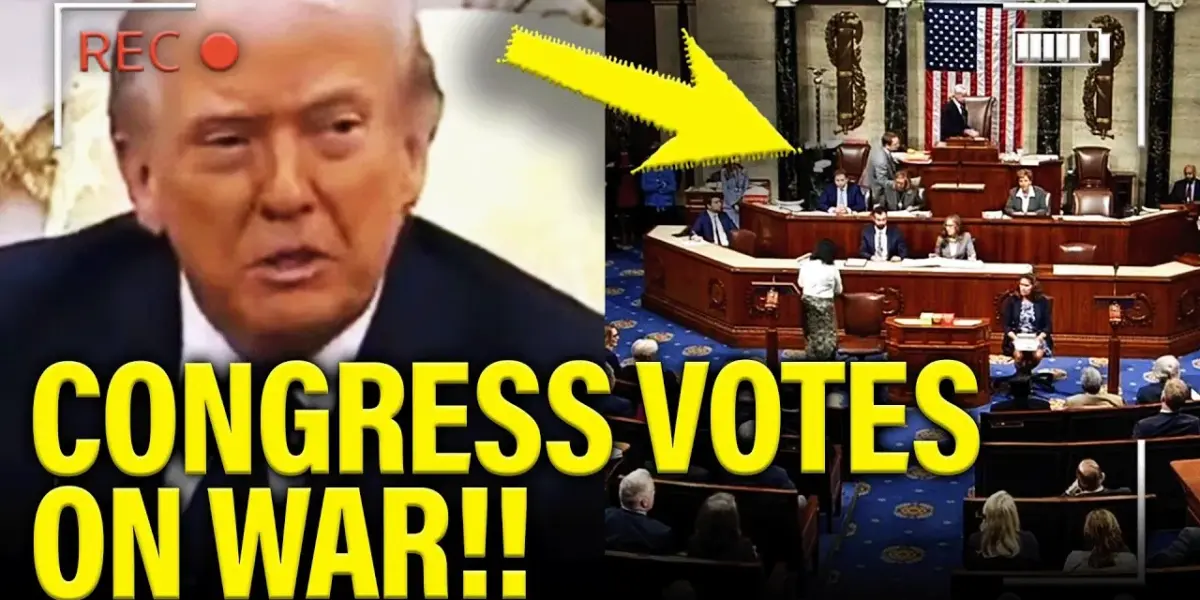
Congress Challenges Trump’s Iran War: A Constitutional Showdown
A significant constitutional battle is unfolding in Washington as members of Congress, from both sides of the aisle, seek to rein in President Donald Trump’s military actions against Iran. This bipartisan effort, spearheaded by figures like Senators Tim Kaine and Rand Paul, and Representatives Thomas Massie and Ro Khanna, aims to pass a War Powers Resolution. This resolution would compel the President to seek explicit authorization from Congress to continue military operations, a move that directly confronts the executive branch’s expansive war-making powers.
The War Powers Resolution Act: A Congressional Check
At the heart of this debate lies the War Powers Resolution Act of 1973. Enacted in the wake of the Vietnam War, this legislation was designed to reassert congressional authority over the decision to commit U.S. forces to armed conflict.
It mandates that the President consult with Congress before introducing U.S. Armed forces into hostilities and requires reporting to Congress within 48 hours of any such introduction. Crucially, it allows Congress to pass a concurrent resolution to terminate U.S. military involvement if it is not authorized by a declaration of war or specific congressional authorization.
Trump’s Resistance and the ‘Special Military Operation’ Gambit
President Trump has vocally opposed these efforts, threatening to veto any War Powers Resolution and suggesting he would disregard it. His administration, along with his allies in Congress, has employed a controversial linguistic strategy, referring to the actions in Iran not as a “war” but as a “special military operation.” This terminology echoes Russia’s framing of its invasion of Ukraine, a deliberate attempt to sidestep the legal and political implications associated with a declared war. By labeling the conflict as an “operation,” the administration seeks to argue that congressional authorization for war is not required, a position that has drawn sharp criticism.
Bipartisan Opposition and Shifting Justifications
The bipartisan nature of the pushback against Trump’s unilateral military action is noteworthy. Senators Kaine, Paul, and Representatives Massie and Khanna represent a coalition that transcends typical partisan divides, highlighting the constitutional concerns shared across the political spectrum.
However, some Republican members of Congress have struggled to articulate a consistent rationale for the President’s actions. When pressed by reporters, figures like Speaker Mike Johnson and Senator Joni Ernst have been observed deflecting questions, questioning the historical precedent for congressional authorization of military strikes, and even mischaracterizing the situation as not being a “war.” Senator Ernst, when asked about prior congressional authorization for military actions, initially struggled to name examples before being reminded of Iraq and Afghanistan.
Further complicating matters, the justifications for the military action have appeared to shift. Initially, the rationale suggested by some administration officials, including Senator Marco Rubio, was that the U.S. had to act preemptively because Israel was poised to strike Iran, and such an action would precipitate an attack on American forces. Later, the explanation shifted to focus on Iran’s ballistic missile program and an alleged “imminent threat.” This inconsistency has fueled confusion and deepened skepticism among lawmakers.
“We have had three or four or five justifications for this act of war over the last four or five days, and nothing in this classified session alleviated that confusion.”- Senator Brian Schatz
The White House’s War Powers Notification
In compliance with the War Powers Act, the White House did submit a letter to Congress apprising them of the military actions taken. However, the language used in the letter, dated March 2, 2026, notably avoids the term “war,” instead referring to “military action” and “military operations.” The letter cites Iran’s status as a state sponsor of terrorism, its pursuit of nuclear weapons, and the threat posed by its ballistic missiles and other weaponry to U.S. forces and allies as the basis for the action. It frames the operations as consistent with the President’s responsibility to protect American interests, while also asserting that the full scope and duration of necessary operations remain uncertain.
Concerns Over Escalation and Civilian Casualties
The debate is further intensified by the human cost of the conflict. The transcript highlights the confirmed fatalities of U.S. Service members, including Captain Cody Kirk, Sergeant First Class Noah Tedins, Sergeant First Class Nicole Ammer, and Sergeant Declan J. Cody.
Beyond the direct military engagements, there are reports of significant civilian casualties in Iran, including the tragic bombing of a girls’ elementary school that reportedly killed 175 people. While the U.S. Central Command stated it was aware of reports of civilian harm and was investigating, neither the U.S. nor Israeli governments have directly addressed the strike on the school, leaving a void in accountability and transparency.
Congressional Briefings and Lingering Questions
Recent classified briefings on the situation have done little to alleviate the concerns of many lawmakers. Senators like Chris Murphy and Brian Schatz emerged from these sessions expressing increased apprehension. Senator Murphy stated that he was told more American lives would be lost and that the administration could not immediately stop drone attacks in the Middle East.
Senator Schatz echoed these sentiments, noting that the briefings failed to clarify the administration’s objectives, which seemed to oscillate between destroying nuclear capacity, targeting missiles, regime change, and combating terrorism. The lack of clear priorities and the continued confusion suggest that the justification for military engagement remains opaque to a significant portion of Congress.
Broader Implications and Historical Context
This confrontation between the executive and legislative branches over war-making authority is not new. Throughout U.S. History, there has been a continuous tension between the President’s role as Commander-in-Chief and Congress’s constitutional power to declare war.
The War Powers Resolution was an attempt to codify and strengthen Congress’s role in this critical area. The current situation highlights the ongoing challenges in enforcing these checks and balances, particularly in a time of rapid technological advancements in warfare and evolving geopolitical threats.
The framing of military actions as “special military operations” is a particularly concerning trend, as it allows leaders to bypass constitutional requirements and public scrutiny. This tactic, if allowed to persist, could erode democratic accountability and pave the way for further unchecked executive power in matters of war and peace.
Why This Matters
The stakes in this constitutional showdown are immense. Fundamentally, this is a debate about the balance of power between the President and Congress, a fundamental tenet of American democracy. Allowing the executive branch to unilaterally initiate and sustain military conflicts without meaningful congressional oversight not only risks entangling the nation in prolonged and costly wars but also undermines the principles of representative government.
The willingness of a bipartisan group of lawmakers to challenge the President on this issue is a crucial affirmation of their constitutional duty. The lack of clear justifications and the potential for significant civilian casualties raise profound moral and ethical questions that demand transparency and accountability.
Future Outlook
The passage of the War Powers Resolution is not guaranteed, particularly in the House of Representatives, where Speaker Johnson has indicated he believes there are sufficient votes to defeat it. However, the very fact that this debate is occurring, and that a significant number of lawmakers are willing to confront the President on his war powers, signals a potential shift in the congressional posture towards executive overreach.
The outcome of this legislative battle will have significant implications for the future of U.S. Foreign policy, the balance of power between branches of government, and the nation’s engagement in international conflicts. The ongoing military actions, coupled with the unresolved constitutional questions, suggest that this is a critical moment demanding public attention and informed debate.
The transcript also briefly touches upon U.S. military operations in Ecuador, framing it within the context of President Trump’s alleged support for certain political figures and a broader discussion of narco-terrorism. While presented as a separate point, it adds another layer to the complex picture of U.S. Foreign military engagement and the potential for intertwined political and economic interests.
Source: Trump LOSES IT over CONGRESS WAR VOTE!!! (YouTube)

Related Articles
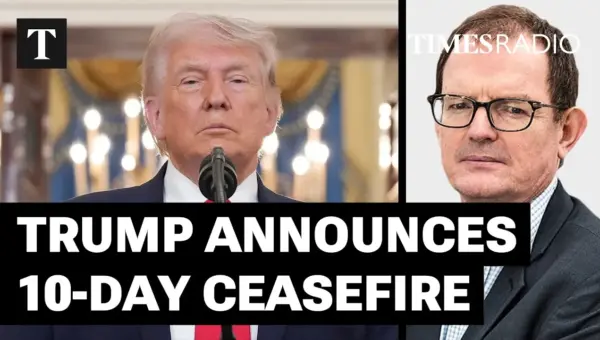
Israel-Lebanon Ceasefire: A Win for Iran and Hezbollah?
A ceasefire between Lebanon and Israel is set to take effect tonight, following direct talks between their leaders. This development is being viewed by some as a strategic win for Iran and Hezbollah, who may emerge from the conflict with their military capabilities intact. The agreement's success and long-term implications remain uncertain.
Trump’s Pardon Promises Signal a Troubling Future
Reports indicate Donald Trump has promised widespread presidential pardons for his staff and associates in a potential second term. While his administration downplays these remarks as jokes, the broad power of the pardon raises concerns about accountability and the rule of law.


Trump’s Ceasefire Claims Mask Growing War Crimes
Dozens of nations have jointly condemned Israel's alleged war crimes in Lebanon, yet Donald Trump's announcement of a 10-day ceasefire has dominated headlines. This analysis questions the sincerity and effectiveness of Trump's peace efforts, highlighting a history of broken promises and ongoing violence, while also noting international condemnation of actions against UN peacekeepers.