UK Base Vulnerable: Expert Downplays Cyprus Missile Threat
Major General Tim Cross has stated he is "not overly worried" about an immediate missile threat to the UK base in Cyprus, despite reports of inadequate defenses. He highlighted the need for significant investment in long-term missile defense for both Cyprus and the UK home base, citing depleted stockpiles and evolving threats.

UK Base Vulnerable: Expert Downplays Cyprus Missile Threat
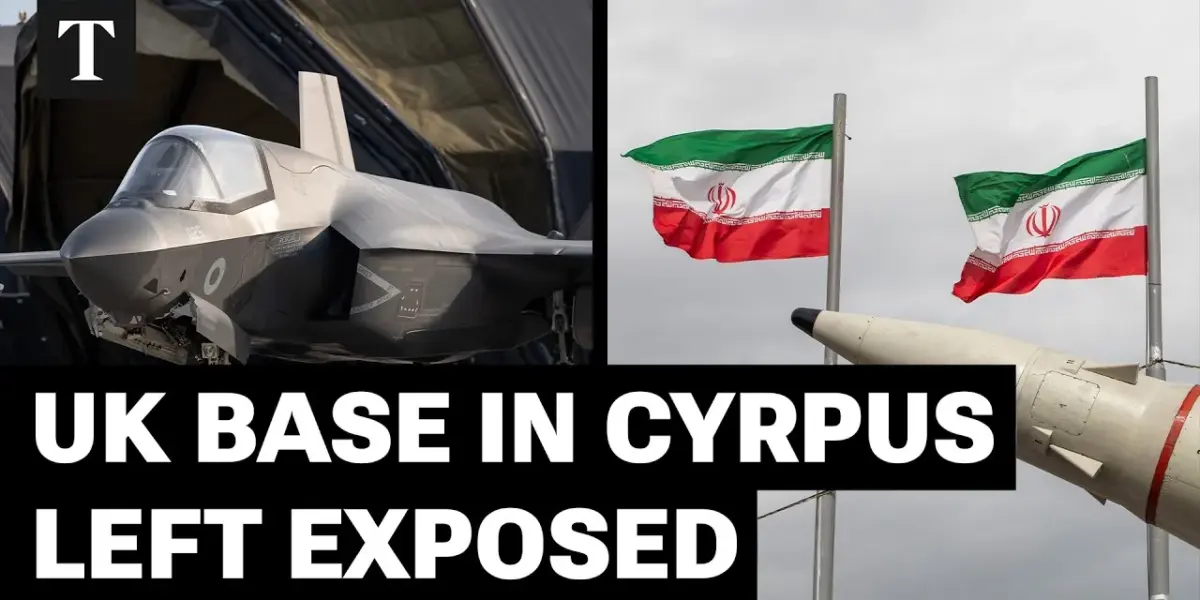
In the midst of escalating regional tensions, reports have emerged suggesting that the United Kingdom’s vital military base in Cyprus, RAF Akrotiri, lacks adequate defense against potential ballistic missile attacks. While the UK is reportedly planning to deploy a warship to strengthen defenses, a seasoned military expert, Major General Tim Cross, has offered a measured perspective, stating he is “not overly worried” about an immediate, large-scale strike on the island, though he emphasizes long-term vulnerabilities in UK defense capabilities.
Shifting Focus Amidst Escalating Conflict
The ongoing conflict, referred to as ‘Epic Fury,’ has entered its fourth day, with the focus shifting from initial strikes to a prolonged war of attrition. This heightened state of alert has brought to light critical defense gaps.
According to reports from The Times, the UK currently possesses no readily deployable air defense systems in Cyprus capable of countering ballistic missile threats. This revelation has raised concerns about the exposure of RAF Akrotiri, a key strategic asset in the Mediterranean.
A Warship as a ‘Sticking Plaster’ or a Necessary Measure?
To address this perceived vulnerability, the UK is reportedly planning to dispatch a warship to the region. The question remains whether a single vessel can adequately shield such a critical hub and replenish potentially depleted missile stockpiles. Major General Tim Cross, a former director general of the Defense Supply Chain with extensive experience in Kosovo and Iraq and knowledge of Cyprus, believes the deployment is the “right thing to do.”
“The bottom line is that we have over all through my career, 43 years I served man and boy, we have assumed that we could operate from secure bases… The world has changed in the last few years and the reach of these unmanned aerial vehicles and of course missiles has extended the ability of any country to reach deeply and long range into places like Cyprus.”
General Cross explained that while the deploying destroyer would possess the capability to intercept missiles and drones, its presence is more of a response to the changing global threat landscape rather than an indication of an imminent, high-probability attack on Cyprus. “I would think probably sufficient in the sense that I don’t think Cyprus is about to be hit hard by lots of these things,” he stated.
Broader Deficiencies in UK Defense
However, General Cross also highlighted that this situation underscores a more significant, long-standing issue: the lack of robust air defense capabilities not only in Cyprus but also within the UK itself. “It does reinforce the point that we don’t have this capability, not just in Cyprus, frankly, but in the UK home base,” he asserted. He noted that despite discussions about this deficiency for several years, “little or nothing has been done about it.”
Adding to the complexity, the UK has significantly depleted its inventory of such systems due to substantial aid provided to Ukraine. “One of the problems is we’ve given a lot of stuff to Ukraine and we don’t have a great inventory of these sorts of systems,” General Cross remarked.
Worst-Case Scenarios and Long-Term Solutions
When asked about potential scenarios, General Cross acknowledged the theoretical worst-case: Iran launching a significant missile attack on Cyprus. However, he reiterated his belief that this is unlikely, despite Iran’s actions against other Gulf states. “I don’t honestly think that’s going to happen,” he said.
The more pressing concern for General Cross lies in the long term. “Longer term, we have got to do something about the defense of the UK home base. And that requires a lot of money.
These missile defense systems are expensive and you need to have a lot of them,” he emphasized. He drew a parallel to current Middle East conflicts, where even with advanced defenses, a small percentage of projectiles can still get through if the overall defensive capability is insufficient.
“For every hundred drones that are launched, the mass of them, 95% of them will be shot down, but 5% will get through, but it’ll be more than 5% if you don’t have the ability to shoot down the other 95%. And the long-range missiles and the hyper the hyper velocity missiles and so forth are even more difficult to shoot down.”
He concluded that addressing missile defense must be a priority within the UK’s strategic defense reviews.
Historical Context and Strategic Foresight
General Cross has been vocal about these defense concerns for decades, stemming from his experiences and observations. He recalled his role in the 2003 Iraq War planning, where logistical and security assumptions proved flawed. “I have been saying for a long time as in 20 years or so that we have assumed for too long that we can operate from a secure home base,” he stated, referencing the vulnerability of logistical hubs like Cyprus when deploying assets.
He expressed frustration at the lack of concrete action despite repeated warnings. “I don’t be clever about it. I’ve been banging on about this for quite a long time, but I’m not alone in that,” he added, indicating a consensus among defense experts.
The Nuances of Offensive vs. Defensive Operations
The current situation also raises questions about the UK’s potential shift from defensive to offensive postures. General Cross cautioned against oversimplification, particularly regarding the distinction between low and high-intensity operations. “If you’re the bloke being shot at, it’s a pretty high intensity operation,” he noted, highlighting the subjective experience of conflict.
He acknowledged the Prime Minister’s stance of using assets for defensive purposes over Cyprus and other Gulf states, rather than directly engaging Iran offensively. “We will use our assets not to go over Iran and bomb Iran… We will use them to defend our airspace over Cyprus and indeed the other Gulf states,” the General explained.
Lessons from Past Interventions
Reflecting on his involvement in the Iraq War, General Cross was critical of the post-war planning, which he described as “woefully thin” during the Iraq inquiry. He expressed skepticism about the current level of end-game planning regarding Iran, drawing parallels to the flawed assumptions made in 2003 regarding the Iraqi people’s reaction to regime change.
He posited that regime change in Iran, if it occurs, must originate internally, driven by the Iranian Republican Guard and security forces refusing to suppress public dissent. He cited the fall of the Berlin Wall and the collapse of communist regimes in Eastern Europe as examples of how security apparatuses can shift allegiance.
“Bombing it has hardened views undoubtedly. It’s probably consolidated views and so forth. So what is the end state here?
What does it look like? I don’t know in 6 months, a year’s time. I don’t honestly know or believe that anybody’s got a clear intent for that.”
General Cross also addressed former President Trump’s rhetoric about an impending “big one,” speculating that it might refer to the use of deep-penetration bombs against Iran’s nuclear facilities, rather than ground troop deployments, which he believes are unlikely and would echo the failures in Iraq and Afghanistan.
UK’s Limited Ground Force Capability
When questioned about the UK’s potential involvement in ground operations in Iran, General Cross was unequivocal: “No. No.
And we haven’t got the capability to do it frankly.” He lamented the decline of the British Army over the past two decades, stating, “The army that I left 20 years ago, it was substantial and capable. That is just not the case today, sadly.” He pointed out that despite government talk of increased defense spending and recruitment, the reality on the ground does not reflect these aspirations.
Political Considerations and International Law
Regarding political dynamics, General Cross acknowledged former President Trump’s criticisms of the UK Prime Minister’s approach. He suggested that while Trump has a fondness for the UK, American presidents often expect unwavering support in military operations. He contrasted the current Prime Minister’s cautious approach, mindful of the legacy of Tony Blair’s involvement in the 2003 Iraq War, with Blair’s strategic decision-making.
General Cross suggested that the current Prime Minister’s hesitation stems from a genuine concern for international law and a desire to avoid repeating past mistakes. He expressed personal regret that the UK had not been more supportive of coalition efforts from the outset, particularly in providing basing rights or air power, acknowledging that all choices have consequences.
The Importance of Historical Understanding
The discussion underscored the critical importance of learning from history, particularly in complex geopolitical regions. General Cross referenced the strategic missteps in Iraq, where a lack of understanding of sectarian divisions contributed to the subsequent civil war. He also cited the Kosovo intervention as an example where, despite legal ambiguities, a strong moral imperative and a perceived success emboldened subsequent actions.
“It’s not just about international law. It’s about what’s the right thing to do, legitimacy and so on.
But it is also about understanding the lessons of history and the division between Sunni and Shia… You need to be jolly careful before you start these things.”
He concluded by emphasizing the volatile nature of the Middle East, with its long history of conflict, urging extreme caution before initiating any military action.
What’s Next?
As the situation in the Middle East remains fluid, attention will be on whether the deployed warship provides a tangible increase in Cyprus’s defensive capabilities and if diplomatic efforts can de-escalate the immediate tensions. The ongoing discussions surrounding the UK’s long-term defense strategy, particularly concerning missile defense and the readiness of its armed forces, will be crucial in shaping future security postures in an increasingly unpredictable world.
Source: Major General ’Not Overly Worried’ About Exposed UK Base In Cyprus (YouTube)

Related Articles

Trump’s Iran Deadline Looms: Is the US President Bluffing?
President Trump has issued a stern deadline to Iran, warning of severe consequences if demands aren't met. Analyst Zineb Riboua believes the President is serious and not bluffing, citing Iran's strategic miscalculations and overestimation of its own capabilities. The Strait of Hormuz remains a key flashpoint with potential global market impacts.


US Scours Iran for Missing Pilot in High-Stakes Search
US and Iranian forces are in a race against time to find a missing pilot whose F-15 crashed over Iran. One pilot was rescued quickly, but the second remains lost, potentially without a working distress signal. The situation is complicated by ongoing Israeli airstrikes and regional tensions.

Trump’s Iran Speech: Victory Declared, But War Looms
President Donald Trump declared victory over Iran, claiming the nation's military was weakened. However, his speech also hinted at further strikes, leading many analysts to question the narrative of victory and express concerns about potential escalation. Journalist Ayman Mohyeldin highlighted the contradiction between Trump's claims and his intentions for future military action.