US Air Force Conducts Daring Rescue of F-15E WSO in Iran
U.S. special operations forces conducted a daring rescue of a downed F-15E WSO deep within Iran's Zagros Mountains. The mission involved elite units, advanced aircraft, and the destruction of U.S. assets to prevent capture. The operation highlights U.S. capabilities amid heightened tensions with Iran.

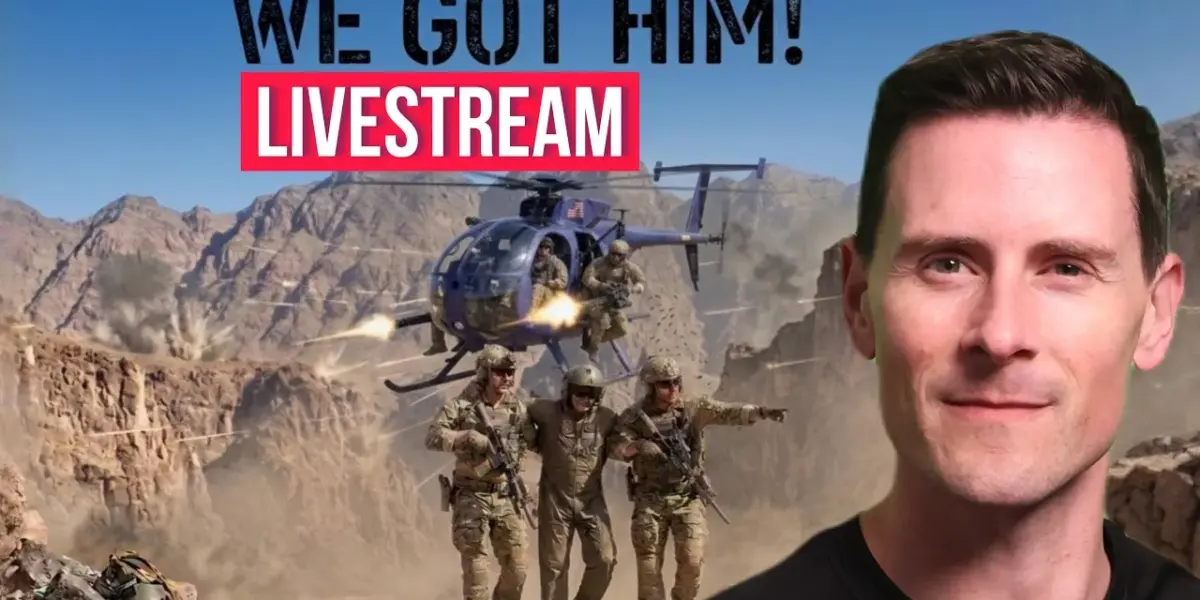
US Air Force Conducts Daring Rescue of F-15E WSO in Iran
In a complex operation deep within Iranian territory, U.S. special operations forces successfully rescued the weapon systems officer (WSO) of a downed F-15E fighter jet. The mission, described as one of the most daring search and rescue operations in U.S. history, took place in the rugged Zagros Mountains of southwestern Iran.
The rescue involved multiple specialized units and extensive air support. Elite teams, including Air Force pararescue jumpers (PJs) and Naval Special Warfare Development Group operators, worked together.
They were supported by the 160th Special Operations Aviation Regiment, known as the Nightstalkers, flying MH-6 and AH-6 Little Bird helicopters for rapid insertions and fire support. Additional support came from HH-60W Jolly Green II helicopters for heavy lift capabilities and A-10 Thunderbolt II aircraft for close air support.
Strategic Context: The Rescue Mission
The WSO was evading enemy forces for approximately 48 hours after his F-15E was shot down. The mountainous terrain, characterized by steep ridges and deep valleys, provided excellent cover for evasion but posed significant challenges for both the evader and the rescue forces.
The Iranian Revolutionary Guard Corps (IRGC) and local militias were actively hunting the downed pilot, offering rewards for his capture. This situation created a high-stakes race against time.
U.S. forces utilized MQ-9 Reaper drones to monitor the area and engage potential threats within a 3-kilometer radius of the downed airman. Reports suggest these drones provided crucial intelligence and defensive fire, striking Iranian military-aged males who approached the rescue zone. This highlights the integrated approach of modern airpower, combining manned and unmanned assets for tactical advantage.
The Evacuation and Aircraft Destruction
The extraction plan involved multiple MC-130J Commando II transport aircraft landing in hostile territory. However, two of these aircraft became bogged down in soft sand upon landing, preventing them from taking off safely. With Iranian forces closing in, U.S. special operations teams made the difficult decision to destroy the stranded aircraft using demolition charges.
The transcript clarifies that the aircraft were not destroyed by enemy action but by U.S. forces to prevent sensitive technology and equipment from falling into Iranian hands. This action, while a loss of materiel, ensured that no critical assets were captured. The remaining aircraft successfully extracted the WSO and the rescue team, returning them to friendly airspace.
Iranian Response and Geopolitical Tensions
The incident occurs amid heightened tensions between the United States and Iran. Iranian state television has called on citizens to act as human shields at power plants, indicating a defensive posture and a willingness to use civilian populations to deter potential attacks. The Iranian Foreign Minister has warned against ultimatums and stated that negotiations are incompatible with threats, while also asserting Iran’s right to ballistic missiles, regional allies, and uranium enrichment.
The U.S. has responded with warnings of potential strikes on Iranian infrastructure, including bridges and power plants, if concessions are not made. This exchange highlights the delicate diplomatic and military situation, with both sides issuing warnings and preparing for further escalation. The U.S. objective appears to be to disrupt financial flows to the IRGC and pressure Iran to return to negotiations.
Strategic Implications
The successful rescue operation demonstrates the U.S. military’s capability for complex, high-risk missions in denied airspace. It highlights the effectiveness of specialized units like PJs and the 160th SOAR, along with advanced technology like the MQ-9 Reaper. The destruction of U.S. aircraft to deny enemy capture is a standard operating procedure in such scenarios, echoing historical precedents where equipment is destroyed to prevent intelligence or technological gains by adversaries.
For Iran, the incident represents a significant blow, both militarily and in terms of propaganda. The inability to capture the downed WSO, despite extensive search efforts, highlights the challenges Iran faces in countering advanced U.S. special operations. The reliance on proxy tactics and the calls for civilian mobilization suggest a defensive strategy against perceived overwhelming U.S. force projection.
Historical Parallels
The challenges faced during the evacuation of the C-130Js in Iran evoke memories of Operation Eagle Claw in 1980. During that mission, a failed hostage rescue attempt in Iran also saw U.S. aircraft unable to operate effectively due to environmental conditions and mechanical failures, leading to the destruction of assets to prevent their capture. This historical parallel highlights the enduring difficulties of operating in Iran’s challenging terrain and political climate.
Conclusion
The rescue of the F-15E WSO is proof of the training, equipment, and dedication of U.S. special operations forces. It showcases a commitment to leaving no service member behind, even in the most perilous environments. The operation also occurs within a volatile geopolitical context, where diplomatic efforts continue amidst the threat of further military action.
Source: INSANE New Details Emerge of The F-15E WSO Rescue In Iran LIVESTREAM (YouTube)

Related Articles


Trump Team Ignites Global Policy Chaos
The Trump administration's foreign policy is marked by a disregard for experienced advisors and a reliance on loyalists. This approach risks repeating past mistakes and creating global instability. Allies are questioning U.S. reliability, while adversaries may see opportunities.


Global Powers Clash Over ‘Western Civ’ Definition
A debate over what defines "Western civilization" is quietly reshaping international discussions, with differing views from figures like Marco Rubio contrasting with liberal interpretations emphasizing openness and tolerance. This ideological divide influences how nations interact and could lead to a more fragmented or cooperative global order depending on which definition prevails.

Trump Eyes Iran Deal by Monday, Hints at Support for Protests
President Donald Trump believes a deal with Iran could be finalized by Monday, telling Fox News he is considering aggressive actions if an agreement isn't reached quickly. Trump also revealed that the US sent guns to Iranian protesters through Kurdish channels. He further stated that Iran's nuclear program is no longer a point of negotiation, with most issues already conceded.