Iran Conflict Escalates: Explosions Rock Tehran, US Embassy Attacked
Explosions have rocked Tehran and Beirut as the conflict with Iran escalates, with Israel confirming troop presence in Lebanon and the U.S. Embassy in Saudi Arabia targeted by drones. Six American service members are reported dead, amidst mounting casualties in Israel and Iran. Washington grapples with President Trump's decision to enter the conflict, while concerns rise over civilian impact and regional stability.

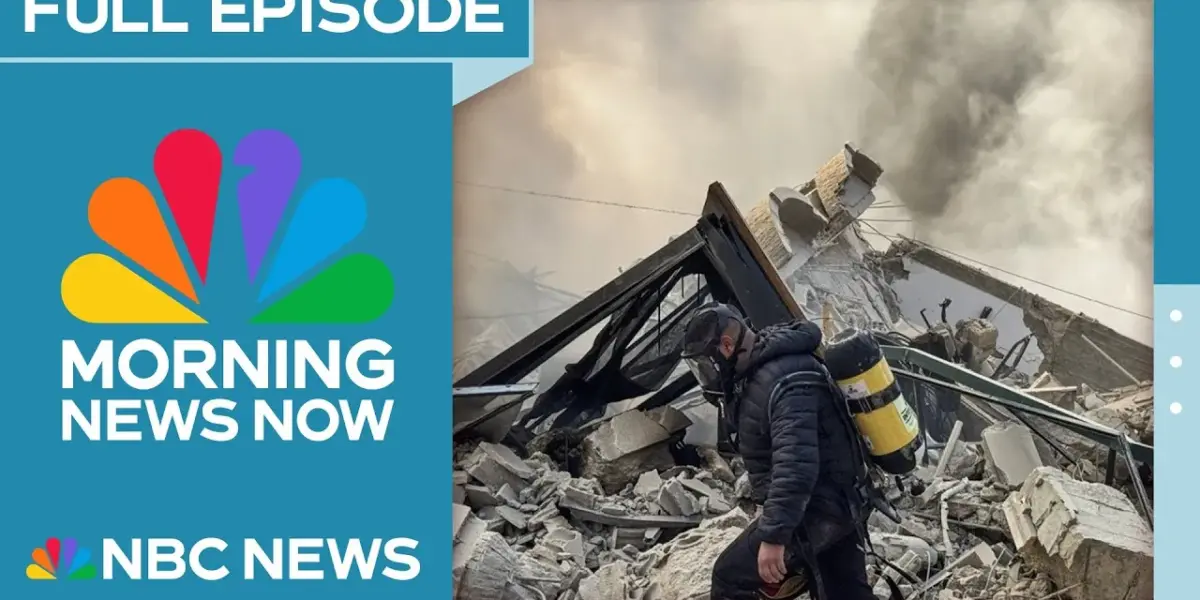
Middle East Engulfed in Escalating Conflict
Overnight explosions have rocked Tehran and Beirut, marking a significant escalation in the ongoing conflict with Iran. Israel has confirmed its troops are on the ground in Lebanon, intensifying its campaign against Hezbollah. Meanwhile, in Saudi Arabia’s capital, Riyadh, the U.S. Embassy was targeted by Iranian drones, representing the latest wave of retaliatory strikes.
The human toll is mounting, with at least six American service members reported dead. In Israel, ten people have been killed, while humanitarian officials in Iran report nearly 800 fatalities. The conflict, now in its fourth day, shows no signs of abating, prompting a war of words in Washington over President Trump’s decision to enter the fray.
Israel’s Preparedness Amidst Attacks
Reporting from Israel, NBC News International Correspondent Matt Bradley described being in one of the country’s two nerve centers for Magen David Adom, the national ambulance and emergency service. This state-of-the-art dispatch center, supported by American donations, is located approximately 100 feet underground and equipped with heavy blast doors and advanced ventilation systems, capable of withstanding significant attacks.
Bradley noted that the advanced technology allows for automated emergency responses, contributing to the remarkably low casualty numbers in Israel despite the ongoing attacks. “It’s places like this one that explain why, despite the fact that we have seen quite a few deaths over the past few days in Israel, why the casualty numbers here are so incredibly low compared to what we’re seeing elsewhere,” he stated.
Iranian Retaliation Spreads Across the Gulf
The conflict has seen a metastasizing effect, with Iran stepping up its retaliatory strikes against American targets throughout the Gulf states. Overnight, drones were fired at the U.S. Embassy in Riyadh, Saudi Arabia. Similar attacks are being reported across Bahrain, Kuwait, the United Arab Emirates, and Qatar.
“We’re seeing a real metastasizing of this conflict, which is exactly what people were warning about if Iran got attacked,” Bradley reported. The sustainability of these attacks remains uncertain, dependent on Iran’s remaining munitions. Despite Israel’s claims of near-complete air superiority over Iran, missile alerts are still occurring in Israel, indicating the exchange is far from over.
Inside Iran: Civilian Impact and Political Uncertainty
Matt Bodner, reporting from Tehran, described a chaotic and harrowing picture for civilians following the initial U.S. Bombing campaign. Reports indicate the city was covered in smoke, with residents sheltering in their homes, anxious about further strikes. Many military targets, including police stations, are located near residential areas, leading to concerns about civilian safety.
Traffic jams were reported as residents attempted to flee to safer regions. Hospitals in the northwest of the city were filled with injured civilians and militia members.
While the situation is reportedly quieter now, public emotions are mixed, with significant concern about who will lead the country and whether Iran will survive as a coherent entity. The economic impact is also a major factor, with rising prices and potential struggles for citizens as savings dwindle, echoing sentiments from previous widespread protests.
The Question of Succession in Iran
Bodner also addressed the critical question of leadership succession within Iran. The Assembly of Experts, a body of religious clerics, is tasked with choosing the successor to the Supreme Leader. Following the initial strike that killed the Ayatollah and a significant portion of the regime’s senior leadership, figures like Ali Reza Ashrafi, appointed to lead a temporary transitional council, are being closely watched.
The Iranian Constitution mandates that the 88-member panel convenes as quickly as possible to select a new Supreme Leader. However, Bodner suggested a potential deterrent to moving too quickly: the risk of the United States targeting the newly appointed leader. “It still could be some time,” he noted.
Evacuation Challenges and Security Concerns
The State Department has issued no evacuation orders for U.S. citizens in over a dozen countries, leaving many stranded. One American attempting to fly out of Doha found his plane turned back, leaving him uncertain about his departure. Matt Bradley highlighted that while Israel has robust protection measures, including mandatory bomb shelters in nearly every building, the Gulf countries are facing a significant influx of Iranian attacks.
Retired Colonel Peter Mansoor, former executive officer for General David Petraeus, discussed the potential duration of the conflict. While the U.S. military may have a target list that takes 4 to 6 weeks to complete, Mansoor stressed that the conflict’s end is ultimately up to the Iranians. “If they continue to fight after those 4 to 6 weeks, we’re going to have to continue to defend our facilities in the Middle East,” he stated.
Military Objectives and Congressional Response
President Trump outlined four key objectives for the U.S. military operation: destroying Iran’s missile capabilities, annihilating its navy, preventing Iran from obtaining nuclear weapons, and ensuring the regime cannot arm or fund terrorists. While the U.S. military has conducted thousands of strikes, Iran continues its retaliatory attacks.
Colonel Mansoor confirmed that Iranian military forces have been severely weakened, with the U.S. and Israel controlling the skies. However, he anticipates Iran will attempt to prolong the conflict to erode the will of the U.S. and Israel, likely holding back some munitions. Regarding potential U.S. Ground involvement, President Trump has not ruled out boots on the ground, possibly indicating a larger wave of air attacks given the U.S. Air superiority.
In Washington, the conflict has largely fallen along party lines. Democrats criticize the administration’s strategy and objectives, while Republicans largely remain in alignment.
A vote on a War Powers Resolution is expected this week, which, if passed, would require congressional approval for further military action in Iran. However, with Republicans controlling both the House and the Senate, its passage faces an uphill battle.
Analysis and Future Outlook
Global affairs journalist Elise Labott suggested that Israel may have forced America’s hand in the current conflict, citing intelligence suggesting Iran would retaliate against the U.S. If attacked. She characterized the administration’s messaging as inconsistent, shifting from concerns about Iran’s nuclear and missile programs to imminent threats against Americans.
Labott expressed skepticism about achieving all stated objectives within the 4-to-5-week timeline, particularly regarding Iran’s nuclear program, which involves more than just destroying facilities and requires eliminating scientists and enriched uranium. She also noted the complexities of regime change in Iran, emphasizing that the existing military and security structures remain in place, and the opposition lacks the means to effectively challenge them. The leadership vacuum further complicates any potential internal uprising, leaving the Iranian people uncertain about U.S. Support.
Looking Ahead
As the conflict enters its fifth day, the immediate focus remains on the ongoing aerial exchanges and the potential for further Iranian retaliation. The situation in Iran, particularly regarding leadership succession and domestic stability, will be closely monitored.
In Washington, the upcoming vote on the War Powers Resolution will be a key indicator of congressional sentiment and the administration’s ability to act unilaterally. The long-term implications for regional stability and global security remain uncertain.
Source: Morning News NOW Full Episode – March. 3 (YouTube)

Related Articles

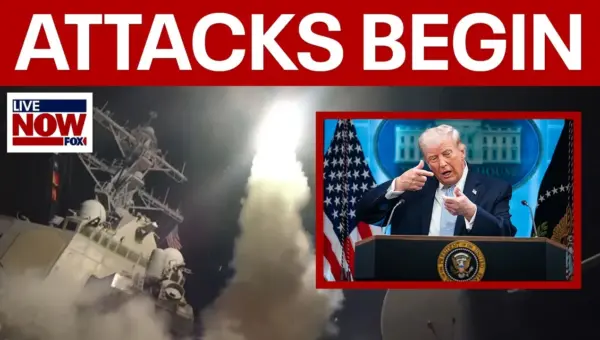
Trump Threatens ‘Civilization’s Death’ as US Strikes Iran
President Trump issued a stark warning to Iran, threatening catastrophic consequences if a deal to reopen the Strait of Hormuz was not reached. The U.S. military carried out dozens of strikes against targets on Kharg Island following Trump's deadline. International leaders expressed concern over potential war crimes amid the escalating tensions.

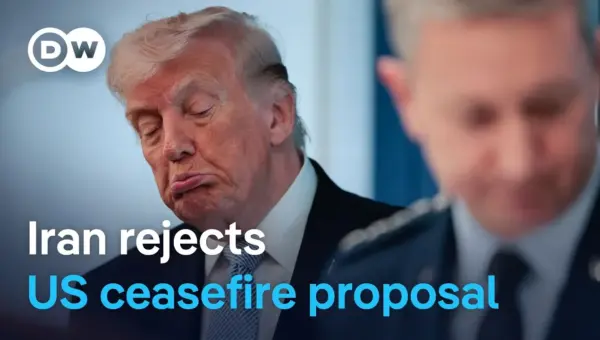
Iran Rejects US Ceasefire, Defies Strait of Hormuz Reopening Demand
Iran has rejected the US ceasefire proposal and defied demands to reopen the Strait of Hormuz. Analysts warn of significant global economic impacts if the vital oil shipping lane is disrupted. The situation remains tense as a US deadline for reopening the strait approaches.
Trump’s Iran Deadline Looms: Is the US President Bluffing?
President Trump has issued a stern deadline to Iran, warning of severe consequences if demands aren't met. Analyst Zineb Riboua believes the President is serious and not bluffing, citing Iran's strategic miscalculations and overestimation of its own capabilities. The Strait of Hormuz remains a key flashpoint with potential global market impacts.