El Mencho’s Demise Unleashes Chaos: Mexico Grapples with Cartel Power Vacuum and International Repercussions
The death of notorious cartel boss "El Mencho" has unleashed widespread violence across Mexico, sparking retaliatory attacks and plunging the nation into chaos. His demise is expected to trigger a brutal restructuring of international criminal networks and internal power struggles within his Jalisco New Generation Cartel (CJNG), with significant implications for global drug trafficking and Mexico's security.

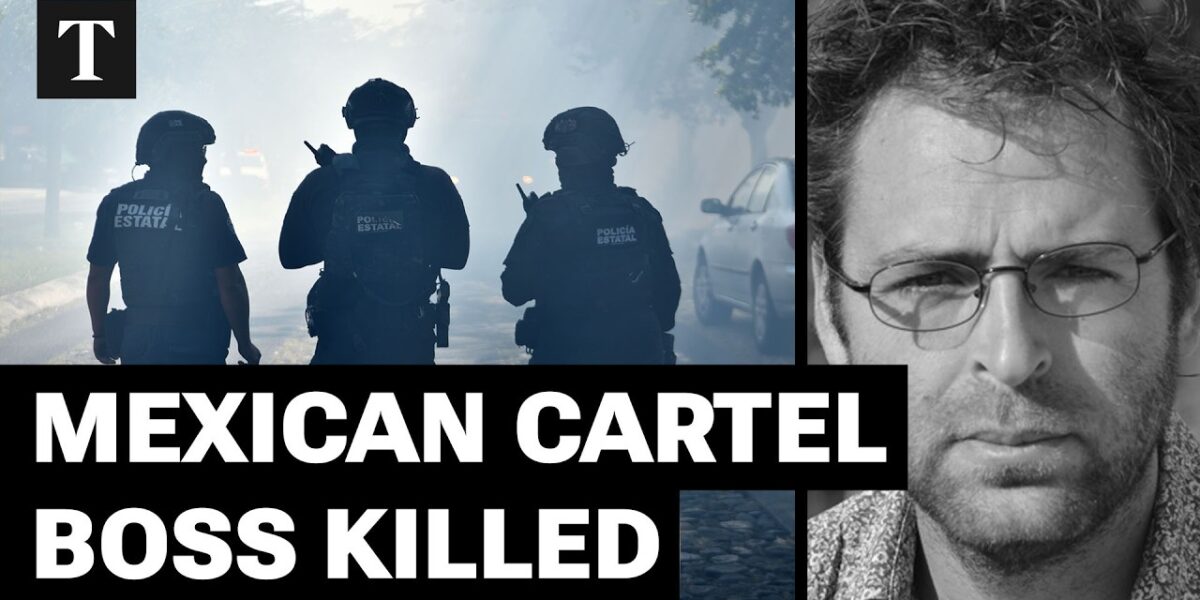
A Nation on Edge: The Aftermath of a Cartel Kingpin’s Fall
In a dramatic turn of events that sent shockwaves across Mexico and reverberated through international criminal networks, the death of Rubén Oseguera Cervantes, notoriously known as "El Mencho," has plunged the nation into a new era of uncertainty and escalating violence. El Mencho, the enigmatic and ruthless leader of the Jalisco New Generation Cartel (CJNG), was arguably one of the most powerful drug lords on the planet, and his demise at the hands of Mexican security forces has ignited a furious backlash, triggering widespread chaos and raising profound questions about the future of organized crime in Latin America.
The immediate fallout was swift and brutal. Violence erupted across at least eight states, with Mexico’s second-largest city, Guadalajara, bearing the brunt of the cartel’s retaliatory fury. Reports flooded in of burning vehicles, strategically placed roadblocks, and fires deliberately set to sow terror and disrupt public order. Local authorities, alongside international governments, issued urgent shelter-in-place orders, advising citizens and foreign tourists alike to remain vigilant and seek safety. Flights into and out of Guadalajara were temporarily cancelled, and tourist hotspots like Puerto Vallarta also faced advisories. Schools were closed, and public transport curtailed, painting a stark picture of a nation gripped by fear.
This eruption of violence is not merely a spontaneous act of defiance; it is a direct and calculated response by the CJNG to the killing of its founder and leader. However, as history has repeatedly shown in Mexico’s long and bloody drug war, the death of a kingpin rarely signifies an end to the conflict. Instead, it often marks the beginning of a new, even more volatile chapter, characterized by internal power struggles, the emergence of splinter groups vying for control, and a brutal restructuring of criminal hierarchies that could have far-reaching implications for drug trafficking routes and international security.
The Demise of a Drug Lord: El Mencho’s Final Stand
The operation that led to El Mencho’s death was far from straightforward, underscoring the immense power and defensive capabilities of the CJNG. Initial reports suggested a direct assassination, but it quickly became clear that the objective was an arrest, intended to bring the notorious cartel boss to justice, likely in Mexico City. However, this attempt was met with fierce resistance, escalating into a deadly firefight that resulted in multiple casualties. The details of the clash remain shrouded in the fog of conflict, but the sheer scale of the cartel’s response hints at the intensity of the battle.
The significance of an attempted arrest, rather than a "straightforward" elimination, cannot be overstated. Had El Mencho been captured alive, it is almost certain he would not have faced trial in a Mexican court or served time in a Mexican prison. Given his status as Mexico’s most wanted and among the United States’ most sought-after criminals, extradition to the U.S. would have been an almost foregone conclusion. This strongly suggests that U.S. authorities were likely aware of the operation beforehand, highlighting the deep level of cooperation and shared intelligence between the two nations in the ongoing fight against organized crime. The failure to capture him alive, therefore, represents a missed opportunity for intelligence gathering and a judicial victory for the U.S., though his death still delivers a significant blow to the cartel’s leadership.
Jalisco New Generation Cartel (CJNG): A Reign of Terror
To understand the magnitude of El Mencho’s death, one must first comprehend the organization he built: the Jalisco New Generation Cartel. Emerging from the fragmented remnants of the Milenio Cartel in the early 2010s, the CJNG quickly distinguished itself through its extreme violence, territorial ambition, and sophisticated operational tactics. Under El Mencho’s leadership, the cartel transformed into a formidable transnational criminal organization, rivaling and often surpassing the notorious Sinaloa Cartel in its ferocity and reach.
The CJNG’s modus operandi has been characterized by its willingness to directly confront the Mexican state, employing military-grade weaponry, armored vehicles, and even shooting down a military helicopter in 2015. Their brutality is legendary, often involving public displays of torture and execution to instill fear and assert dominance. Unlike older, more hierarchical cartels, CJNG adopted a decentralized, franchise-like model, allowing for rapid expansion and diversification into various illicit activities beyond traditional drug trafficking, including extortion, kidnapping, human trafficking, and fuel theft.
El Mencho, born in Michoacán, rose through the ranks with a reputation for ruthlessness and strategic acumen. His leadership saw the CJNG establish a significant presence across Mexico, particularly in his home state of Jalisco, which served as the cartel’s operational heartland. From this base, the CJNG expanded its influence into key ports and border crossings, becoming a dominant player in the global drug trade, particularly in the production and distribution of methamphetamine and, more recently, the deadly synthetic opioid fentanyl, which has fueled an unprecedented overdose crisis in the United States.
The cartel’s international reach extends beyond drug smuggling. They have established networks for money laundering, arms trafficking, and even engaged in cybercrime, demonstrating a modern and adaptable approach to organized crime. This diversification and global footprint made El Mencho a truly formidable figure, and his removal from the equation is expected to create ripples across the entire spectrum of international illicit trade.
The "Kingpin Strategy": A Double-Edged Sword
The pursuit and elimination of cartel leaders, often referred to as the "kingpin strategy" or "decapitation strategy," has been a cornerstone of Mexico’s and the U.S.’s anti-drug efforts for decades. The logic is straightforward: remove the head, and the body will wither. However, the historical record in Mexico tells a more complex and often tragic story.
While the capture or death of a cartel leader can temporarily disrupt operations and serve as a symbolic victory for law enforcement, it frequently leads to unintended and adverse consequences. The power vacuum created by a kingpin’s demise often triggers intense, bloody internal struggles as lieutenants and aspiring leaders vie for control. This competition for authority can lead to an increase in violence, not a decrease, as factions turn on each other and new, often more ruthless, figures emerge to fill the void. This phenomenon, sometimes described as the "balcanization" of cartels, results in a proliferation of smaller, more brutal, and less predictable criminal groups.
Mexico has witnessed this cycle repeatedly. The takedown of figures like Arturo Beltrán Leyva, Nazario Moreno González ("El Chayo"), and various leaders of the Zetas and Gulf Cartels often preceded periods of heightened violence and cartel fragmentation. Even the capture of Joaquín "El Chapo" Guzmán, while a monumental achievement, did not dismantle the Sinaloa Cartel, which adapted and continued its operations under new leadership, albeit with some internal strife. The death of El Mencho, given his unparalleled power and the CJNG’s brutal nature, is anticipated to follow this pattern, potentially ushering in an extended period of extreme violence as different groups, both within and outside the CJNG, seek to capitalize on the leadership vacuum and seize control of lucrative territories and trafficking routes.
Immediate Fallout: Chaos Across Eight States
The immediate response to El Mencho’s death was a chilling demonstration of the CJNG’s capacity for rapid and coordinated retaliation. The widespread violence across eight states—including Jalisco, Michoacán, Guanajuato, and Colima—underscored the cartel’s pervasive influence and its willingness to directly challenge state authority.
Guadalajara, a vibrant economic hub and Mexico’s second-largest city, transformed into a battleground. Residents reported seeing vehicles engulfed in flames, strategically placed to block major arteries and create chokepoints. These "narco-blockades" are a signature tactic of Mexican cartels, designed to slow down security forces, create diversions, and spread fear. The fires, often targeting businesses, gas stations, and public infrastructure, served as both a message of defiance and a means to disrupt daily life, forcing the state to react defensively.
The impact on public life was profound. Shelter-in-place orders, a stark reminder of the escalating threat, confined millions to their homes. Schools were shuttered, leaving parents scrambling and children out of classrooms. Public transport systems, vital for the functioning of urban centers, were either suspended or heavily curtailed, paralyzing economic activity and disrupting the livelihoods of countless individuals. The temporary closure of Guadalajara’s international airport and the advisories for popular tourist destinations like Puerto Vallarta sent a clear signal to the international community: Mexico’s security situation, particularly in the CJNG’s strongholds, was gravely compromised.
The proximity of some of the violence to major sporting venues in Guadalajara, including the stadium set to host matches for the World Cup in three months and the intercontinental playoffs in just a few weeks, added another layer of concern. The image of a nation struggling with widespread cartel violence just meters from international sporting events poses a significant reputational and security challenge for Mexico, potentially deterring tourism and foreign investment at a critical juncture.
International Ramifications: Reshaping the Global Drug Trade
El Mencho’s death is not merely a domestic issue for Mexico; it has significant international ramifications that could reshape the global landscape of organized crime. As one of the world’s most powerful drug lords, his influence extended far beyond Mexico’s borders, impacting drug supply chains, money laundering operations, and criminal networks across the Americas, Europe, and Asia.
The immediate question is how the CJNG will adapt. While the cartel is known for its brutal efficiency, a leadership vacuum at the very top is bound to create instability. This could lead to a period of internal consolidation, where a new figure or a collective leadership emerges. Alternatively, it could result in the fragmentation of the CJNG into smaller, warring factions, each vying for control of lucrative territories and trafficking routes. Such fragmentation could make the cartel even harder to combat, as law enforcement would face a multitude of smaller, less centralized, and potentially more unpredictable groups.
The broader international drug trade will inevitably feel the effects. The CJNG has been a primary supplier of fentanyl and methamphetamine to the United States, contributing significantly to the ongoing opioid crisis. Any disruption to their operations, even temporary, could create opportunities for rival cartels, such as the Sinaloa Cartel or remnants of other groups, to expand their market share. This could lead to new alliances, shifting power dynamics, and potentially even more brutal territorial disputes as criminal organizations compete for control of the highly profitable synthetic drug trade.
Moreover, the sophisticated international money laundering networks and arms trafficking routes established by the CJNG will likely undergo significant adjustments. Intelligence agencies globally will be closely monitoring these shifts, anticipating new patterns and challenges in the fight against transnational organized crime.
Mexico’s Enduring Struggle: Governance and Organized Crime
El Mencho’s death and the ensuing violence cast a harsh light on Mexico’s enduring struggle with organized crime and the challenges faced by its government. Despite successive administrations implementing various strategies, from direct confrontation to social programs, the power and influence of cartels remain immense, often permeating local governance structures and eroding public trust.
The Mexican government faces a multi-faceted challenge. Institutional weaknesses, including corruption within law enforcement and judicial systems, continue to hamper efforts to effectively combat cartels. The sheer financial power of these organizations allows them to bribe officials, intimidate witnesses, and outgun security forces, creating a climate of impunity.
The current administration’s security strategy, often characterized by a "hugs, not bullets" approach, has aimed to address the root causes of violence through social programs and economic development, rather than relying solely on military force. While this approach seeks to break the cycle of recruitment into criminal organizations, the immediate, overwhelming response to El Mencho’s death demonstrates that the state still needs to employ robust security operations against the most violent and entrenched cartels. Balancing social policies with the necessity of direct confrontation remains a critical and complex dilemma for Mexican authorities.
Furthermore, the role of the military in domestic security operations continues to be a point of contention. While often the only force capable of confronting heavily armed cartels, the militarization of public security raises concerns about human rights and the long-term health of civilian institutions. The events surrounding El Mencho’s death highlight the continued reliance on military forces to tackle high-profile criminal targets, underscoring the deep-seated nature of the security crisis.
The Path Forward: Uncertainty and the Specter of Escalation
As Mexico navigates the turbulent aftermath of El Mencho’s death, the path forward is fraught with uncertainty. The immediate future will likely be marked by continued violence as the CJNG consolidates its leadership and potentially retaliates further. Security experts and observers widely anticipate internal power struggles within the cartel, which could manifest in increased infighting and further bloodshed across the territories it controls. This internal strife, coupled with potential challenges from rival cartels seeking to exploit the perceived weakness, threatens to intensify Mexico’s already dire security situation.
The long-term implications are even more complex. Will a new, equally ruthless leader emerge, or will the CJNG fragment into less centralized, but still dangerous, entities? How will the international drug trade adapt to this significant shift? The interconnectedness of global criminal networks means that changes in Mexico will inevitably ripple outwards, affecting drug consumption patterns, law enforcement strategies, and geopolitical stability far beyond its borders.
For Mexico, the challenge extends beyond simply combating violence. It involves strengthening institutions, eradicating corruption, and fostering economic opportunities that can genuinely compete with the allure of cartel membership. The events following El Mencho’s demise serve as a stark reminder that the war on drugs is a complex, evolving conflict, where tactical victories often come with strategic costs, and the ultimate prize—lasting peace and security—remains elusive.
A Nation Holds Its Breath
The death of El Mencho is a pivotal moment, but it is not an end. It is a new beginning in Mexico’s ongoing battle against organized crime, a battle that continues to exact a heavy toll on its citizens and challenge the very fabric of the nation. As the smoke clears from the burning vehicles and the shelter-in-place orders are lifted, Mexico and the international community brace themselves for what comes next, knowing that the landscape of power, fear, and illicit enterprise has been irrevocably altered.
Source: Gunmen Run Riot After Mexico Kills Cartel Boss | Jon Bonfiglio (YouTube)

Related Articles


Cambodia Cracks Down on Global Love Scam Operations
Cambodia is intensifying its crackdown on global scam operations that defraud billions annually, often forcing trafficked individuals, primarily from Indonesia, to carry out romance and investment scams. While authorities raid compounds and free victims, challenges remain in distinguishing victims from participants and dismantling the deeply entrenched criminal networks.

California Hospice Fraud Ring Stole $267M
A massive $267 million Medicare fraud scheme has been uncovered in California, leading to the arrest of 21 individuals. Criminals allegedly used stolen identities from the dark web to purchase and operate 14 hospice companies, billing for services that were never provided. Authorities seized millions in cash and assets during recent raids.


Cartels Unleash Terror: 20 Heinous Murders Revealed
A new exposé details 20 of the most shocking and infamous assassinations carried out by powerful cartels. From the gruesome murder of Hugo Hernandez to the massacres in Durango and San Fernando, these events reveal the brutal ruthlessness of organized crime.