Canada Pivots East, Threatening US Energy Dominance
Canada's strategic pivot towards India, driven by perceived US instability, signals a potential end to American energy dominance. This shift could lead to higher energy costs for Americans and a broader recalibration of global economic power.

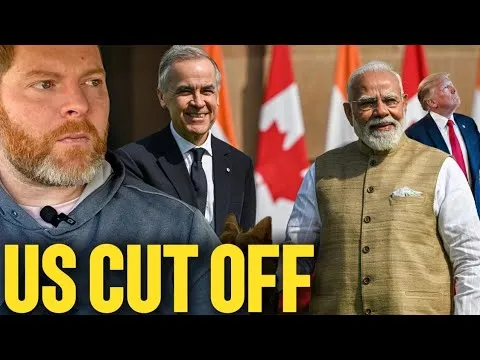
Canada’s Strategic Shift Signals a New Global Economic Order
In a move that could reshape North American energy markets and signal a broader geopolitical realignment, Canada appears to be strategically pivoting away from its deep economic ties with the United States. This shift, driven by Canada’s pursuit of its own national interests and a perceived instability in American leadership and policy, suggests a potential end to the era of unquestioned US economic dominance, particularly in the energy sector. The implications for American consumers, businesses, and its global standing are significant and warrant careful consideration.
The US as a Dystopian Hellscape?
The narrative presented is stark: the United States is depicted as a nation grappling with a broken economy, where the working class struggles to afford basic necessities like groceries, while the ultra-wealthy acquire multiple luxury assets. This internal economic disparity is compounded, according to the analysis, by a foreign policy that appears unfocused and destabilizing. The transcript paints a picture of a leadership more concerned with superficial details, such as interior decorating, than with addressing critical national issues like energy supply chain disruptions in the Strait of Hormuz or preparing the nation for potential military engagements.
“This is who’s in charge of our country. You can’t even stay on top. You’ve destabilized an entire region.
The fuel supply. Onethird of the fuel is hung up in the straight of Hormuz. What was supposed to be a two-day operation looks like it’s going to be stretching on indefinitely by your own words.
But yeah, have you seen the drapes? Have you seen the new lentil? It’s marble and it has gold inlaid in it.
It’s It’s my favorite. I love gold. This is what it’s like to be an American right now.”
Canada’s ‘Adults in the Room’ Approach
In contrast to this portrayal of American chaos, Canada is presented as a beacon of stability and foresight. The analysis suggests that Canadian leadership, exemplified by actions taken by figures like Mark Carney, is prioritizing the long-term survival and prosperity of their nation.
This is particularly evident in Canada’s robust engagement with India, a rapidly growing economic power. The recent signing of significant trade deals, including a substantial uranium supply agreement, signals a deliberate strategy to diversify economic partnerships and secure favorable terms for Canadian resources.
A Strategic Pivot to the East
The core of the argument lies in Canada’s decision to redirect its energy and resource exports. With the United States heavily reliant on Canada for a significant portion of its crude oil (60%) and natural gas imports (99%), any shift in this supply chain could have profound consequences. The transcript posits that if even a small percentage of Canada’s usual energy exports to the US are rerouted to India, it would severely disrupt American energy markets, leading to a significant economic windfall for Canada.
This strategic redirection is not limited to fossil fuels. Canada’s dominance in the uranium market, essential for nuclear power, is also highlighted. A long-term supply deal with India, a nation with growing energy demands, could leave the US, which already struggles to meet its own nuclear fuel needs, at the back of the line.
Derisking in an Unstable World
The term “decoupling” is often used, but the analysis suggests a more nuanced strategy at play: “derisking.” As the United States is perceived as becoming increasingly unstable—philosophically, morally, mentally, and especially economically—Canada is taking steps to insulate itself from potential fallout. This involves selling critical minerals like cobalt, lithium, and nickel, vital for the transition to electric vehicles, at global market rates rather than offering preferential “friend discounts” to the US.
This strategic recalibration is not unique to Canada. The transcript implies a broader trend of former allies “evacuating the US orbit.” The rationale is clear: nations must protect their own interests in a world where traditional alliances are being redefined by transactional relationships based on supply and demand, rather than historical ties.
The Imperial Premium
The consequence for the United States, according to this analysis, is the imposition of an “imperial premium.” As the US engages in foreign policy actions that alienate allies and destabilize regions, it risks losing the economic buffers and preferential trade relationships it has long enjoyed. When Canada, a crucial energy supplier, prioritizes deals with India, the US could find itself in a global bidding war for resources it previously took for granted. The transcript suggests that in such a scenario, a nation burdened by massive debt and crumbling infrastructure would be at a severe disadvantage.
Historical Context and Future Outlook
Historically, the relationship between the US and Canada has been characterized by a unique blend of proximity, shared values, and economic interdependence. The US has often viewed Canada as a stable, resource-rich neighbor, a reliable partner whose resources could be accessed with relative ease.
However, this analysis suggests that this assumption is no longer valid. The perception among a significant portion of Canadians (nearly 70% in one cited article) that the US is a threat, rather than just an economic competitor, underscores a growing divergence in national outlooks.
The future outlook painted is one of increased economic volatility for the United States. As traditional partners like Canada seek to secure their own futures by diversifying their markets and commanding higher prices for their resources, the US may face escalating energy costs and supply chain vulnerabilities. This “great decoupling” might not be a headline-grabbing event, but a gradual, yet profound, recalibration of global economic power, with resources increasingly flowing eastward.
Why This Matters
This analysis highlights a critical juncture in international economic relations. The potential for Canada to significantly alter the North American energy landscape by redirecting exports to India has far-reaching implications. For American consumers, it could mean higher fuel prices and increased energy insecurity.
For businesses, it could signal a need to re-evaluate supply chain dependencies and the costs associated with them. On a geopolitical level, it suggests a weakening of US influence and a shift towards a multipolar world order where economic expediency trumps historical alliances.
The argument that Canada is “derisking” from American instability is a potent one. It suggests that nations are increasingly making calculated decisions based on perceived risk and reward, rather than loyalty or tradition.
If this trend continues, the US could find itself increasingly isolated, facing higher costs for essential resources and diminished leverage on the global stage. The coming years, as the transcript suggests, could see extreme fallout from these shifting economic tides, forcing a stark re-evaluation of America’s role and its relationships with its closest neighbors and traditional allies.
Source: Warning: Canada Just Cut the US Empire Off (YouTube)

Related Articles


Trump’s ‘Energy Independence’ Claim Sparks Global Debate
President Trump's 'America First' policy highlights U.S. energy independence and allies' reliance on the Strait of Hormuz. This assertion has sparked global discussions on energy security and the need for allies to contribute more. The dynamic impacts global energy markets and investor outlooks.


Iran Claims Ceasefire Deal, US Denies Key Demands
Iran has announced a two-week ceasefire agreement, claiming the U.S. has accepted demands for troop withdrawal and Iranian control of the Strait of Hormuz. However, conflicting statements from U.S. officials cast doubt on these claims, creating significant uncertainty about the deal's true nature. The situation remains fluid, with global markets and regional stability hanging in the balance.


Taiwan Opposition Chief Visits China on ‘Peace Mission’
Taiwan's opposition leader, Cheng Lee Wun, is on a six-day visit to China, calling it a 'peace mission' aimed at improving dialogue. The trip occurs amid rising security tensions, with Taiwan's government urging caution against political concessions. Analysts suggest China may be emboldened by global events but an invasion remains unlikely.