Trump’s Foreign Policy Blunders: A Costly Legacy
Six U.S. service members have died, and the finger is being pointed directly at Donald Trump's foreign policy decisions. This analysis delves into the "America First" paradox, the potential return of interventionist doctrines, and the critical need for accountability in foreign policy.


Trump’s Foreign Policy Blunders: A Costly Legacy
The recent loss of six U.S. Service members has ignited a fierce debate about accountability in foreign policy, with a direct accusation leveled against former President Donald Trump. The assertion is stark: these lives were lost due to Trump’s decisions and rhetoric. This isn’t merely a political talking point; it’s a profound moral and military indictment that demands rigorous examination.
The argument posits that Trump, despite campaigning on an “America First” and anti-interventionist platform, ultimately steered the nation towards actions that resulted in these tragic casualties. The responsibility, it is argued, is not just Trump’s, but also that of politicians who fail to explicitly link these deaths to his policies.
The “America First” Paradox
Trump’s rise to power was fueled by a promise to fundamentally alter America’s role in the world. He decried interventions, questioned long-standing alliances like NATO, and pledged to prioritize national interests above all else. This resonated with a segment of the electorate disillusioned with protracted conflicts and perceived global overreach.
Yet, the narrative emerging from the recent casualties suggests a stark contradiction. The very leader who promised to keep America out of foreign entanglements is now being held responsible for the deaths of its soldiers abroad.
The transcript highlights a peculiar political migration: from the interventionist foreign policy of the Bush-Cheney era to the populist “America First” movement, and then potentially back again. This suggests a cyclical nature to foreign policy debates, where disillusionment with one approach can lead to an embrace of its opposite, only for the pendulum to swing back as new problems arise.
Shifting Geopolitical Sands and the Monroe Doctrine
The analysis points to a concerning trend in Republican foreign policy thinking, particularly the resurgence of a hemispheric focus. The argument suggests that after Trump’s initial skepticism towards global alliances, there’s been a rhetorical shift towards asserting dominance within the Western Hemisphere.
This is framed as a return to a form of the Monroe Doctrine, where the U.S. Claims a right to exert influence and control over its neighboring countries. The implication is that this aggressive regional posture, coupled with actions like verbal attacks on allies such as Greenland and Canada, and interventionist rhetoric towards Venezuela, signals a return to a more interventionist, albeit regionally focused, foreign policy.
The mention of striking Iran further complicates this picture, suggesting a potential return to the hawkish foreign policy associated with the Dick Cheney era. This creates a complex mix of policy shifts and potential contradictions, where an “America First” president’s actions seem to be leading the nation back towards the very foreign policy entanglements he once criticized.
Why This Matters
The core of this issue is accountability. When U.S. Service members die in the line of duty, the reasons behind their deployment and the strategic decisions that led to their deaths must be transparent and subject to scrutiny.
The accusation that these six lives were lost specifically because of Trump’s policies, whether direct or indirect, raises critical questions about presidential authority, foreign policy decision-making, and the long-term consequences of political rhetoric. It highlights the immense power and responsibility vested in the presidency and the need for clear lines of accountability, especially when lives are at stake.
Implications, Trends, and Future Outlook
This situation highlights a growing disconnect between campaign promises and the realities of governing, particularly in foreign policy. The “America First” doctrine, while appealing to many, faces the complex challenges of maintaining global stability and protecting national interests, which often necessitate engagement and alliances.
The potential resurgence of a more assertive, regionally focused U.S. Foreign policy, reminiscent of historical doctrines, could signal a new era of geopolitical maneuvering. This could lead to increased tensions with regional powers and a reevaluation of U.S. Global commitments.
The future outlook suggests a continued debate about the optimal role of the United States in the world. Will the nation lean towards isolationism or re-engage with traditional alliances?
Will the lessons learned from past interventions lead to greater caution, or will perceived threats drive a more aggressive stance? The political polarization surrounding these issues means that any future foreign policy direction will likely be contested and subject to intense partisan debate.
Historical Context
The echoes of past foreign policy debates are palpable. The Bush-Cheney era was characterized by large-scale interventions in the Middle East, driven by the post-9/11 security landscape. Trump’s “America First” platform was, in many ways, a direct reaction against the perceived failures and costs of those interventions.
The Monroe Doctrine, first articulated in 1823, has historically been used to justify U.S. Influence and intervention in Latin America. Its potential re-emergence in modern discourse suggests a continuity of certain American foreign policy traditions, even as the political rhetoric shifts.
Understanding these historical precedents is crucial for grasping the current dynamics. The tension between interventionism and isolationism, the role of alliances, and the assertion of U.S. Power have been recurring themes throughout American history. The current moment appears to be a critical juncture, where the nation is grappling with its identity and its place in a rapidly changing global order.
Source: They Died Because Of Trump #politics #fyp #new (YouTube)

Related Articles
Trump’s Iran Speech: Victory Declared, But War Looms
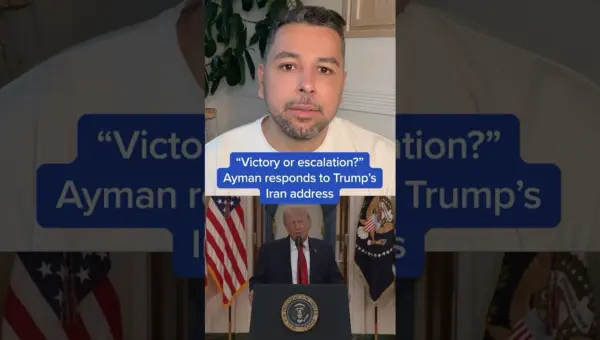
President Donald Trump declared victory over Iran, claiming the nation's military was weakened. However, his speech also hinted at further strikes, leading many analysts to question the narrative of victory and express concerns about potential escalation. Journalist Ayman Mohyeldin highlighted the contradiction between Trump's claims and his intentions for future military action.
Hayes Critiques Trump’s Iran War Speech, Fact-Checks Claims
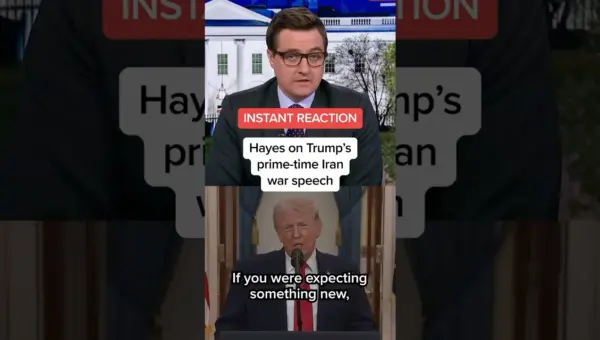
Chris Hayes fact-checked former President Donald Trump's recent prime-time address on Iran, questioning the accuracy of his claims about the Strait of Hormuz and the necessity of military action. Hayes argued that Trump's rhetoric oversimplified a complex geopolitical situation and could hinder diplomatic solutions, urging viewers to seek factual reporting.
Trump Eyes 2-3 More Weeks for Iran War
President Trump indicated that the military conflict with Iran could conclude in the next two to three weeks, during a prime-time address. The speech primarily recapped existing administration statements, with no major new announcements. Trump also addressed the economic impact of the war on U.S. gas prices and reiterated calls for allies to assist with the Strait of Hormuz.