Trump’s Tariff Gambit: A Supreme Court ‘Gift’ Rejected with Dire Political Consequences

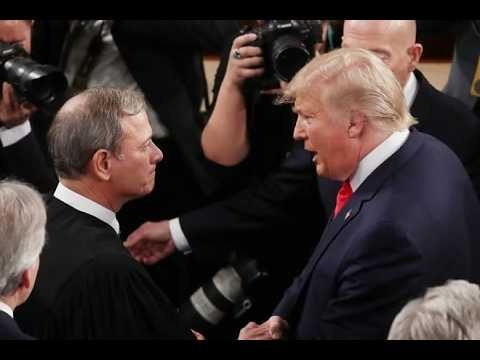
Trump’s Tariff Gambit: A Supreme Court ‘Gift’ Rejected with Dire Political Consequences
In a recent development that has sent ripples through Washington D.C. and beyond, a U.S. Supreme Court ruling declaring former President Donald Trump’s tariffs unconstitutional presented him with what many observers saw as a political lifeline. However, in a characteristic move that has left allies and adversaries alike questioning his strategy, Trump reportedly rejected this “gift,” vowing instead to reimpose and even escalate the very tariffs that had been a consistent drag on his economic policy and public approval. This decision, as analyzed in recent political discourse, is poised to saddle the Republican Party with significant political baggage, particularly as the nation heads into crucial midterm and general elections.
The implications of this choice extend far beyond immediate economic concerns, touching upon fundamental questions of constitutional authority, political strategy, and the enduring influence of personal ego in high-stakes governance. This article delves into the multifaceted consequences of Trump’s tariff stance, explores other significant political and societal issues discussed in recent commentary, including government transparency regarding Unidentified Aerial Phenomena (UAPs) and the ongoing fallout from the Jeffrey Epstein scandal, and considers how these narratives collectively shape the current political landscape.
The Tariff Tempest: A Supreme Court ‘Gift’ Rejected
Donald Trump’s economic policy during his presidency was largely defined by his aggressive use of tariffs on imported goods. These tariffs, often touted as a tool to protect American industries and jobs, were consistently met with criticism for their economic consequences. As highlighted in recent commentary, tariffs are fundamentally a consumption tax. They are imposed on imported goods, initially paid by American companies, and subsequently passed on to American consumers in the form of higher prices for everything from food and clothing to housing and groceries. This direct impact on consumer costs runs directly counter to a core promise of Trump’s campaigns: to bring prices down for American families.
The unpopularity of these tariffs was consistently reflected in public opinion, with approval ratings reportedly hovering around a mere 38%. Despite this, abandoning such a signature economic policy would have been perceived as capitulation — a move anathema to Trump’s political brand. This is precisely why the Supreme Court’s ruling — declaring his tariffs unconstitutional — was widely seen as an “unwitting gift.” It offered Trump a perfect, face-saving “out,” allowing him to pivot away from a disastrous policy by attributing its demise to judicial decree rather than a change of heart or admission of failure.
The Supreme Court’s 6-3 decision underscored a fundamental principle of American governance: the power to impose taxes, including tariffs, rests with Congress, not the Executive Branch. This ruling reaffirmed Article I, Section 8 of the U.S. Constitution, which explicitly grants Congress the power “To lay and collect Taxes, Duties, Imposts and Excises…” and “To regulate Commerce with foreign Nations.” The Court, in essence, reminded the executive branch of the separation of powers and the legislative branch’s constitutional authority over trade policy.
However, instead of embracing this opportunity to recalibrate his economic platform and address surging consumer costs, Trump reportedly doubled down. Initially, he vowed to reimpose tariffs at 10% globally, a figure he swiftly escalated to 15% after what was described as a night of contemplation and escalating anger. This move, observers suggest, not only squandered a prime opportunity for political repositioning but also ensured that the very economic pressures his base is desperate for relief from — high prices and inflation — would continue unabated, if not worsen.
The decision to reimpose tariffs, particularly on a global scale, carries significant economic risks. Tariffs disrupt global supply chains, forcing businesses to seek alternative, often more expensive, sources for goods. This can lead to decreased competitiveness for American companies, retaliatory tariffs from trading partners, and a further increase in domestic prices. For American consumers already struggling with the cost of living, this translates directly into less purchasing power and greater financial strain. Economists widely agree that tariffs, while intended to protect domestic industries, often result in a net negative for the overall economy by distorting markets and increasing costs.
Political Fallout: GOP’s Tariff Trap
Trump’s decision to defy the Supreme Court and double down on his tariff policy creates a significant political conundrum for the Republican Party, particularly with upcoming elections. Midterm elections are often seen as a referendum on the sitting or previous president, and saddling the party with an unpopular policy that directly contributes to higher prices for everyday goods is a risky strategy.
The “extraordinary baggage” of more tariffs means more taxes and higher prices, directly impacting working-class Americans who are not only desperate for economic relief but who may have believed Trump’s original promises to deliver it. This policy, which “helps nobody in the entire GOP,” according to commentators, puts Republican candidates in a difficult position.
For those running in 2026, a stark choice emerges: either disavow Trump’s tariffs and risk incurring his wrath, which often manifests as a primary challenge and potential career-ending opposition, or embrace the tariffs and attempt to justify a consumption tax that disproportionately impacts their constituents. Both options carry the significant risk of losing their jobs. The dilemma highlights the pervasive influence Trump continues to wield over the Republican Party, forcing candidates to prioritize loyalty to him over potentially sound economic policy or the immediate needs of their constituents.
The Supreme Court’s ruling explicitly stated that tariff authority rests with Congress. This provides a clear legislative pathway for any tariff policy if it has sufficient support. Yet, Trump’s refusal to bring the issue to Congress, despite his claims of “great unity amongst the Republicans,” suggests a reluctance to test that unity or acknowledge the constitutional role of the legislative branch. As noted in the transcript, if Trump genuinely believed in the unity and mandate, he could easily instruct figures like Speaker Mike Johnson to bring the tariffs to a vote in the House, where, it is speculated, such a measure might “die on the floor.” This avoidance of the legislative process further underscores a pattern of executive overreach and a disregard for the co-equal branches of government.
The Supreme Court’s Unappreciated ‘Favor’
Perhaps one of the most striking aspects of this situation is Trump’s reported “raging at the Supreme Court.” This reaction is particularly ironic given the Court’s track record of rulings that have often been perceived as deferential to him, including decisions related to presidential immunity and the application of the 14th Amendment. The Court’s tariff ruling, far from being an act of antagonism, was interpreted by some as an attempt to “throw Trump a bone” in an election year, offering him a politically viable exit from an unpopular policy. Justices appointed by Trump himself, like Neil Gorsuch and Amy Coney Barrett, were part of the majority in this decision, suggesting a judicial adherence to constitutional principles rather than a personal slight.
The motivation behind Trump’s steadfast adherence to tariffs, even in the face of judicial rebuke and political peril, is attributed to a deeper, personal drive: the protection of his ego. For Trump, every battle is a personal one, and “winning for the sake of winning” appears to supersede practical policy considerations or broader economic consequences. This approach ensures that prices stay high for Americans and risks alienating international trading partners, who may consequently seek new supply chains that deliberately exclude the U.S. from the equation. The narrative suggests that in Trump’s view, the purpose of the presidency, at least in this context, is to protect the ego of the person in charge, regardless of the suffering it might inflict on the populace.
Beyond Tariffs: Unveiling Government Secrets
While the tariff controversy dominates headlines, other significant discussions from recent commentary shed light on different facets of government and public trust. These include the ongoing debate surrounding Unidentified Aerial Phenomena (UAPs) and the persistent demand for accountability in the Jeffrey Epstein scandal.
The Unidentified Aerial Phenomena (UAP) Enigma
Congressman Jared Moskowitz, a member of the UAP task force in Congress, has been a vocal proponent of greater government transparency regarding UAPs. His insights suggest a deep-seated belief that the American government is “lying to the American people” and withholding crucial information. This sentiment is shared across the political spectrum, with bipartisan efforts involving figures like Chuck Schumer, Harry Reid, and Marco Rubio pushing for disclosure.
Moskowitz highlights the existence of “plenty of video evidence” and “documentary evidence” supporting the existence of UAPs. Crucially, he points to the testimony of “decorated military people with stellar records” — former pilots and high-ranking officials — who have witnessed phenomena that “defied gravity” and moved in ways “we can possibly understand.” This shift from fringe theories to credible military accounts has dramatically changed the public and governmental discourse around UAPs.
The core questions, however, remain: Are these UAPs “ours,” belonging to adversaries, or private companies? Is it advanced technology that has been reverse-engineered? Moskowitz mentions evidence of “crash retrieval programs” in the U.S., Russia, and China, with documents reportedly going back decades, and references individuals like David Grusch who have spoken on the matter. While expressing skepticism about claims of “biologics,” he firmly believes there is “definitely more that the United States government is telling us.”
A disturbing aspect of this alleged secrecy, as discussed, is the method of funding these undisclosed programs. It is suggested that the Pentagon, which has historically struggled with audits, may be “overcharging for certain programs and misappropriating those funds” to finance secret projects without congressional oversight. The example of stealth helicopters used in the Osama bin Laden raid, which emerged from Area 51 without public knowledge or specific congressional funding, serves as a powerful illustration of these “advanced tech programs.” Congress, including members of intelligence and armed services committees, has reportedly been “kept it from us,” with government officials actively trying to block disclosure language in bills. This points to a significant challenge to democratic oversight and accountability within the executive branch, fueling public distrust.
The Lingering Shadow of the Epstein Files
The global ramifications of the Jeffrey Epstein scandal continue to unfold, with recent commentary highlighting significant developments in the UK. The reported arrest of Andrew Mountbatten Windsor, formerly Prince Andrew, on suspicion of “misconduct in public office” — specifically for allegedly sharing confidential government information with Epstein when he was a special trade representative — marks a “seismic event in British history.” This development represents a high-profile individual facing consequences for his association with Epstein, creating a stark contrast with the perceived lack of accountability in the United States.
The question arises whether this international pressure will translate into increased accountability for individuals implicated in the Epstein files within the U.S. While some believe “more information that comes out leads to more questions which leads to more investigations which leads to more accountability,” there is a strong sentiment that the Trump administration has been “hellbent on protecting these people.”
Concerns have been raised about law enforcement officials and political figures — such as Pam Bondi, Todd Blanch, and Cash Patel (the FBI Director) — who are accused of proceeding with a “sense of impunity.” These individuals are alleged to have lied under oath, obfuscated facts, and actively worked to hide co-conspirators while exposing victims, all while the broader Epstein files, legally mandated for release, remain largely withheld or heavily redacted without adequate explanation. The commentary suggests that these officials, described as “woefully unqualified,” owe their loyalty and jobs to Trump and are involved in a “cover-up,” likely operating under the assumption of future pardons.
The allegations against figures like Cash Patel, who reportedly stated there was “no credible information” that Epstein trafficked women and girls to powerful men, directly contradict evidence found in released tranches of the Epstein files. This perceived obstruction of justice and defiance of legal requirements for transparency erode public trust in institutions and the rule of law, creating an environment where powerful individuals appear shielded from consequences that others would face.
Conclusion: A Landscape of Unforeseen Consequences
The confluence of these issues — Donald Trump’s rejection of a judicial “gift” regarding tariffs, the persistent calls for transparency on UAPs, and the ongoing saga of the Epstein files — paints a complex picture of contemporary American politics. Each narrative, in its own way, highlights fundamental challenges to accountability, truth, and democratic governance. Trump’s tariff strategy, driven by what is perceived as personal ego, risks significant economic hardship for Americans and political erosion for his party. Meanwhile, the executive branch’s alleged secrecy regarding UAPs and the perceived cover-up in the Epstein case underscore deep-seated issues of public trust and official impunity.
These developments collectively suggest a political landscape grappling with the tension between individual power and constitutional limits, between public demand for truth and governmental opacity, and between the pursuit of justice and the protection of powerful elites. As the nation approaches future elections, the ability of its institutions to address these challenges will undoubtedly shape its trajectory, demanding a renewed commitment to transparency, accountability, and adherence to the rule of law.
Source: Supreme Court ruling leads to DIRE CONSEQUENCES for Trump (YouTube)

Related Articles
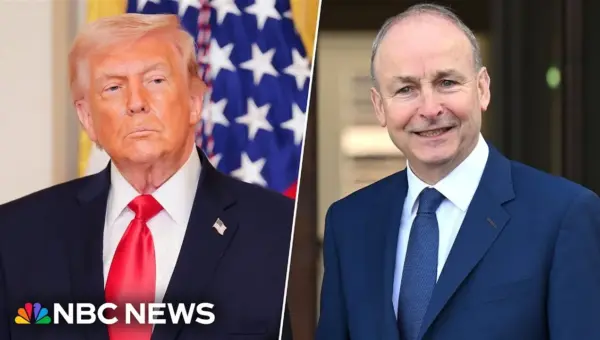
Trump Welcomes Irish Leader, Discusses Trade, Iran Tensions
President Trump welcomed Ireland's Taoiseach to the White House, discussing trade and the strong historical ties between the nations. The meeting also covered President Trump's views on Iran's military capabilities, his criticisms of NATO's support for U.S. initiatives, and upcoming foreign policy engagements.


Beirut Airport Stays Open Amid Nearby Strikes
Beirut's international airport remains open and operational despite nearby Israeli airstrikes targeting the city's southern suburbs. Passengers arriving at the airport reported hearing and seeing the effects of attacks close to the grounds, though many expressed they are "used to it." The airport's continued function highlights its critical role as Lebanon's main gateway.


US Hit by Snow Blizzards and Tornado Threats
Record-breaking snow has buried the Midwest, with one town receiving three feet and Green Bay experiencing its largest March snowstorm since 1888. Meanwhile, the East Coast faced severe storms and tornado threats, leading to over 4,000 flight cancellations nationwide. The South also saw unusual frigid temperatures and snowfall.