US Blockade Halts Iran’s Sea Trade, Diplomatic Talks Advance
The U.S. military has implemented a full blockade on Iranian ports, halting all sea trade and exerting significant economic pressure. Meanwhile, Lebanon and Israel have begun their first direct diplomatic talks in decades, though the effectiveness of these high-level discussions is debated.

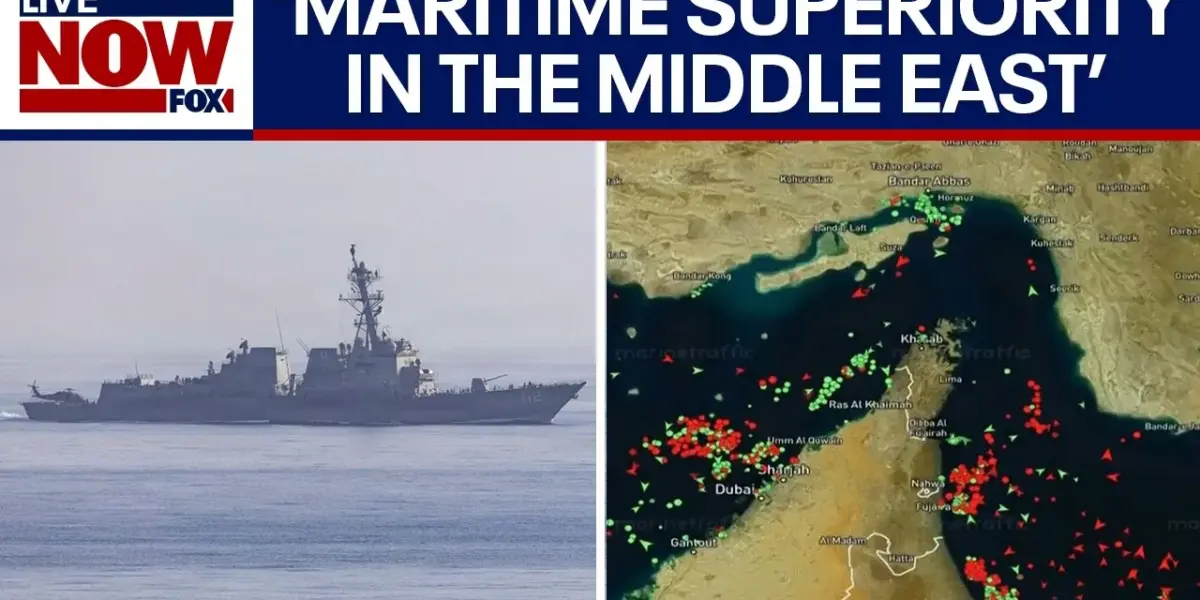
US Imposes Strict Blockade on Iranian Ports
The United States military has implemented a full blockade on Iranian ports, halting all sea trade into and out of the country. U.S. Central Command (Centcom) reported that in less than 36 hours, American forces have completely stopped economic activity by sea, which fuels an estimated 90% of Iran’s economy. Commander Brad Cooper of Centcom stated that U.S. forces are maintaining maritime superiority in the Middle East. During the initial 24 hours of the blockade, six merchant vessels were directed by U.S. forces to turn around and re-enter a port in the Gulf of Oman, with no ships successfully passing through the blockade.
Strait of Hormuz: A Critical Chokepoint
This action targets the strategic Strait of Hormuz, a narrow waterway through which about one-fifth of the world’s oil and natural gas supply passes. Iran had previously allowed ships carrying its oil or paying it subsidies to pass. The U.S. strategy aims to exert economic pressure on Iran, with estimates suggesting the blockade could cost Iran hundreds of millions of dollars daily. The U.S. aims to counter Iran’s control over the strait, asserting that if Iran cannot guarantee free passage, then no passage will be allowed.
Fragile Ceasefire and Tensions Remain
Despite the blockade, a fragile ceasefire between Iran and the U.S. appears to be holding, though tensions are high. President Trump issued a warning that any Iranian warships approaching the blockade would be destroyed. While direct military clashes between the U.S. and Iran have not occurred since the ceasefire, there have been close calls. Two U.S. destroyers passing through the Strait of Hormuz on the day negotiations began saw conflicting reports, with Iran claiming its drones approached the warships and the U.S. stating they passed safely.
The situation remains precarious, with recent incidents highlighting the ongoing conflict through proxies. A drone attack in Kuwait City on the day the ceasefire began, likely launched by an Iraqi militia, suggests Iran’s ability to continue the conflict indirectly. Additionally, threats of Houthi attacks in the Strait of Bab al-Mandab have caused a U.S. carrier, the USS Bush, to reroute around Africa rather than transit the strait, indicating a heightened sense of caution.
Diplomatic Talks Between Lebanon and Israel
Meanwhile, diplomatic efforts are underway, with Lebanon and Israel holding their first direct diplomatic talks in decades in Washington D.C. These discussions, which included Senator Marco Rubio, aim to de-escalate regional tensions. The Israeli ambassador to the U.S. expressed hope that the Lebanese government would not be controlled by Hezbollah’s threats, emphasizing the need for a separation between Lebanon and Iran.
Ambassadorial Discussions, Not Negotiations
However, the effectiveness of these talks is being questioned. Professor Alone Burstein noted that these discussions are being held between ambassadors, whose role is not typically to negotiate agreements. He suggested that the talks serve as a way for the U.S. to demonstrate its ability to manage the situation. The immediate focus of the talks was not a framework agreement, but rather whether both sides could agree to begin negotiations amidst ongoing active conflict.
Lebanon has called for a ceasefire, which Israel has not agreed to. Despite the limitations, these talks are significant as the first direct engagement between Israel and Lebanon since the 1980s. They highlight President Trump’s influence in compelling countries to engage diplomatically. Professor Burstein believes that while these talks may lay groundwork for the future, they are largely ceremonial at this point and unlikely to yield immediate agreements. Meaningful negotiations, he explained, typically involve military and technical experts, with politicians later signing off on deals.
Future of Talks and Key Disagreements
Looking ahead, Professor Burstein believes there is a strong likelihood that talks between the U.S. and Iran will resume. Both sides have an interest in de-escalation, with President Trump seeking to avoid further political and economic complications, and Iran desiring a reduction in pressure. He anticipates that any renewed talks will likely result in minor advancements being announced, followed by an extension of the current ceasefire.
The core issues under negotiation remain the status of Iran’s enriched uranium and control over the Strait of Hormuz. Reports suggest Iran offered to halt enrichment for five years, while the U.S. demanded twenty years and the removal of existing enriched uranium. Iran has also demanded complete control over the Strait of Hormuz, proposing a toll for ships passing through as a form of reparations. The U.S. has rejected these demands.
Source: US says no ships have passed Iran blockade in first 36 hours (YouTube)

Related Articles


Oil Prices Surge to $91 Amid Geopolitical Tensions
Oil prices have surged to $91 a barrel, driven by disruptions in the Strait of Hormuz. This is leading to higher gas prices across the U.S., with California facing particularly steep costs. The situation is fueling debate on energy policy, exports, and the transition to renewable fuels.
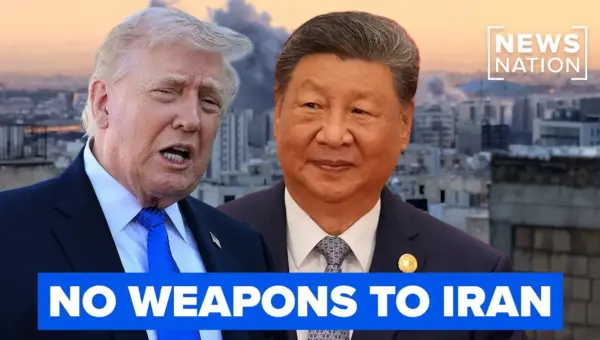
China Backs Strait of Hormuz Blockade, Halts Iran Arms
China has agreed not to supply weapons to Iran and is not opposing the U.S. naval blockade in the Strait of Hormuz. This significant development comes as President Trump prepares for a state visit to China and aims to pressure Iran by controlling vital shipping lanes. The move impacts global trade and reshapes regional power dynamics.

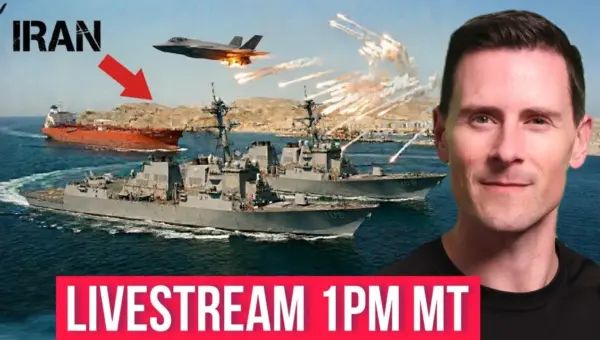
US Navy Blocks Iranian Ships in Hormuz
The U.S. Navy successfully blocked six Iranian-linked ships in the Strait of Hormuz using precise radio warnings. This action ensures global shipping lanes remain open amid rising regional tensions. President Trump has indicated a willingness for renewed peace talks.