Strait of Hormuz Tensions Rise Amid US Blockade of Iran
The US has implemented a blockade on Iranian imports, aiming to halt maritime trade, but reports indicate ships are still navigating the Strait of Hormuz. Meanwhile, Acting Attorney General Todd Blanche asserts Americans should be pleased with President Trump's deep involvement in the Department of Justice, highlighting loyalty as a key principle.


Strait of Hormuz Control Questioned Amid US Blockade
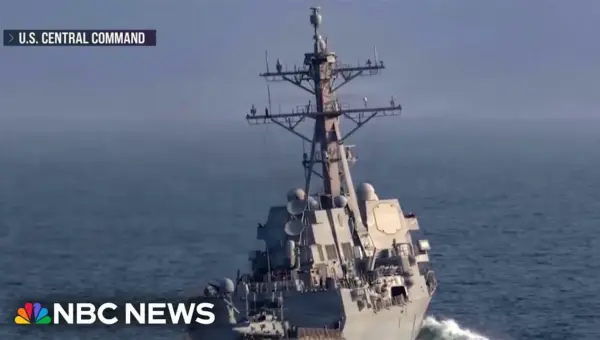
The United States Central Command announced Tuesday that a blockade of Iranian imports had been fully implemented, aiming to halt all maritime trade in and out of Iranian ports. US forces stated they would not impede vessels transiting the Strait of Hormuz to or from other destinations.
In the first 48 hours, US warships reportedly warned at least nine vessels to turn around, with a US official indicating five were carrying oil. However, despite these claims, maritime tracking data and Iranian state media suggest multiple ships have still managed to cross the Strait of Hormuz from Iranian ports.
Navigating a Complex Maritime Situation
US officials have stated that no vessels have been stopped from passing through the Strait, though the exact meaning of this remains unclear. American personnel did not board any vessels, and no shots were fired during these encounters. This approach differs from past actions where US forces boarded and seized ships linked to Venezuela.
The effectiveness of the current blockade hinges on vessel compliance and the US’s capacity to maintain its operations over time. It is not a clear-cut situation, leaving ambiguity about who truly controls the Strait of Hormuz and the efficacy of the blockade.
Mine Clearing Efforts and Potential Risks
US Central Command also reported efforts to clear mines laid by Iran in the Strait of Hormuz to ensure safe passage. Multiple US Navy guided missile destroyers have been deployed for these operations. However, mine clearing is a slow and difficult process.
Experts warn that predictable shipping routes could make US ships more vulnerable to attacks from drones, anti-ship missiles, submarines, and mines. The full extent of progress on mine clearing remains unknown, and these efforts are expected to be prolonged and challenging, likely requiring international assistance.
Economic Pressure and Diplomatic Uncertainty
The blockade aims to pressure Iran’s economy, which heavily relies on oil exports. This comes as in-person talks between the US and Iran were reportedly possible this week. While President Trump expressed optimism about peace talks, Tehran has been more reserved.
Iran had entered recent negotiations feeling emboldened, despite economic hardship, by its ability to control the Strait of Hormuz, which had previously sent energy prices soaring. The US blockade appears to be a response to Iran’s actions, aiming to make Iran pay a high price for blocking ships.
Potential Outcomes of the Blockade
If the blockade successfully cuts off Iran’s oil exports, it could severely impact its economy and potentially force concessions in negotiations, particularly regarding nuclear enrichment. However, it could also lead Iran to refuse further negotiations and opt for escalation. This situation risks exacerbating the global energy crisis and further escalating the conflict.
The outcome depends on whether Iran feels cornered and chooses to make concessions or opts for further confrontation. While the US expresses optimism about peace talks, Iran’s ultimate stance remains uncertain.
New Leadership at the Department of Justice
In a separate development, Acting Attorney General Todd Blanche told NBC News that Americans should be pleased with President Trump’s deep involvement in the Department of Justice (DOJ). Blanche, who previously served as Trump’s personal attorney in several criminal cases, was recently promoted from his role as Deputy Attorney General. This promotion occurred after Trump reportedly removed Pam Bondi, the former AG, due to frustration over a lack of success in prosecuting his political opponents.
Blanche’s Loyalty and DOJ Scrutiny
Laura Jarrett, NBC News Senior Legal Correspondent, interviewed Blanche, describing him as a survivor who is self-assured, resolute, and above all, loyal to the President. Blanche defended the DOJ’s handling of the Epstein files, admitting mistakes were made in releasing victim information, which he called inexcusable and horrifying. He clarified that while no case can currently be brought against anyone based on the current information in the files, the investigation remains open should new evidence emerge.
Perception of Justice Department Control
When asked about who is in charge at the DOJ, Blanche stated that the President is the Attorney General’s boss, a role established by the Constitution. He acknowledged that the President holds ultimate executive authority. This open acknowledgment of presidential control over the DOJ marks a departure from previous administrations that sought to maintain an illusion of distance between the White House and the Justice Department, aligning with the ‘unitary executive theory’.
Legal Cases and Departures from DOJ
The interview also touched upon recent legal decisions that appear to benefit Trump’s allies, such as the overturning of seditious conspiracy convictions for members of the Oath Keepers and Proud Boys. Blanche dismissed claims of a ‘brain drain’ at the DOJ, attributing staff departures to administration changes and normal turnover. He expressed offense at the idea that employees were fleeing, emphasizing the hard work of DOJ personnel.
Future of the Department of Justice
Blanche’s tenure as Acting Attorney General is subject to time limits under federal rules, suggesting a pathway to confirmation for a permanent role. While Democratic opposition is expected during confirmation hearings, he is likely to be confirmed by a Republican-led Senate.
Blanche appears confident in his position, driven by the President’s value of loyalty. Meanwhile, the DOJ is reportedly increasing its investigation into Fed Chair Jerome Powell regarding building renovations, despite a judge’s prior ruling finding no evidence of a crime.
Investigation into Fed Chair Powell Continues
Three prosecutors from the U.S. Attorney’s Office for Washington D.C. Visited the Federal Reserve’s headquarters, stating they were checking on renovation progress. Fed Chair Powell has criticized the investigation as politically motivated, and a judge previously agreed, finding no evidence of wrongdoing.
The U.S. Attorney’s office, however, suggested their prosecutors were justified in continuing their inquiry. This ongoing situation highlights the continued scrutiny of federal officials and the potential for politically charged investigations.
Source: Who’s in Control of the Strait of Hormuz and the Department of Justice? – April 15 (YouTube)

Related Articles

US Warships Enforce Iran Oil Blockade Near Strait of Hormuz
U.S. warships are enforcing an oil blockade on Iran near the Strait of Hormuz, warning vessels against non-compliance with potential force. Iran has threatened to disrupt shipping in the Red Sea if the blockade continues. Meanwhile, Israel remains committed to its military operations against Hezbollah in Lebanon, aiming to dismantle the organization.


US Navy Warns Ships: Iran Port Blockade Now Active
The U.S. Navy has fully implemented a blockade of Iranian ports, broadcasting warnings to vessels against docking or departing. This move aims to cripple Iran's oil exports. Iran has threatened to disrupt traffic in the Red Sea if the blockade continues, while Israel's military operations in Lebanon follow a similar strategy to its actions in Gaza.


US Blocks Iran Ports, Sparks Tensions; Trump Feuds with Pope
The U.S. Navy has implemented a partial blockade of Iranian ports, increasing tensions, while President Trump continues his feuds with Pope Francis and Federal Reserve Chair Jerome Powell. Meanwhile, Live Nation has been found guilty of illegally monopolizing the ticketing market, a verdict that could impact concert-goer prices.