RFK Jr. Accused of Lying to Congress About ‘Reparenting’ Black Children
Robert F. Kennedy Jr. is accused of lying to Congress about his past remarks suggesting all Black children need to be "re-parented" by the federal government. Critics, including Michael Steele, call the comments racist and evidence of his unfitness for office. The controversy highlights concerns about harmful stereotypes and the potential impact on health policy.


RFK Jr. Accused of False Testimony on ‘Reparenting’ Black Children
Robert F. Kennedy Jr. is facing accusations of lying to Congress regarding his past statements about “re-parenting” Black children.
The controversy centers on remarks he made during a 2024 podcast interview, which he allegedly denied or downplayed when questioned by Congresswoman Terri Sewell in a House Ways and Means Committee hearing. Critics argue his comments, suggesting that all Black children need to be “re-parented” by the federal government, are deeply racist and reveal his unfitness for public office.
Controversial Remarks Surface in Congressional Hearing
During a House Ways and Means Committee hearing, Congresswoman Terri Sewell questioned Kennedy about his previous statements. She cited a 2024 podcast interview where Kennedy suggested that Black children on ADHD medication should be “re-parented.” Sewell quoted him as saying, “Every Black kid is now just standardly put on Adderall, SSRI, benzos, which are known to induce violence, and that those children are going to have to go somewhere to get re-parented.”
When pressed by Sewell, who noted Kennedy’s admitted lack of medical board certification and medical school attendance, he appeared to deny making the specific statement. “I don’t even know what that phrase means,” Kennedy reportedly stated, adding, “I doubt that I said that.” Sewell insisted, “You absolutely said it.” The exchange highlighted a significant discrepancy between Kennedy’s past public remarks and his testimony before Congress.
Michael Steele Condemns Remarks as Racist and Unfit
Michael Steele, co-host of The Weeknight, joined the discussion, expressing strong condemnation of Kennedy’s alleged statements. Steele characterized the remarks as “stupid,” “racist,” and “insane.” He emphasized that there is no evidence to support Kennedy’s claim that Black children are universally or disproportionately medicated as he described.
Steele pointed out that the actual problem in the Black community is often the lack of access to necessary healthcare and medication for children with mental health issues. He stated, “What the problem is in the Black community for a lot of parents who are dealing with children who have mental health issues, it’s actually getting the medication that they need, actually having access to the health care system that this fool now runs.”
Questioning the Use of Medication and Stereotypes
Further dissecting Kennedy’s comments, Steele questioned the specific medications mentioned and their purported link to violence. He explained that Adderall is typically used to reduce impulsivity and help lower rates of risky or aggressive behavior, contrary to Kennedy’s suggestion. Steele suggested that Kennedy’s comments might stem from harmful stereotypes of young Black children being overly aggressive.
“So where did that come from? Oh, maybe the stereotyping of young Black of, of young Black kids as being overly aggressive,” Steele mused.
He shared personal experiences as a father of Black sons, acknowledging the challenges of dealing with childhood behavior that can sometimes be rough. Steele argued that labeling such behavior as inherently aggressive feeds into damaging, generational stereotypes within Black communities.
Concerns Over ‘Adultification’ and Parental Rights
Steele also touched upon the concept of the “adultification” of Black children, particularly young Black boys. He linked this to Kennedy’s “re-parenting” idea, questioning who has the right to raise another person’s child. Steele reiterated Congresswoman Sewell’s pointed question: “Have you ever parented, let alone re-parented a Black kid?”
He emphasized the complex realities faced by Black parents, including economic, political, educational, and social stigmas that their children must navigate. Steele questioned what Black parents should expect from a healthcare system led by someone who holds such views about their children and their parenting abilities. He expressed concern about how this attitude could influence healthcare access and policy for the Black community.
Broader Implications for Health Policy
The accusations against Kennedy raise significant questions about his suitability for his current role as Secretary of Health and Human Services. Critics argue that his views on race, parenting, and mental health medication demonstrate a profound lack of understanding and empathy. The situation highlights the potential impact of such beliefs on the development and implementation of health policies affecting minority communities.
Steele concluded by framing Kennedy’s remarks as an attack on all Black children and parents. He stressed the importance of hearing directly from those impacted by such rhetoric and policies. The ongoing debate highlights the need for leaders in public health to approach sensitive issues with accuracy, respect, and a genuine understanding of the communities they serve.
Source: Lawrence: RFK Jr. lied to Congress when he denied saying ‘every Black kid’ should be ‘re-parented’ (YouTube)

Related Articles


Health Secretary Faces Tough Questions on Measles Cases
Health Secretary Robert Kennedy faced tough questions in Congress this week over rising measles cases and declining vaccination rates. Experts are concerned that the US is close to losing its measles elimination status due to a record number of cases last year and insufficient pro-vaccine messaging. The discussion highlighted the critical importance of maintaining high vaccination coverage to protect public health.

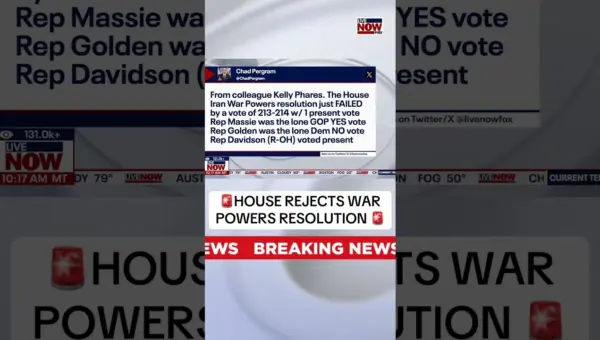
House Rejects War Powers Resolution on Iran
The House of Representatives narrowly defeated a resolution aimed at limiting President Trump's military actions against Iran, with a vote of 213-214. The close outcome revealed divisions among lawmakers, including key votes from a Republican and a Democrat who supported the measure. This decision reinforces the President's authority in foreign military engagements.


GOP Clashes Over Surveillance Powers, Budget Ahead of Deadline
Congress is embroiled in a heated debate over renewing critical surveillance powers under FISA, with Republicans divided on adding privacy protections. Simultaneously, lawmakers are tackling budget priorities, including funding for Homeland Security, and discussing the implications of tax cuts ahead of the midterm elections. Emerging concerns about Artificial Intelligence regulation are also on the legislative agenda.