Pope Leo Calls Out World Tyrants, Clashes With Trump
Pope Leo has publicly criticized global "tyrants" and military actions, leading to a dispute with President Donald Trump. An expert notes the Pope's stance is rooted in Catholic tradition and concerns about rising Christian nationalism. The clash highlights differing views on power and morality, with the Pope representing traditional theology against a politically charged religious movement.

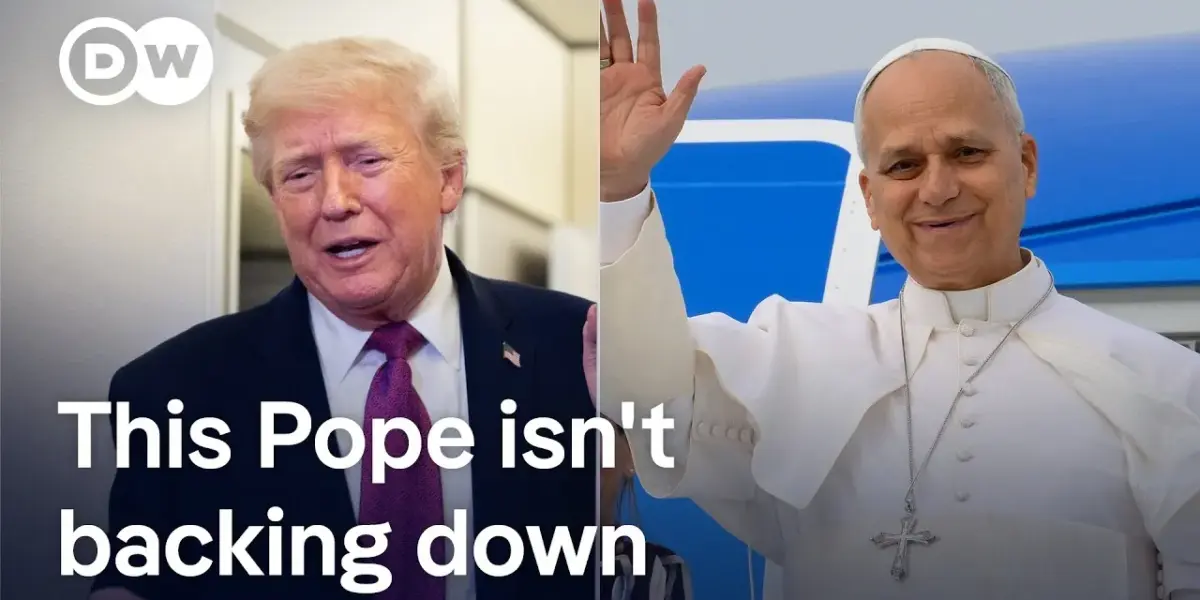
Pope Leo Criticizes Global Leaders, Sparks Row With Trump
Pope Leo, typically a voice for peace, has become embroiled in a public dispute with U.S. President Donald Trump. The Pope has openly criticized U.S. and Israeli military actions in Iran, putting him at odds with the American president.
Just days after President Trump reportedly insulted him, Pope Leo continued to speak out during his tour of Africa. He told followers that the world is being “ravaged by a handful of tyrants.”
Masters of War and Neglected Needs
Pope Leo highlighted how those in power, described as “masters of war,” seem unaware of the ease with which destruction can occur. He noted that while it takes only a moment to destroy, rebuilding can take a lifetime.
The Pope pointed out that billions of dollars are spent on conflict and devastation. Meanwhile, the resources needed for healing, education, and rebuilding are often overlooked and unavailable.
Jesus told us, “Blessed are the peacemakers, but woe to those who manipulate religion in the very name of God for their own military, economic, or political gain, dragging that which is sacred into darkness and filth.”
A Shift in Papal Criticism
Pope Leo, the first U.S.-born pope, had largely avoided direct criticism of President Trump’s policies. This changed when the U.S. president ordered strikes in Iran in March.
President Trump responded with social media posts criticizing the Pope. However, he took a more diplomatic tone when asked about the disagreement on Thursday.
“I have no disagreement with the fact the Pope can say what he wants, and I want him to say what he wants, but I can disagree,” President Trump stated. He emphasized his concern about Iran potentially acquiring nuclear weapons, warning of global jeopardy if that were to happen.
Expert Analysis: Catholic Teaching and Nationalism
Professor Linda Woodhead from King’s College London, an expert in theology and religious studies, discussed the Pope’s stance. She believes Pope Leo’s criticisms stem from traditional Catholic social teaching and theology. Professor Woodhead also noted the Pope’s concern about the rise of Christian ethnationalism, a movement with racist undertones that strongly supports Donald Trump.
Historically, popes have often engaged in disputes with political leaders. Professor Woodhead recalled past conflicts between popes and emperors, including wars and the forced removal of popes from the Vatican. She pointed to recent examples like Pope Francis addressing immigration and Pope John Paul II’s role in criticizing communism.
A Political and Theological Clash
Professor Woodhead described the dispute as both political and theological, arguing that the two aspects are difficult to separate. She views Pope Leo’s message as politically aware, making direct interventions in real-time. However, these interventions are grounded in a long history of Catholic thought, emphasizing law, morality, and democracy.
The Pope is pushing back against what he calls “tyranny” and the idea that “might is right.” He asserts that moral standards and laws must guide the exercise of power, placing himself in opposition to those who believe power alone dictates right and wrong.
American Leaders, Divergent Views on Power
The clash between Pope Leo and President Trump, both prominent Americans, offers insight into their differing views on power and morality. Professor Woodhead suggested that being American allows the Pope to understand the U.S. religious and political climate, particularly the influence of the MAGA movement and far-right Christian groups.
The Pope is reportedly alarmed by the current strength of Christian ethnationalism within the U.S. government. This tradition often promotes a view of “cultural Christianity” and a “Christian civilization” under threat from Islam and “wokeism.” This perspective calls for Christians to fight for civilization, often with an apocalyptic outlook.
Challenging Christian Nationalism
This form of Christian nationalism contrasts sharply with traditional Catholic teaching, which has a more nuanced understanding of Christianity and various forms of authority. Pope Leo, by speaking out, represents this richer theological tradition against the Christian nationalist movement that has a long history in America.
Vice President JD Vance, a recent convert to Catholicism, commented on the Pope’s criticism of the Iran war. Vance stated, “I like that the pope is an advocate for peace.
I think that’s certainly one of his roles. On the other hand, how can you say that God is never on the side of those who wield the sword?” He suggested that when opining on theology, one must ensure it is anchored in truth.
Theological Depth vs. Recent Conversion
Professor Woodhead found Vance’s challenge to the Pope on theology presumptuous. She noted that the Pope likely possesses a far deeper theological education than Vance, a recent convert. Vance’s argument that violence is never justified, Woodhead explained, misrepresents the Pope’s message.
The Pope’s stance aligns with the Catholic Church’s long history of considering “just war” theory. This theory requires a just cause and the use of just means in warfare, a well-developed position that Vance appears to be evading.
Declining Mainstream Christianity in the U.S.
Despite the Pope’s clear message, there has not been a significant public outcry in the United States. Professor Woodhead attributes this to rapid changes in American Christianity. The U.S. is becoming more secular, similar to Europe, and the once large, liberal center of Christianity has shifted significantly.
Christianity in the U.S. has become more nationalistic and right-wing. Many young people have left churches as a result, weakening the liberal Christian voice. While pockets of dissent exist, such as an Episcopalian bishop’s critique of then-President-elect Trump’s inauguration speech, this mainstream tradition is now much weaker than it was decades ago.
Religious Leaders and the Exercise of Power
The Trump administration frequently invokes religion and God to defend its policies. Pope Leo described this as dragging the sacred into “darkness and filth.” While many European churches have struggled to push back against right-wing political power, some are beginning to repudiate such ideologies.
The Church of Norway, for example, was compelled to repudiate right-wing Christianity after Anders Breivik, a Christian terrorist, murdered many people. This led the church to confront past anti-Muslim and anti-Jewish sentiments and work with Muslims against the idea of reestablishing an anti-immigrant, anti-Muslim Christian civilization focused on power.
Catholic Church Follows Protestant Lead
It is notable that the Catholic Church is now echoing some of these same positions. This development suggests a growing solidarity among religious institutions in challenging the conflation of faith with right-wing political agendas. The struggle between an “eye for an eye” approach and “turning the other cheek” remains a central theme.
Professor Linda Woodhead from King’s College London provided valuable context for this complex situation. The discussion highlighted the ongoing tension between traditional religious teachings and the appropriation of religious language for political gain.
Source: Pope Leo: ‘world is being ravaged by a handful of tyrants’ amid row with Trump | DW News (YouTube)

Related Articles
Trump Declares America Saved, Promises More Victories Ahead
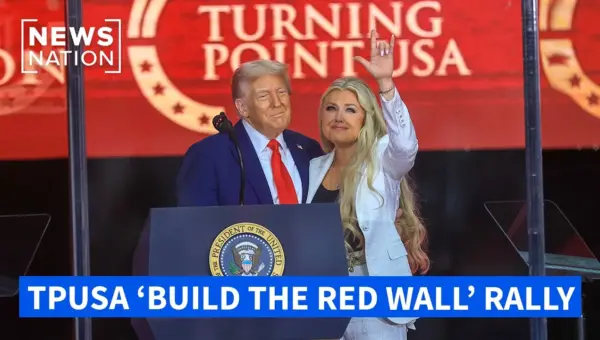
Former President Donald Trump addressed a Turning Point USA rally, asserting his policies revitalized the economy, secured borders, and restored global respect. He detailed numerous achievements in economic, foreign, and social policy, contrasting them with the current administration. Trump urged voters to win the midterm elections to preserve this progress and prevent a decline into a 'third world nation.'


Trump’s Strait Claims Crumble as Iran Recloses Key Waterway
Dozens of ships are turning away from the Strait of Hormuz after Iran seemingly closed it again, contradicting earlier announcements by former President Donald Trump. This event highlights the ongoing geopolitical tensions and their impact on global shipping and trade.
European Allies Rebuke Trump’s ‘Toxic Brand,’ Shun ‘Genocidal Rhetoric’
European allies are increasingly distancing themselves from Donald Trump's 'MAGA' brand, citing his 'genocidal rhetoric' and attacks on the Pope. Reports indicate that leaders previously aligned with Trump are now finding his conduct too extreme. This global backlash, highlighted by shifts in Italy and Hungary, suggests a growing international unease with Trump's political approach.