Pope Francis Draws Fire From Trump Allies Over War Comments
Pope Francis's recent comments suggesting prayers of those involved in war may go unheard have drawn criticism from allies of former President Trump. Michael Johnson argued that religious leaders should expect political responses when entering political discussions. He also highlighted the 'just war' doctrine and the Trump administration's counter-terrorism successes.

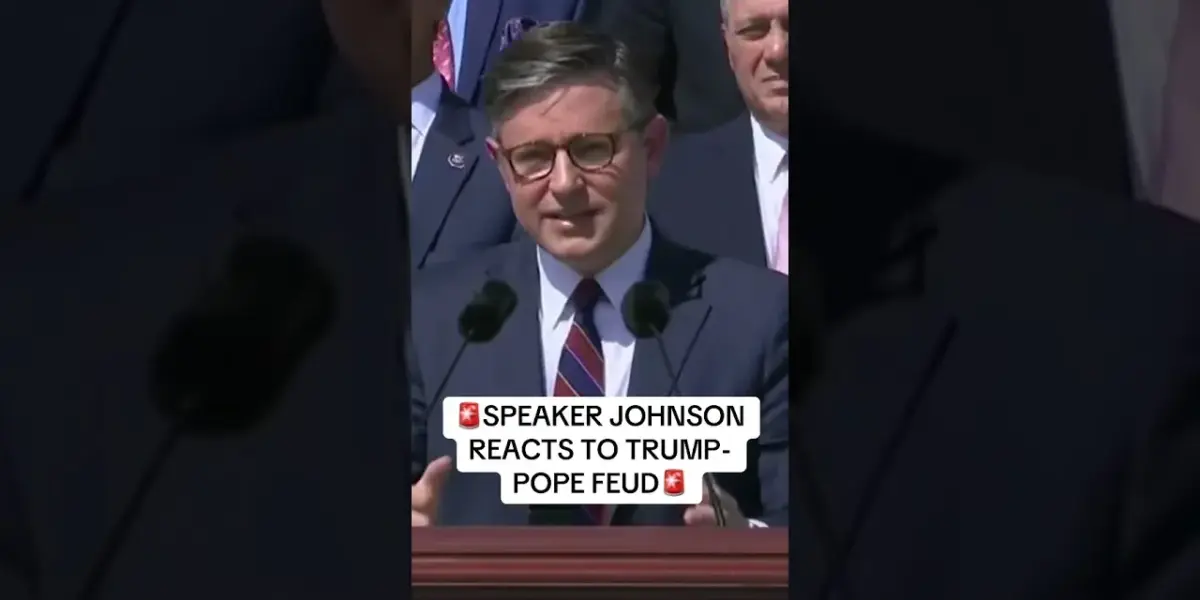
Pope Francis Faces Criticism for Remarks on War
Pope Francis has drawn criticism from allies of former President Donald Trump following his comments about war and prayer. The Pope suggested that those who engage in war may not have their prayers heard by Jesus. This statement, made recently, has sparked a debate about the role of religious leaders in political matters.
Michael Johnson, speaking on a recent broadcast, suggested that religious leaders should expect a political response when they wade into political discussions. He believes the Pope received a predictable reaction to his remarks. Johnson found the Pope’s specific comment about prayers of those involved in war to be surprising.
Theological Context and ‘Just War’ Doctrine
Johnson pointed to established Christian theology, specifically the ‘just war’ doctrine. This doctrine explores the conditions under which war might be considered morally permissible. It acknowledges that there can be a time and purpose for conflict, a concept referenced in biblical texts.
The ‘just war’ doctrine is a long-standing theological framework. It helps believers understand complex ethical issues related to warfare. This doctrine suggests that not all wars are inherently evil, but rather their justification depends on specific circumstances and intentions.
Trump Administration’s Perspective on Global Security
Johnson argued that comments from President Trump and Vice President Pence reflect a deep understanding of critical global stakes. Their views are informed by classified briefings detailing the seriousness of current international situations. These briefings likely highlight significant threats and the potential consequences of inaction.
The administration’s perspective, as described by Johnson, focuses on concrete actions taken to counter terrorism. He specifically mentioned the removal of a nation’s ability to be a major sponsor of terrorism. This action, he believes, has directly saved countless innocent lives.
Impact of Counter-Terrorism Efforts
According to Johnson, the disruption of state-sponsored terrorism has significant positive outcomes. He stated that potentially millions of innocent people will be spared from death by terrorists. This outcome is presented as a direct benefit of the administration’s policies.
The reduction in terrorist activity is framed as a major success. It allows ordinary citizens to live without the constant threat of violence. Johnson emphasized that this protection of life is a clear and positive result of the actions taken.
Broader Implications of Religious Statements in Politics
The exchange highlights the delicate balance religious figures must strike when commenting on political issues. While religious leaders have the freedom to express their views, their statements can provoke strong reactions, especially when they touch upon sensitive topics like war. This can lead to a complex interplay between faith, politics, and international relations.
Understanding the context behind such statements is crucial for a balanced perspective. Johnson’s remarks suggest that political leaders often operate with a different set of information, including classified intelligence, which shapes their views on national security and global affairs. This difference in information can lead to differing interpretations of events and policies.
Looking Ahead
The ongoing dialogue between religious leaders and political figures will likely continue. Future statements from the Vatican or other religious bodies on global conflicts will be closely watched. The response from political leaders and their supporters will offer further insight into the evolving relationship between faith and governance.
The impact of these discussions on public opinion and international policy remains a key area to observe. As global tensions persist, the intersection of religious and political discourse will continue to be a significant factor.
Source: Johnson on Trump-Pope feud (YouTube)

Related Articles
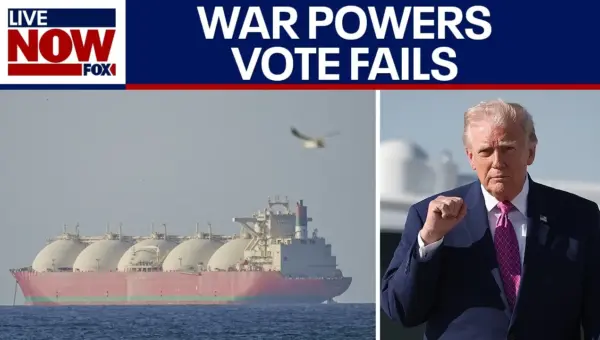
Senate Blocks Limits on Trump’s War Powers Against Iran
The U.S. Senate has voted against limiting President Trump's war powers concerning Iran, rejecting a resolution that aimed to restrict his ability to order further military strikes. Democrats have repeatedly pushed for such limitations, citing concerns over potential escalation and the cost of conflict. Despite some bipartisan unease, the measure failed to gain sufficient support.
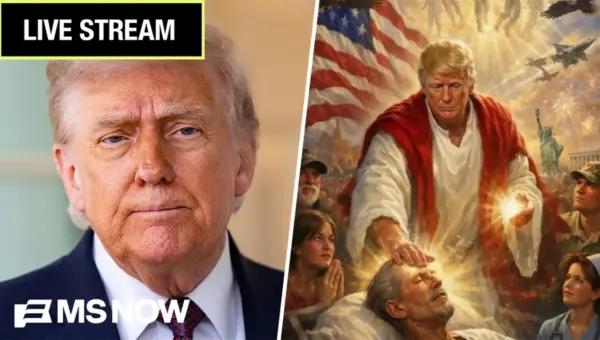
White House Briefs Amid Outcry Over Trump’s AI Jesus Image
The White House held a press briefing addressing public backlash over a controversial AI-generated image of Donald Trump as Jesus Christ. The incident highlights growing concerns about the use of artificial intelligence in political messaging and the spread of misinformation. Officials reiterated the administration's commitment to combating AI misuse and promoting transparency.
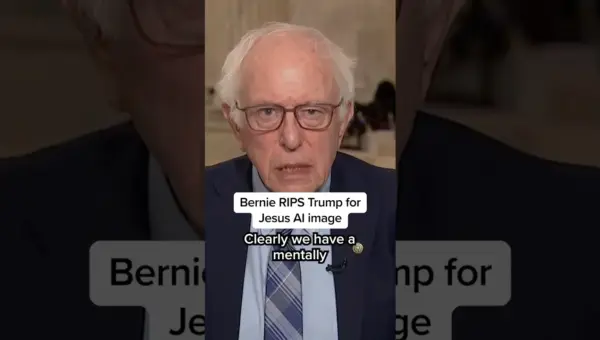
Bernie Sanders Slams Trump Over AI Jesus Image
Senator Bernie Sanders has strongly condemned former President Donald Trump for sharing an AI-generated image of Jesus Christ, calling him "mentally unstable." The incident highlights growing concerns about the misuse of artificial intelligence in political discourse and the spread of misinformation.