Obama’s Return Fuels Trump’s Fears in Redistricting Battle
Barack Obama's endorsement of a Virginia redistricting referendum signals a strategic escalation in the battle for electoral control, directly challenging Donald Trump's influence. This move highlights the growing nationalization of fights over district maps and their potential impact on the U.S. House of Representatives.

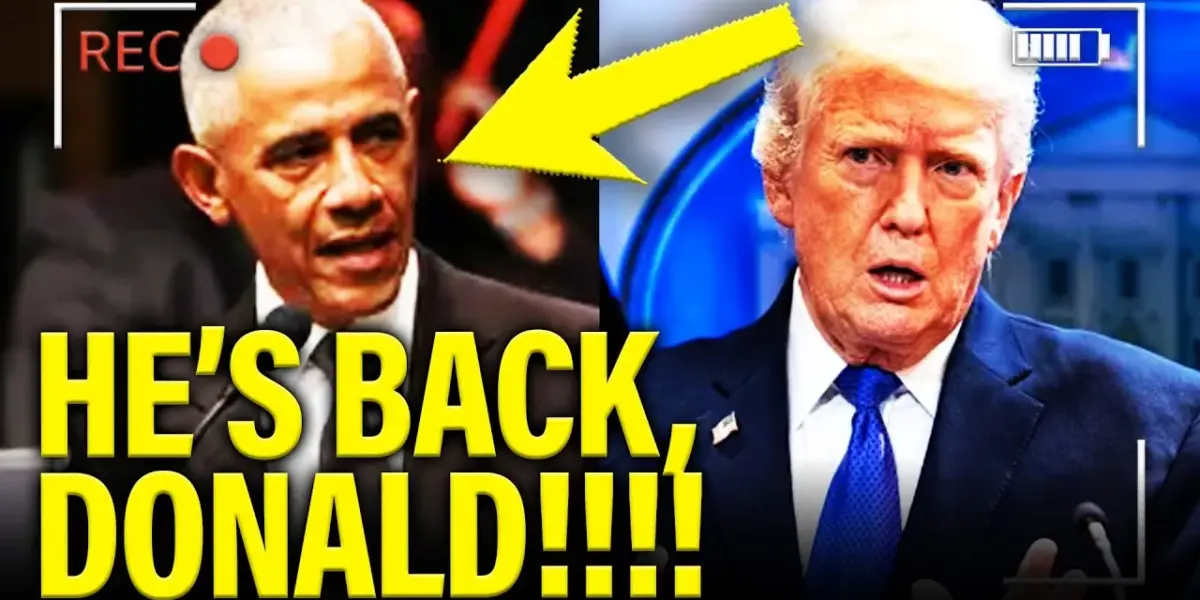
Obama’s Re-Entry Ignites Political Firestorm, Targeting Trump’s Weaknesses
The political landscape is once again being reshaped, not just by policy debates, but by the strategic maneuvering of familiar figures. Former President Barack Obama has stepped back into the political arena, a move that history suggests is particularly adept at provoking Donald Trump. This week, Obama publicly endorsed a Democratic initiative in Virginia aimed at redrawing congressional districts, urging voters to support a referendum that would implement a new map before the 2026 midterms.
Obama framed the effort as a crucial step to “level the playing field” and protect voters from what Democrats describe as aggressive redistricting tactics employed by Republicans in other states. The proposal, if approved by Virginia voters in an April referendum and subsequently by the courts, could lead to a new congressional map that potentially grants Democrats several additional seats. This intervention arrives at a critical juncture, as Republican-controlled states have been actively redrawing their congressional maps mid-decade to secure an electoral advantage for upcoming elections.
The Echoes of Division and the Call for Hope
Obama’s message resonated with a broader commentary on the state of American democracy. He lamented the daily assaults on democratic institutions, the rhetoric of fear and division, and the notion that some citizens matter more than others.
He also spoke of the celebration of greed and bigotry, the mockery masquerading as strength, and the denigration of science and expertise in favor of ignorance and dishonesty. In moments like these, he acknowledged, it can be difficult to maintain hope, and the temptation to succumb to cynicism or compromise with power can be strong.
“Every day you wake up to things you just didn’t think were possible. Each day we’re told by those in high office to fear each other and to turn on each other and that some Americans count more than others and that SOME DON’T EVEN COUNT AT ALL.” – Barack Obama (paraphrased from transcript)
However, Obama also invoked the spirit of Reverend Jesse Jackson, portraying him as an inspiration to choose a harder, more impactful path. He called for individuals to become “heralds of change” and “messengers of hope,” to step forward and make a difference in their communities, not for personal gain, but for purpose and to fulfill a moral imperative. This call to action is particularly poignant, serving as a stark contrast to the divisive tactics that have characterized much of recent political discourse.
Redistricting as a Political Weapon
The Virginia redistricting effort is presented by Democrats as a direct response to Republican-led redistricting pushes, notably those encouraged by Donald Trump in states like Texas. The transcript highlights a similar tactic in California, where a redistricting proposition, though initially seen as a Republican ploy, ultimately “royally backfired in Trump’s face.” This suggests a potential for such strategies to rebound unpredictably.
The narrative that Democrats are in disarray and incapable of countering Trump is challenged by the example of Gavin Newsom. The transcript posits Newsom as a successful case study in confronting Trump, noting his prominent position in betting markets for the next Democratic nominee.
The success of Proposition 50 in California, which involved Newsom in a redistricting fight, is cited as evidence of Democrats’ growing efficacy in this arena. The claim is made that Republicans are no longer funding opposition to it, and its approval rating, even in conservative Orange County, stands at 57%, indicating broad support for redistricting.
Shifting Electoral Tides and Trump’s Vulnerabilities
The analysis suggests a broader shift in the political winds, with Democrats performing better in generic ballot polls and key constituencies that Trump previously won showing declining support. Young voters and Latino voters, in particular, are highlighted as groups whose approval of Trump has significantly decreased since his initial entry into office. Headlines about layoffs at major companies like UPS, Amazon, and Intel are presented as indicators of economic challenges that could negatively impact the incumbent party.
Obama’s intervention is significant not just for its content, but for its timing and its direct challenge to Trump’s influence. Trump’s political ascent was, in part, built on his opposition to Obama, from the “birther” conspiracy to ongoing attacks.
Few figures seem to provoke Trump’s attention as effectively as his predecessor. Historically, Trump has consistently responded to Obama’s re-entry into political conversations, whether through speeches or criticisms.
Obama’s message continues to hold considerable weight, capable of mobilizing Democratic voters, especially younger demographics and moderate suburbanites. At a time when Trump is reportedly losing ground with independents, Obama’s involvement carries heightened stakes. The Virginia redistricting proposal is more than just a local issue; it could significantly influence control of the U.S. House of Representatives in the 2026 elections.
The Broader Implications for National Politics
The fight over redistricting in Virginia is framed as part of a larger national contest over the rules of electoral competition. Obama’s endorsement signals that Democrats perceive this moment as strategically vital, particularly in a midterm cycle where they have shown signs of outperforming expectations, even in traditionally Republican strongholds like Texas.
The transcript provides data from Texas primaries to illustrate this trend. In 2022 midterms, a significantly larger proportion of primary ballots were cast in Republican primaries (62%). However, for the 2026 cycle, more votes are being cast on the Democratic side.
This shift is presented as highly unusual, with the last time more Democrats voted in Texas primaries for a midterm election being as far back as 2002. This pattern is interpreted as a sign of Trump’s panic and his calls to end runoffs, indicating a recognition of changing tides that could pose a significant threat in the upcoming November elections.
Why This Matters
The involvement of Barack Obama in the Virginia redistricting battle signifies a strategic escalation by the Democratic Party. It transforms a state-level issue into a national political flashpoint, directly linking it to Donald Trump’s influence and the broader fight for control of electoral processes.
Obama’s endorsement not only mobilizes key Democratic voter segments but also is a potent counter-narrative to the perception of Democratic disarray. The potential impact on the balance of power in the House of Representatives makes this a critical battleground, highlighting how redistricting, often a behind-the-scenes process, can have profound consequences for American democracy.
Implications, Trends, and Future Outlook
The current situation suggests a growing trend of national political figures engaging directly in the mechanics of electoral competition, such as redistricting. Obama’s intervention indicates a recognition that controlling the electoral map is as crucial as winning votes. The success of such efforts, like the one in Virginia, could embolden Democrats to pursue similar strategies in other states, potentially leading to a significant shift in congressional representation.
Conversely, if these efforts fail, it could signal a need for recalibration of Democratic strategy. The increasing polarization around redistricting highlights the deep partisan divisions regarding electoral fairness and representation. The future outlook suggests continued high-stakes battles over how districts are drawn, with significant implications for voter access, representation, and the overall balance of power in American politics.
Historical Context and Background
Redistricting, the process of drawing electoral district boundaries, has historically been a contentious issue in American politics. It is intended to occur every ten years following the census to reflect population changes. However, it has frequently been manipulated for partisan gain, a practice known as gerrymandering.
This has led to numerous legal challenges and public debates over fairness and representation. Donald Trump’s presidency saw an increased focus on leveraging redistricting to solidify Republican advantages, a strategy that has faced both successes and significant pushback. Barack Obama’s direct involvement now marks a notable escalation, bringing the weight of a former presidency into a fight that has often been waged at the state and local levels, highlighting the increasing nationalization of political battles over the very structure of American democracy.
Source: Trump gets NIGHTMARE NEWS as OBAMA comes back to HAUNT HIM (YouTube)

Related Articles
Trump Warns Iran: Bombing Could Start ‘Tomorrow’
President Trump has signaled a tough stance on Iran, warning that he expects to be "bombing tomorrow" if a satisfactory deal isn't reached, with the current cease-fire set to expire. Despite the escalating rhetoric, financial markets have remained measured, seemingly pricing in a future resolution and a potential "peace dividend."
Warren Questions Fed Nominee’s Independence from Trump
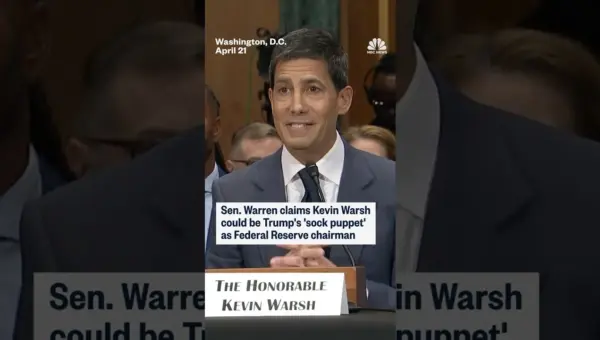
Senator Elizabeth Warren questioned Federal Reserve nominee Kevin Warsh's independence from President Trump, suggesting he might act as a "sock puppet." Warren cited Trump's alleged remarks about controlling interest rates through his chosen nominee. Warsh attempted to distance himself from political questions during the hearing.

Trump’s Iran Claims Under Scrutiny After False Statements
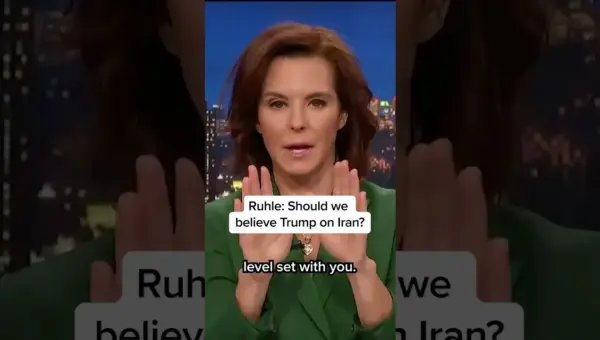
MSNBC anchor Stephanie Ruhle has called attention to several untrue statements made by President Trump regarding Iran over the past week. Ruhle's report fact-checked the President's claims, highlighting discrepancies and questioning the accuracy of information presented on a critical international issue. The segment stressed the importance of reliable information for public trust and informed decision-making.