Iran Blockade: Trump’s Risky Gamble Leaves World Guessing
The US naval blockade of Iran's oil exports in the Strait of Hormuz faces questions about its effectiveness and long-term strategy. Experts debate whether this move will force Iran to a deal or lead to costly escalation, while nuclear ambitions and asymmetric warfare capabilities add layers of complexity. A political solution is increasingly seen as the only path forward.

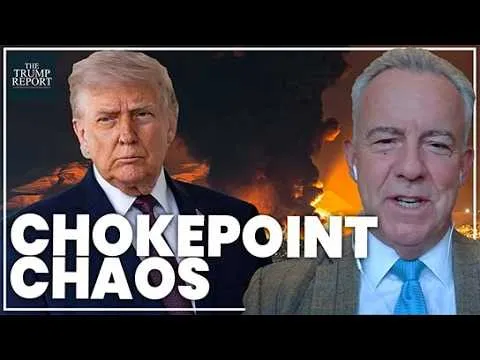
Iran Blockade: Trump’s Risky Gamble Leaves World Guessing
The Strait of Hormuz has become a focal point of international tension, with the United States implementing a naval blockade. The stated goal is to prevent Iran from benefiting from oil exports, especially to countries like China. However, experts question the immediate effectiveness and long-term strategy of this move, suggesting it may not yield the quick results President Trump desires.
Blockade’s Slow Burn
A naval blockade is not a quick fix. It typically takes weeks or months to have a significant impact. This gives Iran more time to weather the storm than President Trump might have. While the US Navy is allowing ships that pose no threat to Iran to pass, Iranian oil tankers and vessels linked to Iran are being targeted. Two days into the operation, its success is hard to gauge, with some traffic reportedly turning around. However, the real economic pinch won’t be felt for some time.
Iran’s Workarounds and US Complications
Iran is already looking for ways around the blockade, potentially shifting trade to alternative routes like the Caspian Sea or overland corridors through Russia and Central Asia. This strategy aims to reduce reliance on the Strait of Hormuz. However, moving large amounts of oil through these alternative routes is not simple. Iran has invested heavily in infrastructure on Kharg Island to offload oil onto supertankers, a process that cannot be easily replaced by smaller tankers or alternative ports that are still under construction.
Mixed Messages and Unclear Goals
The US objective appears to be choking Iran’s oil-dependent economy to force a deal. Yet, the impact of such blockades often falls hardest on the general population, not just the ruling regime. There are concerns that the money saved by the regime might not reach the people, and the intended help for the Iranian populace may not materialize. This leads to questions about the strategy’s clarity and whether it truly aligns with the goal of helping the Iranian people.
Nuclear Ambitions: A Complex Negotiation
The broader context involves Iran’s nuclear ambitions. While Iran claims it does not seek nuclear weapons, evidence such as highly enriched uranium levels (60% and potentially moving towards 85% for weapons-grade) raises concerns. The previous nuclear deal, the JCPOA, took years to negotiate. Restarting such complex talks in the current climate, especially after a conflict, seems highly unrealistic within a short timeframe. The US and its allies distrust Iran’s intentions, especially given past evasiveness with inspections.
Historical Parallels and Strategic Dilemmas
The situation draws parallels to the Budapest Memorandum of 1994, where Ukraine gave up its nuclear weapons in exchange for security guarantees from the US, Russia, and the UK. Russia’s subsequent invasion of Ukraine highlights the perceived value of nuclear weapons for national security, potentially influencing Iran’s calculations. This historical context suggests that Iran might see nuclear weapons as the ultimate guarantee of its safety.
The Price of Escalation
President Trump has indicated that the current conflict is nearing its end, yet reports of additional US troops being sent to the Middle East suggest a different reality. Sending more troops could be a tactic to gain leverage for negotiations. However, a ground invasion of Iran, facing a large and determined military, would come at an immense human cost. Many military advisors believe that such an escalation is not worth the price, especially given the potential for heavy casualties.
Iran’s Asymmetric Warfare Capabilities
If conflict erupts, Iran possesses asymmetric warfare capabilities that could cause significant disruption. These include anti-ship missiles, drones, and fast, unmanned patrol boats. While the US Navy is powerful, a sustained swarm attack using quantity over quality could pose a serious threat, even to American warships. Iran’s intimate knowledge of the Strait of Hormuz, with its narrow shipping lanes, gives it a significant home-field advantage.
A Political Solution Needed
Ultimately, many analysts believe there is no purely military solution to the current crisis. While military actions might temporarily set back Iran’s nuclear or missile programs, the core issues remain. A political solution, involving bringing Iran in from the cold, easing sanctions, and offering a different path, is seen as the only way to achieve lasting stability. Without addressing the root causes, the problem is likely to resurface, potentially with Iran holding even more leverage.
Robotics Transforming Warfare
Meanwhile, the conflict in Ukraine highlights the growing role of robotics and drones in warfare. Ukraine’s use of drones and ground robots without direct troop involvement marks a significant shift. This technology is transforming frontlines, with drones now causing a majority of casualties, a stark contrast to past conflicts. This innovation puts pressure on Russia, which is reportedly losing more soldiers than it recruits and struggling economically. Ukraine’s development of its own advanced weaponry, supported by the West, is proving to be a significant challenge for Russia.
Source: Trump risks ‘huge price to pay’ with next Iran move | Former RAF Air Vice-Marshal (YouTube)

Related Articles

Oil Prices Surge to $91 Amid Geopolitical Tensions
Oil prices have surged to $91 a barrel, driven by disruptions in the Strait of Hormuz. This is leading to higher gas prices across the U.S., with California facing particularly steep costs. The situation is fueling debate on energy policy, exports, and the transition to renewable fuels.


Trump’s Allies Rebel: Conservatives Slam President’s Policies
Prominent conservative figures and lawmakers are openly criticizing President Trump's policies in 2026, signaling a growing divide within the movement. From Candace Owens questioning the Iran conflict to Senator Rand Paul challenging trade policy, a wave of dissent is challenging the president's agenda.

China’s Iran Gambit: Deception or a New World Order?
President Trump claims China will stop sending weapons to Iran, but deep skepticism remains due to China's past support and use of spy satellites to aid Iran. This move could be a strategic ploy to weaken the US military.