IMF: Middle East War Halts Global Economic Growth Momentum
The International Monetary Fund (IMF) has cut its global economic growth forecast, attributing the halt in positive momentum to the ongoing Middle East war. Higher commodity prices are driving inflation forecasts upward, impacting economies worldwide. While the U.S. shows relative insulation due to its energy export status, consumers may face higher gas prices.

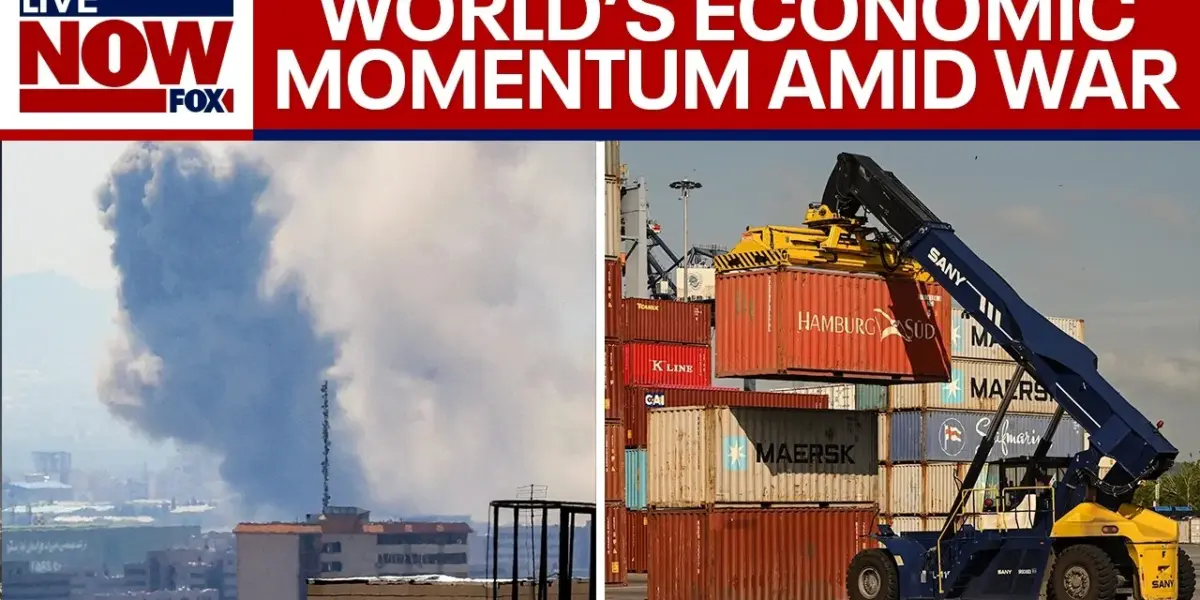
Global Growth Outlook Dims as Middle East Conflict Disrupts Momentum
The International Monetary Fund (IMF) has significantly lowered its global economic growth forecast, citing the ongoing conflict in the Middle East as the primary reason for halting positive momentum. The organization’s chief economist highlighted that the world was already facing a slowdown, but the war has exacerbated these challenges, leading to higher commodity prices and increased uncertainty.
Economic Forecast Revised Downward
In its latest report, the IMF projects global growth to slow to 3.1% in 2026. This marks a downward revision from previous expectations. Inflation is also expected to rise to 4.4% before easing to 3.7% in 2027. These figures represent a 0.6 percentage point upward revision in inflation forecasts compared to January, largely driven by increased commodity prices, particularly energy.
“War in the Middle East has halted this momentum,” stated the IMF’s chief economist. This statement underscores the significant impact of geopolitical events on the global financial system.
Factors Supporting Growth Before the Conflict
Before the recent conflict, the global economy had shown resilience. Despite major trade disruptions and policy uncertainty in the previous year, the private sector adapted well. This adaptation was supported by several factors, including lower-than-expected U.S. tariffs, fiscal support in various countries, favorable financial conditions, and a boom in the technology sector. Economists had anticipated this positive momentum would carry into 2026, potentially leading to an increase in global growth forecasts.
Impact of the Middle East War
The war in the Middle East has created significant disruptions, particularly to energy markets. The IMF’s analysis suggests that the conflict’s impact on global growth is primarily concentrated in the Middle East itself and in regions heavily reliant on energy imports from the area, such as East Asia and Europe. The assumption is that the conflict will be relatively short-lived, but the duration and scope remain uncertain.
United States Economy’s Relative Insulation
While the global outlook is concerning, the United States economy appears relatively insulated compared to other regions. Bill Adams, Chief U.S. Economist at Fifth Third Commercial Bank, explained that the U.S. has been a net exporter of petroleum products since 2019. This makes the U.S. less vulnerable to rising oil prices compared to countries that are major energy importers. He noted that the U.S. economy has also shown resilience during past periods when other parts of the world lagged, such as during the dot-com boom in the late 1990s.
Effects on the Average American
For the average American, the most immediate impact of the conflict is likely to be higher prices at the pump for gasoline. Businesses also face increased costs for diesel fuel, which is essential for transporting goods. These higher operational costs can eventually translate into increased consumer prices. Industries with strong international ties, such as agriculture, entertainment, software, and higher education (due to international students), may also feel the effects of slower global growth more directly.
Potential Scenarios and Future Outlook
The IMF’s forecast is based on a base case scenario that assumes a short-lived conflict. If the war ends quickly, and energy shipments resume, energy prices could fall, leading to a brighter global economic outlook. The U.S. could recover relatively fast in such a scenario. However, the duration of the conflict and its impact on energy markets remain key variables. The economic impact on Americans is currently viewed as a shock to prices, with its long-term effects dependent on the conflict’s resolution.
Looking Ahead
As the situation in the Middle East continues to evolve, economists and policymakers will closely monitor energy prices, trade flows, and geopolitical developments. The IMF’s revised forecast serves as a stark reminder of the interconnectedness of the global economy and the profound impact that regional conflicts can have on worldwide growth and stability. The coming months will be critical in determining the extent of the war’s long-term economic consequences.
Source: Iran war has 'halted' world's economic momentum, IMF says (YouTube)

Related Articles


Trump’s Trade Wars Fueled Inflation, Fed Report Claims
A new Federal Reserve report links Donald Trump's trade wars to increased inflation since January 2025. Economists claim prices would have fallen to pre-pandemic levels without these tariffs. This finding highlights the significant consumer cost of protectionist trade policies.


Economy Crumbles: Americans Can’t Afford Basics
A significant majority of Americans report that their incomes can't keep up with rising prices, forcing cutbacks on essentials and reliance on credit. This economic strain is highlighted by data showing a widening gap between wages and inflation.


Tax Cuts Fuel Manufacturing Boom, IRS Data Shows
New IRS data and industry analysis suggest that 2017 tax cuts are fueling a surge in manufacturing investment and job creation. Lawmakers are debating future tax policy, with potential risks to economic growth if these cuts are not maintained. The impact extends to small businesses and working families.