EU Targets Kids Online: Age App Sparks Privacy Fears
The EU is introducing a new age verification app to limit children's access to social media, using "zero-knowledge proof" to protect privacy. While supporters see it as a vital safety tool, critics fear mass surveillance and data risks.


EU Targets Kids Online: Age App Sparks Privacy Fears
Europe is taking a bold step to shield children from the dangers of social media. The European Union is launching a new age verification app.
This app aims to give parents and guardians a stronger way to control what young people see online. European Commission President Ursula von der Leyen announced the initiative, emphasizing a firm stance against platforms that don’t protect children.
The technology behind this app is quite clever. It uses something called “zero-knowledge proof.” This means you can prove you are a certain age without actually showing your personal information, like your date of birth or ID. Think of it like showing a bouncer a special pass that says you’re old enough, without them needing to see your driver’s license.
This action by the EU comes at a time when many European countries are already looking at stricter rules for social media. There’s growing worry about how harmful and addictive content affects young minds. This app is seen by supporters as a vital tool to fight these issues and ensure children’s safety in the digital world.
Concerns About Privacy and Surveillance
However, not everyone sees this new app as a positive development. Critics are raising serious concerns about the potential for mass surveillance and privacy violations.
They worry that even with “zero-knowledge proof,” the system might still collect sensitive data. This is especially true under the EU’s Digital Services Act, which gives regulators broad powers.
These critics argue that the app represents an overreach by governments. They believe it could lead to a situation where personal data is stored unnecessarily, creating risks.
The fear is that this system, meant to protect children, could end up infringing on the rights of all users. It’s a delicate balance between safety and freedom online.
Why This Matters
This EU initiative highlights a growing global debate about how to regulate the internet, particularly concerning young users. As more of our lives move online, governments are grappling with how to protect vulnerable populations without stifling innovation or infringing on privacy. The success or failure of this app could influence how other regions approach similar challenges.
The core issue is finding effective ways to ensure online safety for children. This includes addressing cyberbullying, exposure to inappropriate content, and the addictive nature of social media platforms. The EU’s approach, using technology to verify age while minimizing data sharing, is a significant experiment in this area.
Historical Context and Future Outlook
Governments have been trying to regulate online content for years, with varying degrees of success. Early attempts often struggled with the borderless nature of the internet and the rapid pace of technological change. Laws like the Digital Services Act represent a more sophisticated effort to create frameworks for online platforms.
The “zero-knowledge proof” technology is relatively new and still being tested in large-scale applications. Its use here is a sign that regulators are looking for advanced solutions.
If this app proves effective and privacy-preserving, it could become a model for other countries. However, if it leads to privacy breaches or is easily bypassed, it might prompt a different direction for online child protection measures.
The rollout of this age verification app is expected soon. Its impact on children’s online behavior and the digital privacy landscape will be closely watched by parents, tech companies, and governments worldwide.
Source: EU Launches Social Media Age Verification App (YouTube)

Related Articles

Castro’s Grandson Pursues Comedy, Not Revolution
Fidel Castro's grandson, Sandro Castro, is forging a unique path through social media comedy, a stark contrast to his grandfather's revolutionary past. He speaks about the need for change, his personal financial struggles despite his famous name, and his views on former President Trump's rhetoric regarding Cuba. Castro believes exiled Cubans would be welcomed back, but acknowledges the island's uncertain future.

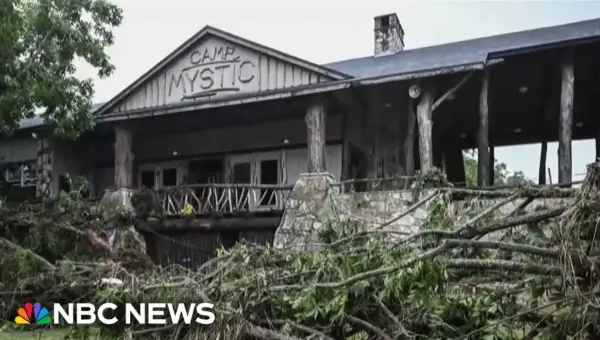
Judge Halts Camp Mystic Repairs Amid Flood Investigation
A Texas judge has ordered parts of Camp Mystic to remain closed due to ongoing investigations into devastating summer floods. The ruling prevents any repairs or land alterations until the probe is complete, stemming from a lawsuit by parents of a missing camper. Camp operations may continue at a separate, higher-ground location, pending state approval.

Pope Francis Calls for Global Peace Amidst Trump’s Social Media Posts
Pope Francis urged the world to embrace peace, citing Algeria's harmonious coexistence of diverse beliefs as a key example. His message comes as former President Donald Trump's critical social media posts about Iran and the Pope's views on the platform 'Truth' have surfaced during the papal visit to Africa.