NYC Nonprofits Accused of Funding Democratic Campaigns Illegally
New York City officials are investigating allegations that city-funded nonprofits are illegally channeling money to Democratic campaigns. Council Member Vickie Paladino claims this practice fuels political imbalance. A recent investigation found hundreds of such contributions, prompting calls for IRS action and new transparency laws.


NYC Nonprofits Accused of Funding Democratic Campaigns Illegally
Some New York City officials are raising concerns about political fairness, pointing to city-funded nonprofits as a potential source of imbalance. These organizations are deeply involved in the city’s economy and provide vital community services. However, questions are surfacing about how their funding might influence politics.
Council Member Vickie Paladino recently voiced her opinions on social media regarding city funding for nonprofits. She suggested that money intended for these organizations could be indirectly channeled to support the Democratic Party. Paladino described this process as a significant issue and questioned the transparency of such financial flows.
“A lot of this money comes from the funneling through nonforprofits goes to the Democratic party,” Paladino stated, highlighting her view of the connection. “And that’s a very, very big deal.” She expressed a Republican perspective, emphasizing the importance of tracking financial origins. Paladino characterized the system as potentially being like a “scam” where money is “just thrown at it.”
The Scale of Nonprofit Funding
Nonprofits are a major part of New York City’s structure, impacting its economy, community aid, and job market. In 2024 alone, the city allocated over $16 billion to nonprofits through contracts for human services. This funding supports a significant portion of the city’s workforce, with nonprofit jobs making up nearly 18% of total private employment, employing over 600,000 people.
Adding to this picture, a substantial part of the nonprofit workforce in New York City, about 34%, is foreign-born. The city’s budget for nonprofits is substantial.
For the current fiscal year, it stands at $18 billion, with a proposed increase to $127 billion under the current mayor, a figure larger than the entire state of Florida’s budget. This represents about 28% of the city’s total budget.
Allegations of Misuse and Investigations
Concerns about how this money is used have grown, with some suggesting it functions as a “shell game.” A Times Union investigation in March uncovered that hundreds of New York 501c3 nonprofits, many from Brooklyn, made illegal campaign contributions to candidates and political action committees over the last decade. This occurred despite clear prohibitions by the IRS and state law.
Since 1999, over 1,000 such contributions have been identified. Many of these nonprofits reportedly misrepresented their political activity on their 990 tax forms, which are used to report financial information to the IRS. The investigation noted that elected Democrats in Brooklyn were frequent recipients of these contributions, sparking alarm among some officials.
Calls for Accountability
In response to these findings, Congresswoman Claudia Tenny has called for investigations by the IRS and for the return of these funds. The allegations raise serious questions about the integrity of campaign finance and the oversight of public funds distributed to nonprofits.
Senator Steve Chan offered a more nuanced perspective when asked about nonprofit funding and political balance. “Nonprofits tend to like some candidates better than others, you know, for their own benefit sometimes,” Chan acknowledged.
He explained that nonprofits can influence their constituents’ voting choices, but this doesn’t always guarantee votes. He compared it to unions, whose endorsements don’t always sway all their members’ votes, citing his own experience where his police union endorsed a Democrat, but he and his friends voted Republican.
Legislative Proposals and Future Outlook
Adrianne Areola, a member of the New York City Council, expressed strong concerns about the current system. “Nonprofits in this city have become financial black holes, and many seem to be taking in money not to actually support their communities but to buy a vote,” she stated. Areola is exploring potential legislation to address this issue.
Her proposed legislation would require 501c3 nonprofits receiving over $250,000 in city funds annually to submit detailed quarterly reports. The goal is to ensure taxpayer dollars are used effectively for the benefit of city residents. This move signals a potential shift towards greater transparency and accountability in how public funds are managed and utilized by nonprofit organizations.
Why This Matters
The accusations of illegal campaign contributions and the sheer volume of city funding directed to nonprofits highlight a critical issue of public trust and accountability. When taxpayer money might be used to influence elections, it undermines the democratic process. The scale of funding involved, billions of dollars annually, means that any misuse has significant consequences for the city’s budget and the services it provides.
This situation calls into question the effectiveness of current oversight mechanisms. If nonprofits are acting as intermediaries for political funding, it creates an opaque system that is difficult for the public to understand or control. Ensuring that public funds serve their intended purpose—community benefit—is paramount for maintaining a healthy and fair political environment.
Implications and Future Outlook
The potential for legislation requiring more detailed reporting from nonprofits could lead to increased scrutiny and a more transparent allocation of funds. If such measures are enacted, it may deter illegal political activities and ensure that city money directly supports community programs. However, implementing and enforcing these new rules will require careful planning and resources.
The debate also touches on the broader role of nonprofits in civic life. While many nonprofits perform essential services, their financial operations and political engagement need to be transparent. The future may see a push for clearer guidelines on political activities for organizations receiving public funds, aiming to strike a balance between community support and political neutrality.
Historical Context
The relationship between government funding and nonprofit organizations has a long history. In the United States, nonprofits have often been partners with government in delivering social services.
This model allows governments to leverage the expertise and reach of community-based organizations. However, this partnership has always carried the risk of political influence and the potential for funds to be diverted from their intended purpose.
Historically, concerns about the political activities of tax-exempt organizations have led to regulations aimed at maintaining their non-partisan status. The IRS has rules in place to prevent 501c3 organizations from engaging in political campaign activities. Investigations like the one by the Times Union suggest that these rules may not always be followed, leading to renewed calls for stronger enforcement and oversight.
Looking Ahead
The city council’s consideration of new reporting requirements is a concrete step. If passed, these measures will take effect in the upcoming fiscal year, starting July 1st. This development signals a potential turning point in how New York City manages its significant investment in the nonprofit sector and its oversight of public funds.
Source: Council Member Vickie Paladino Says NYC Nonprofits Are Fueling Democratic Dominance (YouTube)

Related Articles

House Demands Records: Foreign Funds Under Scrutiny
House Republicans are demanding records from Democratic fundraising platforms, citing concerns about illegal foreign donations. The inquiry, focusing on entities like ActBlue, aims to uncover potential violations of campaign finance laws and ensure greater transparency in political funding.

US Blockade Cripples Iran; Tax Cuts Boost Americans
The U.S. has imposed a naval blockade on Iranian ports, aiming to cripple its economy and fund for military operations. Simultaneously, President Trump's tax cuts are reportedly benefiting millions of Americans, with average refunds exceeding $3,400. Meanwhile, the IRS claims a successful tax filing season, though lawmakers remain critical of agency performance.
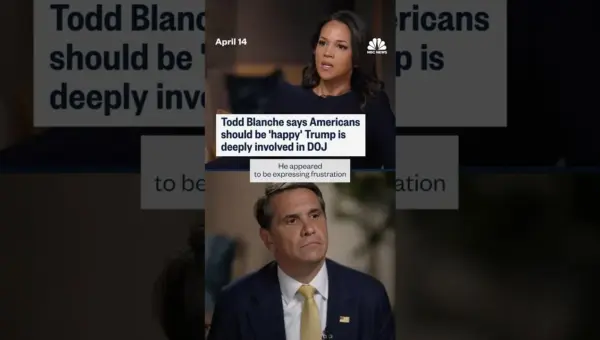
Trump’s DOJ Involvement Should Make Americans Happy, Says Lawyer
Todd Blanche, a lawyer, stated that President Trump's active involvement in the Department of Justice's work should make Americans happy. He believes the President's high expectations and drive for results lead to significant policy successes, such as tax reforms and new fraud task forces. Blanche sees this hands-on approach as a sign of strong leadership ensuring the administration performs effectively.