Germany’s China Gamble: A Self-Inflicted Economic Catastrophe?
Germany's deep economic ties with China are increasingly viewed as a critical vulnerability. Despite recognizing China as a "systemic rival," the country's actions suggest a continued, potentially self-destructive, reliance on the Chinese market and supply chains, leading to job losses and a widening trade deficit.

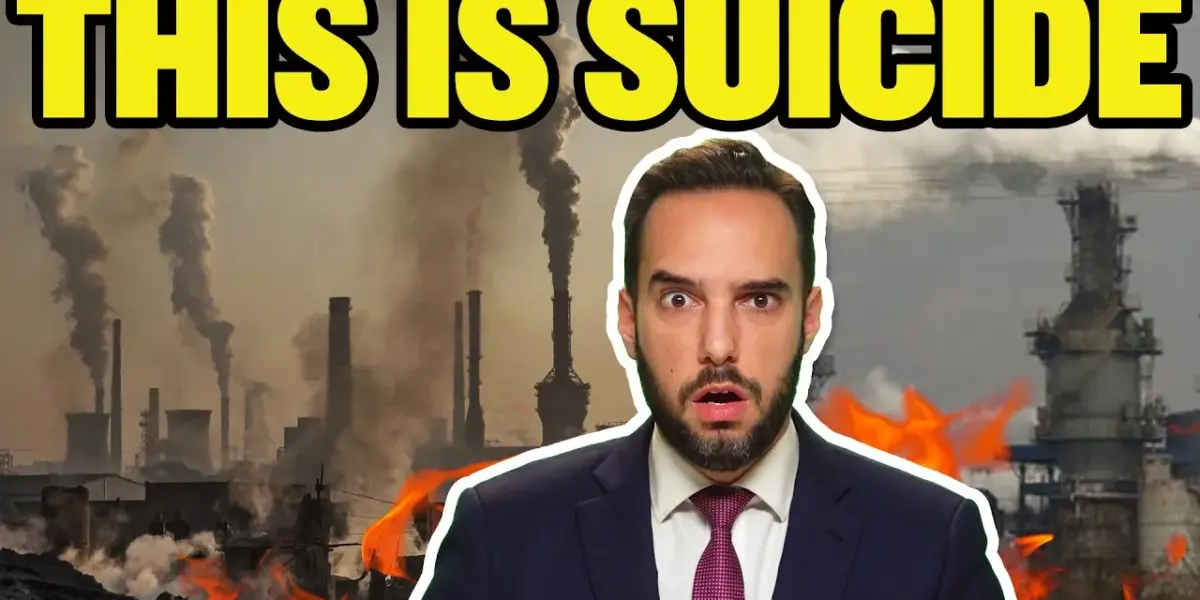
Germany’s China Gamble: A Self-Inflicted Economic Catastrophe?
In a world grappling with shifting geopolitical alliances and economic uncertainties, Germany’s deep entanglement with China stands out as a particularly precarious venture. Despite mounting evidence of China’s aggressive trade practices and its role in global instability, German policymakers and businesses appear locked in a cycle of engagement that critics argue is bordering on self-destructive. This analysis delves into the complexities of Germany’s relationship with China, examining the historical context, the current economic realities, and the potential long-term consequences of its current strategy.
A History of Engagement, Ignoring Red Flags
For decades, Germany has cultivated a robust economic relationship with China, viewing it as a vital market for its high-quality manufactured goods and a crucial component of its export-driven economy. This approach, while historically successful in fostering growth, has increasingly been characterized by a willingness to overlook or downplay China’s less savory actions. From supporting China’s manufacturing capabilities to investing heavily in its research and development, German industry has, with the tacit approval of its political establishment, deepened its reliance on the Chinese market and supply chains. This reliance has been exacerbated by Germany’s own energy policies, including its dependence on Russian fossil fuels and its phasing out of nuclear energy, which have driven up domestic energy costs and further incentivized off-shoring production to more cost-effective locations like China.
Chancellor Scholz’s Visit: Hope Dashed?
The recent visit of German Chancellor Friedrich Mars to Beijing, ostensibly to address trade imbalances and press China on fair competition, offered a glimmer of hope for a more assertive stance. Earlier statements from Mars had called for Europe to be stronger and had highlighted concerns about Chinese government subsidies, manufacturing overcapacity, and restrictions on critical raw materials. He also cautioned against illusions about China’s intentions, noting its pursuit of a new, China-centric multilateral order. However, the outcome of the meeting with Chinese leader Xi Jinping proved largely symbolic. Instead of significant concessions on trade practices, Germany secured pledges for increased imports of high-quality German goods and a substantial order for Airbus aircraft. Critics argue these are superficial gains that do little to address the fundamental issues of unfair competition and economic dependency.
The “China Shock” and Economic Vulnerability
The current situation is being described as Germany’s entry into the “China shock” phase – a wave of Chinese exports that threatens to de-industrialize and weaken its economy. Germany is facing a projected growth rate below 1%, significantly worsened by a massive and rapidly expanding trade deficit with China. In 2025, German exports to China declined while imports from China surged to €170.6 billion, resulting in a deficit exceeding €100 billion – a fourfold increase since 2020. This influx of Chinese goods, including vehicles, batteries, machinery, and chemicals, is directly impacting Germany’s core industries. The automotive sector, a cornerstone of the German economy, is particularly vulnerable. German car exports to China have fallen, while Chinese electric vehicle manufacturers like BYD are making significant inroads into the European market. This competitive pressure has led to substantial job losses in Germany’s manufacturing sector, with hundreds of thousands of well-paid industrial jobs lost or at risk, a situation more severe than during the 2008 financial crisis or the COVID-19 pandemic.
Misguided Assumptions and a “Death Wish”?
Several factors appear to be contributing to Germany’s seemingly paradoxical approach. A degree of hubris, or pride, has led many German elites to believe that China could not quickly overtake them in key industries. As recently as 2016, a former SAP president estimated it would take decades for China to master certain technologies, a prediction that proved inaccurate largely due to the very Western technological transfer Germany facilitated. Furthermore, there’s a persistent, misguided assumption that China operates like other market economies, a notion highlighted by former Chancellor Olaf Scholz’s comparison of Chinese and Japanese car manufacturing. This overlooks the fundamental differences in state-directed economic models and industrial policy employed by Beijing. Perhaps most critically, there’s a deeply ingrained belief that engaging with China and offering it what it wants will somehow alter its behavior – a strategy that has consistently failed to yield the desired results.
The Perils of Dependency and “De-risking” Rhetoric
By allowing China to become its top trading partner, Germany has placed itself in a position of significant vulnerability, potentially opening the door to Chinese economic blackmail. While some German officials and institutions have begun to acknowledge the risks, framing the relationship as one of “systemic rivalry” and advocating for “de-risking,” the practical policy responses have been notably weak. The German government’s decision to vote in favor of dropping EU tariffs on Chinese electric vehicles, despite potential harm to its own auto industry, exemplifies this disconnect. The stated aim of making goods cheaper and avoiding Chinese retaliation, even at the cost of enabling China’s technological advancement, strikes many as short-sighted. Despite the establishment of a 2023 federal government China strategy that acknowledges China as a partner, competitor, and systemic rival, concrete actions to protect national economic security have lagged. Germany has yet to even begin developing the promised national economic security strategy for 2025, leading to accusations that the rhetoric of de-risking has not been matched by decisive policy action.
Why This Matters
Germany’s current approach to China has profound implications not only for its own economic future but also for the broader European Union and the global balance of power. If Europe’s largest economy succumbs to the “China shock,” it could trigger a domino effect, weakening the EU’s economic standing and its ability to act collectively on the world stage. Germany’s reliance on Chinese imports and its diminishing export competitiveness could lead to widespread unemployment, reduced innovation, and a loss of industrial sovereignty. This situation also raises questions about the future of the rules-based international order, as Germany’s actions appear to contradict the principles of fair trade and open competition it ostensibly champions. The long-term consequences of this economic entanglement could redefine Germany’s role in the world and its capacity to influence global affairs independently.
Future Outlook
The trajectory of Germany’s relationship with China remains uncertain. While the “China shock” is a present reality, the extent to which Germany can pivot away from its current dependency is debatable. Future policy decisions will likely hinge on a complex interplay of political will, industrial adaptation, and global economic trends. A failure to implement robust de-risking strategies could see Germany facing prolonged economic stagnation and increased vulnerability to external pressures. Conversely, a decisive shift towards diversifying trade partners, strengthening domestic industries, and enforcing fair trade practices could help mitigate the current risks. The effectiveness of the EU’s collective response will also be crucial, as individual member states acting in isolation may struggle to counter China’s economic influence.
Germany has made a massive mistake by tying themselves to China. Is it over for Germany or can they muster a strategy to actually fix it?
Source: Germany's China Death Wish (YouTube)

Related Articles
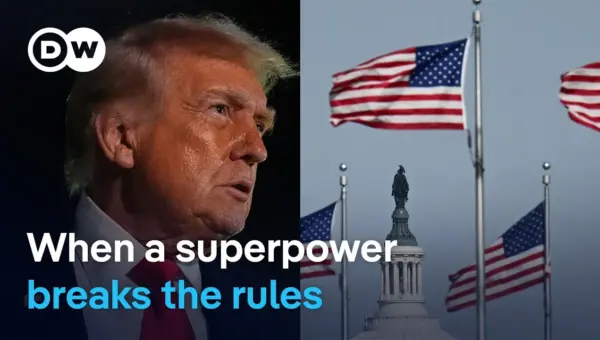
US Actions Abroad Questioned: Rogue State Behavior Alleged
Harvard professor Stephen Walt argues the U.S. is acting like a "rogue state" due to impulsive foreign policy, questionable war planning, and a disregard for international norms. The conflict with Iran highlights limitations in American power, leading allies to question U.S. judgment and seek more stable global partners.
US-Iran Peace Talks Stall; Gap ‘Wider Than Strait of Hormuz’
Peace talks between the U.S. and Iran remain stalled, with a significant gap described as 'wider than the Strait of Hormuz.' Despite White House optimism about ending the conflict and lowering gas prices, public opinion shows weariness and concern over the war's economic toll. International diplomatic efforts continue, but major hurdles persist in resolving key issues.

53 Million Get Tax Cuts, Yet Many Think Taxes Rose
Despite tax cuts benefiting millions, a new poll shows most Americans believe their taxes are rising. Experts highlight a communication gap and call for further pro-growth economic plans.