Donbas: Russia’s Obsession, Ukraine’s Stand, and the Path to Peace
As the Russia-Ukraine war nears its fourth year, the intense fighting in Ukraine's eastern Donbas region has become a focal point. Russia's persistent demand for control over the Donetsk Oblast is met with Ukraine's unwavering defense of its sovereignty, raising questions about the possibility of peace through territorial concession and the broader implications for global security.


Donbas: Russia’s Obsession, Ukraine’s Stand, and the Path to Peace
As the Russia-Ukraine war approaches its fourth year, a recurring narrative is emerging in Western information spaces: peace could be within reach if Ukraine concedes a portion of its eastern Donbas region. This argument suggests that surrendering territory, specifically the Donetsk Oblast, could avert further bloodshed and destruction. However, Ukraine remains resolute in its defense of sovereignty, leading to a protracted and brutal conflict in a region that has become the epicenter of some of the most intense fighting globally since World War II.
The Stakes in Donetsk
The Donbas, particularly the Donetsk Oblast, has transformed into a crucible of intense and deadly combat, drawing comparisons to the most devastating battles of the 20th century. This strategically and symbolically significant region is at the heart of Russia’s war aims, making its control a paramount objective for Moscow. Ukraine, conversely, views its defense of Donbas as a non-negotiable stand for national independence and territorial integrity.
The argument for Ukrainian concession posits that Russia’s strategic advantages, particularly concerning time and resources, make a protracted conflict increasingly disadvantageous for Kyiv. Proponents of this view suggest that a painful territorial sacrifice now might prevent a far greater loss later, a grim calculus being presented to the West as the conflict grinds on.
Ukraine’s Resilience and Russian Objectives
Despite the immense pressure and the devastating toll on its people and infrastructure, Ukraine has demonstrated remarkable resilience. Initial Russian plans for a swift takeover of Kyiv were thwarted, showcasing the Ukrainian military’s determination and strategic capabilities. However, the relentless focus on the Donbas indicates a strategic shift by Russia, concentrating its efforts on securing this vital eastern territory.
Russia’s persistent pursuit of Donbas is rooted in a complex mix of geopolitical ambitions, historical narratives, and economic interests. The region holds significant industrial capacity and is symbolically important within Russia’s broader vision for regional influence. Ukraine’s refusal to cede this territory is therefore not just a matter of land, but a fundamental assertion of its right to exist as a sovereign nation.
The Human Cost of the Donbas Conflict
The fighting in the Donbas has exacted a horrific human toll. Cities and towns have been reduced to rubble, civilian casualties have mounted, and millions have been displaced. The constant threat of shelling, the disruption of essential services like electricity, and the pervasive sense of insecurity have created a humanitarian crisis of immense proportions. The loss of life, particularly among Ukraine’s bravest and brightest, is a tragedy that resonates deeply within the nation.
“All of this, the war, the killing, the destruction, the blackouts, the sleepless nights, and the tragic loss of the country’s bravest and brightest, could be over. All Ukraine needs to do is hand over a small piece of land in the country’s far east, and we have a deal.”
This quote encapsulates the stark dilemma presented by Russia: a potential end to the suffering in exchange for territorial concessions. However, for Ukraine, the cost of such a peace is seen as a betrayal of its people and a surrender of its future.
Prospects for Future Fighting and Lasting Peace
The future of the fighting in Donbas remains uncertain, contingent on a multitude of factors including Western military aid, Russian military strategy, and the morale of both sides. The intensity of the battles suggests that neither side is willing to yield easily, pointing towards a prolonged period of attrition warfare. The strategic importance of Donetsk Oblast means that Russia will likely continue to pour resources into securing it, while Ukraine will fight to defend every inch of its territory.
The question of whether resolving the Donbas issue could be the key to lasting peace is complex. For Russia, territorial gains in Donbas might be seen as a prerequisite for de-escalation, but Ukraine’s fundamental demand is the restoration of its internationally recognized borders. Without a comprehensive peace agreement that respects Ukraine’s sovereignty and territorial integrity, any cessation of hostilities in Donbas may only be a temporary pause rather than a definitive end to the conflict.
Broader Implications and What’s Next
The battle for Donbas is not merely a regional conflict; it has profound implications for European security, international law, and the global order. The outcome will shape future geopolitical dynamics and set precedents for territorial disputes worldwide. As the conflict continues, the international community watches closely, with Western support playing a crucial role in Ukraine’s ability to sustain its defense. The coming months will likely see continued intense fighting in the Donbas, with diplomatic efforts to find a lasting solution facing significant hurdles. The world’s attention remains fixed on this eastern front, where the fate of Ukraine and the principles of national sovereignty are being fiercely contested.
Source: Battle of Donbas: Why Russia so desperately wants what Ukraine refuses to give up (YouTube)

Related Articles


Trump’s Blockade Fails, Allies Shun Mission: A Pattern?
A reported failure of Donald Trump's blockade of the Strait of Hormuz, with ships passing through unimpeded, raises questions about policy effectiveness. This incident, coupled with allies' reluctance to join the mission, suggests a pattern of unintended consequences and strained international relations.
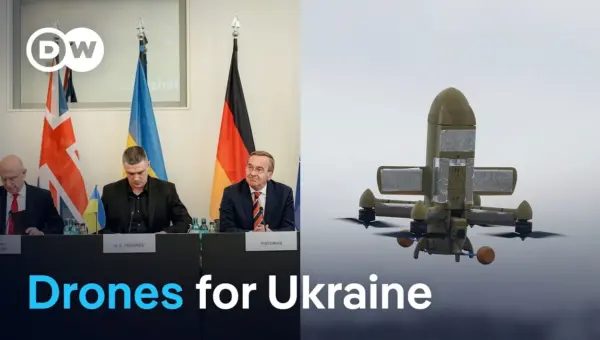
UK Pledges 120,000 Drones to Ukraine in Major Aid Package
Britain has pledged 120,000 drones to Ukraine, marking its largest aid package of its kind, during a meeting of the Ukraine Defense Contact Group in Berlin. The meeting highlighted both strong international solidarity and ongoing challenges in aid delivery, as Germany also boosts its own defense capabilities.


Russia’s War Costs Strain Putin’s Elite Bargain
Russia's prolonged war in Ukraine is straining President Putin's grip on power. Declining oil revenues and escalating military costs are forcing internal power shifts, with intelligence services reportedly gaining influence. This financial pressure is creating significant discontent among the elite and risking broader instability within the Kremlin.