China’s Diaspora: A Silent Battlefield for Western Influence
The Chinese Communist Party weaponizes diaspora ties, but new US initiatives and the contrasting stories of Olympians Eileen Gu and Alysa Liu highlight a growing strategic battle for influence. This analysis explores the CCP's tactics, the US response, and the critical role of the Chinese diaspora in shaping future geopolitical dynamics.

China’s Diaspora: A Silent Battlefield for Western Influence
The global Chinese diaspora, a vast network of individuals living outside mainland China, has long been a complex and often overlooked element in geopolitical strategy. While many Western governments have historically treated these communities with a degree of indifference, a critical shift is underway. The Chinese Communist Party (CCP) has been systematically leveraging ancestral ties, cultural nostalgia, and emotional connections to the homeland to co-opt segments of the diaspora for its geopolitical objectives. Now, in response, Western nations, particularly the United States, are beginning to recognize the strategic imperative of engaging with and supporting these communities, transforming the diaspora into a nascent battlefield for hearts and minds.
The CCP’s Weaponization of the Diaspora
The CCP’s strategy is one of “unrestricted warfare,” a concept that extends beyond conventional military might to encompass psychological operations, economic coercion, and information manipulation. For individuals living abroad, this often translates into subtle yet pervasive pressure. Nostalgia for home, a desire to maintain family connections, and the allure of economic opportunities in China are all exploited by the CCP. Many Chinese individuals living in countries like the US, Canada, and France, despite enjoying the freedoms and opportunities of their adopted homes, find themselves subject to the CCP’s surveillance, harassment, and coercive tactics. This long-standing tactic has largely gone unaddressed by Western policymakers, who have, until recently, turned a blind eye to this insidious form of influence.
A New Front: The Fight for Internet Freedom
A significant development in countering the CCP’s information control is the US government’s initiative to dismantle its censorship apparatus. According to reports from major outlets like Fox News and Reuters, the US, under the leadership of figures like Senator Marco Rubio, is preparing to launch new programs aimed at breaking down internet barriers. A key initiative is the open-source platform, Freedom House, designed to provide secure, anonymous access to the internet for those living under strict censorship. This platform utilizes advanced VPN-like routing to mask user traffic, making it appear to originate from within the US, thereby bypassing geoblocking and censorship filters. With features like one-click anonymous access, no user tracking, and multiplatform support, it aims to be accessible to ordinary users. The potential impact of this platform is immense, offering a stable and secure channel to the outside world for hundreds of millions of Chinese citizens. This marks a transition from the “guerrilla warfare” of small activist groups to a more organized, state-level operation, with the potential to destabilize a regime that relies heavily on information control.
The Olympian Mirror: Identity, Loyalty, and the Diaspora Divide
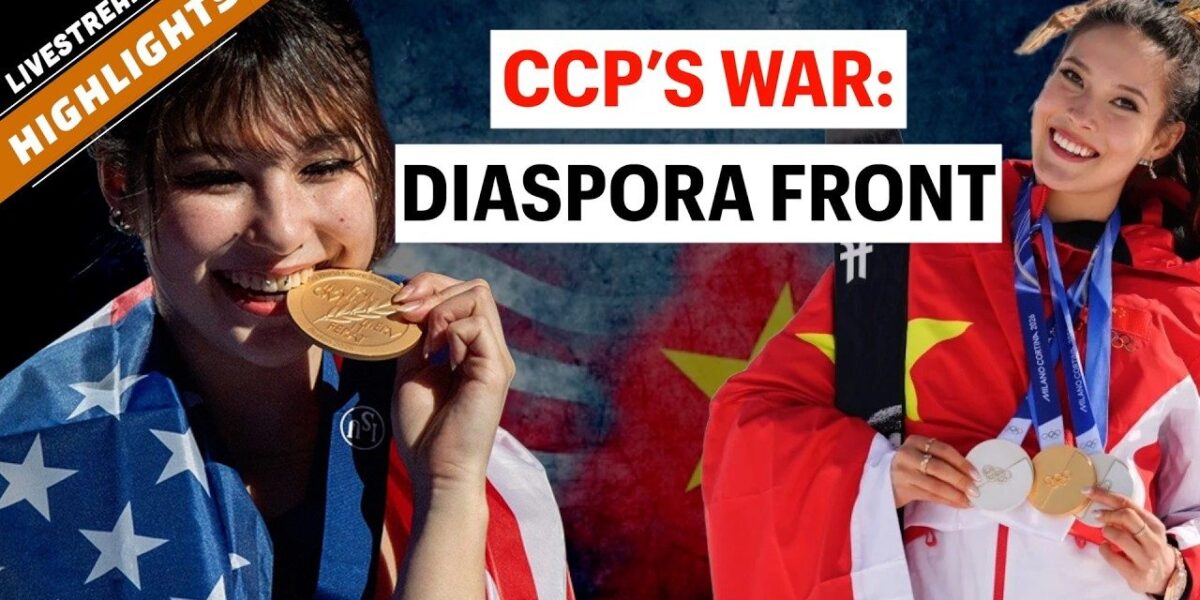
The recent stories of two Olympic athletes, Eileen Gu and Alysa Liu, have unexpectedly ignited a global conversation about the complexities of overseas Chinese identity, loyalty, and the pressures exerted by the CCP. Both athletes, who grew up near San Francisco and hail from single-parent Chinese immigrant families, represent different paths forged by their upbringing and choices. Eileen Gu, a polished and articulate figure, embodies a delicate balancing act, enjoying the benefits of both China and the United States. Her public persona is carefully curated, reflecting a typical, perhaps overly perfected, superstar image that resonates with a certain segment of the diaspora and the CCP’s narrative.
Alysa Liu, in contrast, presents as more genuine and uninhibited. She speaks her mind, acts with the spontaneity of a young adult, and her enthusiasm for her sport is palpable. Her path, characterized by an open expression of self, feels distinctly American. Their divergent journeys are deeply rooted in their parents’ experiences and the different segments of the Chinese diaspora they represent.
Divergent Paths, Divergent Roots
Eileen Gu’s mother, Yan Gu, is a highly educated professional with a background in biochemistry and molecular biology, holding an MBA from Stanford. With alleged family connections to the Chinese government and a career that included early involvement in Wall Street and pioneering the US venture capital model in China, she has maintained strong ties and considerable influence related to China throughout her time in the US. Her business acumen and deep engagement with China’s economic development exemplify a segment of the diaspora that seeks to leverage opportunities in both worlds.
Alysa Liu’s father, Arthur Liu, offers a starkly different narrative. He comes from a small village in Sichuan, was a student organizer during the 1989 pro-democracy movement, and became a fugitive. After fleeing to Hong Kong and then to the US, he continued to openly criticize the CCP’s human rights abuses, organizing protests and speaking out against the regime. His life has been marked by constant CCP surveillance and attempts at espionage, a testament to his unwavering stance against Beijing. Arthur Liu’s experience highlights the courage and sacrifice of those who actively resist the CCP, often at great personal cost.
The Majority and the Minority: A Stark Contrast
The speaker notes that individuals like Arthur Liu, who dare to speak out against the CCP despite facing harassment and intimidation, represent a courageous minority. Many others, more akin to Eileen Gu’s mother, seek to benefit from both worlds. These individuals often avoid discussing human rights or freedom, preferring to navigate the system to their advantage. They may criticize the US without consequence while remaining silent on Beijing’s actions, enjoying privileges bestowed upon them precisely because of their connection to the West.
This dynamic is particularly prevalent in the Chinese diaspora. While the CCP continues its long reach, many in the diaspora adopt a pragmatic approach, prioritizing personal gain and avoiding confrontation with Beijing. They often identify as Chinese in China and American in the US, a strategy that allows them to maximize their benefits. The speaker posits that individuals like Arthur Liu and his daughter are rare precisely because they uphold their values and principles, even when faced with immense pressure and the potential loss of lucrative opportunities.
Why This Matters
The CCP’s systematic manipulation of the diaspora poses a significant challenge to Western democracies. It creates internal divisions, influences public opinion, and undermines efforts to hold Beijing accountable for its human rights abuses and geopolitical ambitions. The contrast between Eileen Gu and Alysa Liu, and more importantly, between their parents’ backgrounds and actions, illustrates the deep ideological chasm within the Chinese diaspora. For Western governments to effectively counter CCP influence, they must move beyond a superficial understanding of these communities. They need to actively support and empower those within the diaspora who, like Arthur Liu, stand up for democratic values and human rights, even when they are in the minority.
Implications, Trends, and Future Outlook
The US initiative to break down internet censorship and the public discourse sparked by the Olympians signal a potential turning point. The strategic engagement with the diaspora is no longer an abstract concept but a critical component of long-term foreign policy. The trend suggests a move from passive observation to active intervention in the information and influence space. The future outlook depends heavily on whether Western nations can effectively support dissenting voices within the diaspora and foster an environment where critical engagement with the CCP is not only safe but encouraged.
The challenge lies in shifting the balance. If individuals like Arthur Liu cease to be the silent minority and their principled stance becomes more widespread, the relationship between China and the free world, and indeed the future trajectory of China itself, could undergo a profound transformation. The diaspora, once a tool for CCP influence, could become a powerful force for change, advocating for freedom and human rights both within China and globally.
Historical Context
The Chinese diaspora has a long history, marked by waves of emigration driven by economic hardship, political instability, and the search for opportunity. Historically, these communities often maintained strong cultural ties but were largely disconnected from the political machinations of the mainland government, especially during periods of internal turmoil like the Cultural Revolution. However, with China’s economic rise and the CCP’s increasing assertiveness on the global stage, the party has actively sought to re-establish control and influence over its expatriate citizens. This modern strategy of diaspora engagement is a departure from earlier eras, characterized by a more sophisticated and pervasive approach to influence operations.
“The fight for internet freedom looked like guerrilla warfare. Small groups of activists and tech volunteers operating in the shadows. Now it’s starting to look like state level regular army operations.”
This quote encapsulates the evolving nature of the struggle for information and freedom. The transition from grassroots activism to state-sponsored initiatives signifies a heightened awareness and a more robust response to the CCP’s pervasive control. The success of these new strategies will hinge on their ability to resonate with the complex realities and diverse motivations of the global Chinese diaspora.
Source: How the Chinese Diaspora Became a Battlefield (YouTube)

Related Articles

Greenland’s Leader: Trump’s Threats Make Citizens Unsafe
Greenland's Prime Minister revealed that citizens felt unsafe and angry after then-President Trump's 'threats' to buy the island. The comments highlight the human impact of geopolitical discussions on national sovereignty.

Iran Shuns Trump’s Deal Demands, Escalating Global Tensions
Iran has rejected President Trump's demands in ongoing negotiations, leading to heightened global tensions. Pakistan has stepped in as a mediator amid fears of escalating conflict. Meanwhile, the White House press briefings presented mixed messages on the economy and policy, facing scrutiny over strategy and communication.


Navy Tightens Grip: US Enforces Strict Blockade on Iran
The US Navy has formally declared a blockade on Iranian ports, warning all vessels to turn back or face boarding and seizure. This significant move aims to exert economic and political pressure on Iran, with explicit threats of force for non-compliance.