Trump Agrees to Talks with Iran After Major Strikes
President Donald Trump has agreed to talks with Iran's leadership following coordinated strikes that reportedly killed key figures, including the Supreme Leader. While Trump claims significant military successes, U.S. strategy remains unclear, and public opinion shows limited support for the actions amid rising American casualties.

Trump Announces Talks with Iran Following Coordinated Strikes
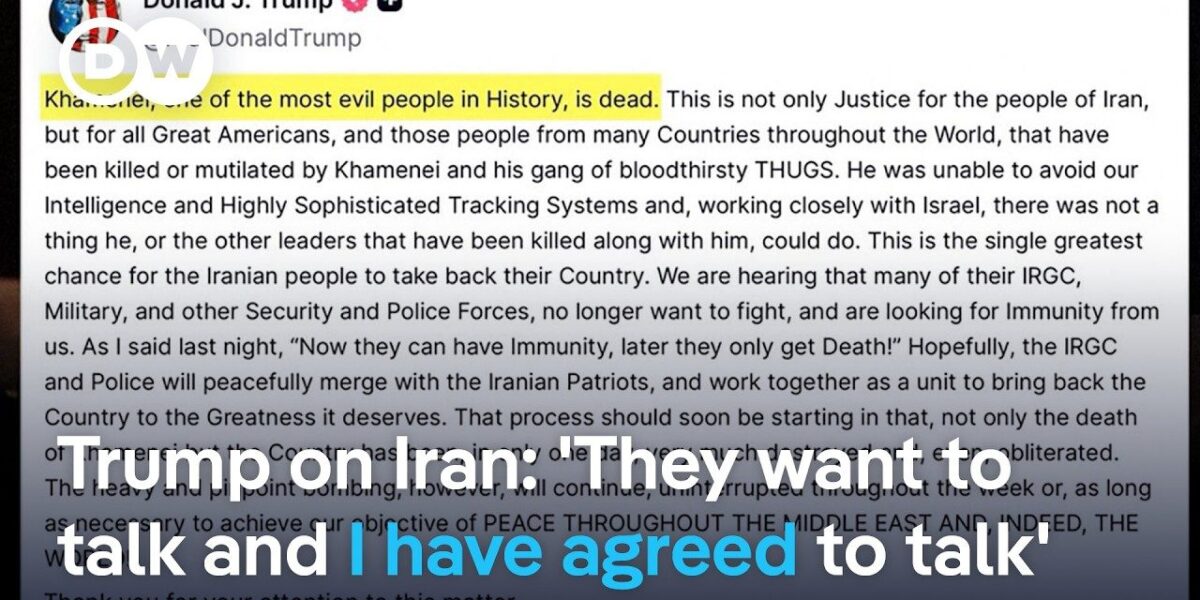
In a significant shift following coordinated strikes on Iran, U.S. President Donald Trump has announced his agreement to hold talks with the nation’s leadership. The remarks were made in an interview with The Atlantic magazine, just days after the U.S. and Israel launched what the President described as a decisive operation against Iranian targets.
“We Want to Talk”: A Sudden Diplomatic Overture
President Trump stated, “They want to talk. I have agreed to talk. So, I will be talking to them. They should have done it sooner.” This declaration comes as a surprise, particularly as it follows a period where Trump had previously advocated for regime change in Iran. The exact timeline and the specific individuals with whom these talks will occur remain unclear, especially given the reported deaths of key Iranian figures in the recent attacks.
“They want to talk. I have agreed to talk. So, I will be talking to them. They should have done it sooner.”
– President Donald Trump
Assessing the Impact of the Strikes
According to President Trump, the coordinated strikes early Saturday morning resulted in the deaths of 48 Iranian leaders, including Supreme Leader Altoya Ali Kane. The President detailed that dozens of bombs were dropped on the Supreme Leader’s compound in Tehran. Furthermore, Trump claimed via social media posts that the U.S. had destroyed and sunk nine Iranian naval ships, some of which were described as “relatively large and important,” and had largely destroyed Iran’s naval headquarters.
“I’ve just been informed that we have destroyed and sunk nine Iranian naval ships, some of them relatively large and important. We’re going after the rest. They’ll soon be floating at the bottom of the of the sea. Also in a different attack. We largely destroyed their naval headquarters. Other than that, their navy is doing very well,” Trump posted on Truth Social.
Uncertainty Surrounds Broader U.S. Strategy
Despite the President’s pronouncements, a broader U.S. strategy for achieving “peace throughout the Middle East” remains largely undefined. On the second day of the strikes, significant questions persist regarding the long-term objectives and the envisioned outcome of the military actions. While Trump initially mentioned regime change and the destruction of Iran’s nuclear and missile capabilities, the specifics of his game plan, including who would potentially lead Iran post-regime change and contingency plans if change doesn’t occur swiftly, have not been elaborated upon. The President has not held a press conference to address these strategic questions directly.
Public Opinion and Rising U.S. Casualties
Public sentiment in the United States appears divided regarding the military actions. A recent Reuters/Ipsos survey indicates that only one in four Americans support the strikes on Iran. The poll also revealed that 56% of Americans surveyed believe Donald Trump is too willing to use military force to advance U.S. interests. This sentiment is particularly noteworthy given Trump’s campaign promise to keep the U.S. out of “forever wars.”
The developments are further complicated by the announcement of the first U.S. casualties in the strikes. Three U.S. troops have died, five are severely wounded, and many others have sustained injuries from shrapnel or concussions. President Trump had previously acknowledged the potential for casualties, and the longer the operation continues, the higher the number is expected to rise, inevitably impacting public opinion as Americans weigh the costs against the perceived benefits.
Looking Ahead: The Path to Peace or Escalation?
The coming days will be crucial in determining the trajectory of U.S.-Iran relations. The announced willingness of both sides to engage in dialogue, however tentative, offers a potential off-ramp from further escalation. However, the success of these talks will hinge on clarity regarding the participants, the agenda, and the underlying intentions of both Washington and Tehran. Simultaneously, the ongoing military operations and the rising human cost on both sides will continue to shape public perception and political discourse, both domestically and internationally. The world watches to see if these strikes will pave the way for a new diplomatic chapter or deepen the existing conflict.
Source: Trump says he will speak to Iran's leadership after killing Khamenei and other top figures | DW News (YouTube)

Related Articles
Iran War Disliked, But Public Outrage Muted: Analysts Weigh In
Despite widespread disapproval of the Iran war, public protests remain muted in the US. Analysts cite fear of reprisal, the prolonged nature of anti-war movements, and America's energy independence as key factors. The conflict's economic impact and the lack of clear objectives continue to fuel public skepticism, though widespread suffering is not yet felt domestically.
Trump’s Blockade Fails, Allies Shun Mission: A Pattern?
A reported failure of Donald Trump's blockade of the Strait of Hormuz, with ships passing through unimpeded, raises questions about policy effectiveness. This incident, coupled with allies' reluctance to join the mission, suggests a pattern of unintended consequences and strained international relations.

Trump’s Wild Claims Fuel GOP Chaos and Public Doubt
Donald Trump's recent erratic statements and Republican figures' defense strategies are causing political turmoil. Concerns over economic misrepresentation and the handling of the Jeffrey Epstein case are mounting, leading to a public demanding more accountability and truth.