Trump’s ‘Madman Theory’ Fails Against Iran, Analyst Says
Analyst David Frum argues that President Trump's use of the 'madman theory' in foreign policy, particularly towards Iran, has failed. This strategy, which relies on unpredictable and irrational behavior to gain leverage, has been undermined by Trump's own reluctance to follow through on extreme threats. Frum suggests that adversaries like Iran have learned to disregard these warnings, as the President's actions reveal a clear focus on self-preservation rather than genuine madness.

Trump’s Foreign Policy Strategy Questioned
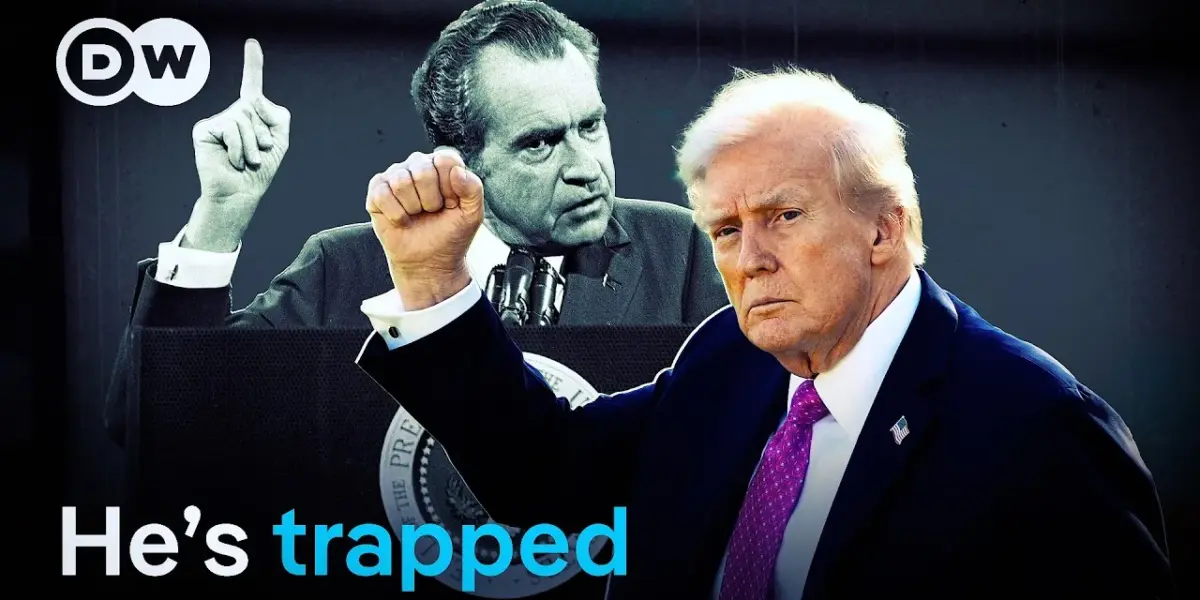
The concept known as the ‘madman theory’ suggests a leader can gain an advantage by appearing unpredictable or irrational. This strategy aims to make adversaries believe anything is possible, forcing them to concede. The idea dates back to the Nixon administration and has recently been used to describe President Donald Trump’s approach to foreign policy, particularly his dealings with Iran.
However, analyst David Frum argues this strategy has significant flaws, especially when applied in situations where a leader’s position is not strong. Frum, a staff writer at The Atlantic and host of The David Frum Show, believes Trump’s use of the ‘madman theory’ has proven ineffective against Iran.
Origins of the ‘Madman Theory’
The term ‘madman theory’ is believed to have originated around 1969 within the Nixon administration. According to Nixon’s Chief of Staff H.R.
Haldeman’s diaries, President Nixon faced a difficult situation in the Vietnam War. He sought a negotiated settlement that would allow the U.S. to exit with its honor intact.
Nixon’s plan involved signaling to the Soviet Union that he was unpredictable and might even use nuclear weapons to secure an exit from Vietnam. The goal was to pressure the Soviets to influence their Vietnamese allies into offering the U.S. a better deal than what could be achieved on the battlefield. This strategy relied on deception; Nixon was not actually willing to use nuclear weapons, but he wanted his enemies to believe he might.
When Strength Undermines the Strategy
Frum explains that this tactic was born out of a weak negotiating position. If a country is winning, it doesn’t need to resort to such extreme measures.
The ‘madman theory’ is an attempt to improve one’s standing by acting irrationally when that standing is already shaky. Strong powers, by contrast, typically emphasize reliability and consistency.
While the U.S. was militarily strong in 1969, the constraint on its Vietnam policy was political. Nixon’s threat was designed to make the Soviets believe he could take unpredictable actions if they didn’t help secure a favorable deal. Trump, according to Frum, has adopted this phrasing for his Iran policy without realizing that adopting the ‘madman theory’ signals a lack of strength.
North Korea: A Different Case Study
Frum acknowledges that the ‘madman theory’ can sometimes work, pointing to North Korea as an example. Despite being a poor and weak nation next to prosperous South Korea, North Korea has managed to deter more powerful neighbors through its perceived willingness to engage in extreme, unpredictable actions. This aggression compensates for its objective weakness.
However, Frum is quick to note that North Korea is not a global success story. The strategy’s logic must align with its outcomes. For North Korea, its aggressive posturing has kept larger, more successful countries at bay, but it has not led to prosperity or international standing.
Trump’s Iran Policy Hits a Wall
When facing Iran, Trump employed military threats, economic pressure, and strong rhetoric, yet these actions failed to significantly alter Tehran’s behavior. Frum suggests Iran saw through the strategy because the U.S. had already imposed maximum possible pressure. Iran’s offensive missile capabilities were damaged, and its leadership faced consequences.
With much at stake, including the survival of its regime, Iran has continued to put pressure on the global economy. The U.S. has responded with economic measures, but Iran, according to Frum, does not prioritize its citizens’ well-being. This allows them to withstand economic hardship better than a nation like the U.S., where economic pain, such as high gasoline prices, directly threatens President Trump’s political standing and approval ratings.
The Predictability Problem
Frum argues that Trump’s approach demonstrates why the ‘madman theory’ fails when applied this way. It becomes a strategy to cut losses rather than protect gains. Trump appears trapped, having expected a quick and easy resolution to the conflict with Iran, but instead finding himself in a larger, more costly engagement he doesn’t know how to end.
His threats and bluster are seen as counterproductive. When leaders repeatedly make extreme threats but fail to follow through, adversaries learn that these threats are not credible. This erodes the uncertainty that the ‘madman theory’ relies on, making the threats hollow.
Iran Learns Not to Care About Threats
Frum highlights that Trump has repeatedly threatened drastic actions against Iran, such as crippling its infrastructure, but has not executed them. This reluctance stems from the potential consequences, like creating a massive refugee crisis that could destabilize allies and Europe, similar to the Syrian migration crisis.
Because Trump does not want these severe outcomes, he makes the threats but doesn’t act on them. Each day this pattern continues, Iran learns that its leaders do not need to take Trump’s threats seriously. This predictability undermines the core principle of the ‘madman theory,’ which depends on genuine unpredictability.
Rationality vs. Apparent Madness
Frum suggests that Trump’s behavior, while appearing erratic, reveals a consistent reluctance to cross certain red lines. Adversaries like Iran can recognize this hesitation, questioning how truly rational Trump is. While some might see his actions as stemming from mental conditions, Frum notes that these do not appear to be the kind of complete delusion that defines true madness.
Trump seems to possess a survival instinct and awareness of his own self-preservation, particularly his political survival. This is the opposite of the ‘madman theory’s’ requirement for someone who disregards their own well-being. His adversaries see his unwillingness to engage in a wider war, and therefore, his extreme statements do not deter them.
Strategy’s Limits Revealed
Ultimately, strategies built on intimidation and unpredictability can limit choices rather than expand them. The ‘madman theory,’ while promising leverage, risks damaging credibility and straining relationships. Frum concludes that how power is used is more important than simply how much power one possesses.
The conversation with David Frum suggests that the ‘madman theory’ as employed by Trump against Iran has failed to achieve its intended goals. The predictable inconsistency of his threats has allowed Iran to disregard them, highlighting the strategic limitations of relying on perceived irrationality when a leader’s actions reveal a clear self-preservation motive.
Source: David Frum on Trump, Iran, and the failure of the 'madman theory' | DW News (YouTube)

Related Articles


Iran Tensions Rise, Navy Secretary Fired Amidst Global Crises
Tensions are high as Iran attacks ships in the Strait of Hormuz, prompting continued U.S. blockades. Meanwhile, the Navy's top civilian leader was fired amidst growing international crises. Wildfires rage across the Southeast, and millions brace for severe weather as the NFL Draft kicks off.


Public Outcry Mounts: Calls for Trump Impeachment Surge
New polling reveals a surge in calls for Donald Trump's impeachment, with a majority of Americans supporting the move. His approval ratings have hit historic lows, particularly on key issues like inflation and the economy. Critics cite his past statements on impeachment and question his administration's competence and foreign policy decisions.


Trump, Putin Share Ukraine Worldview, Kuleba Claims
Ukrainian Foreign Minister Dmytro Kuleba claims former U.S. President Donald Trump and Russian President Vladimir Putin share a similar worldview. Both, he suggests, believe smaller nations should submit to the demands of greater powers. This perspective could significantly alter U.S. policy toward the Ukraine conflict.