Oppo X9 Ultra Hits Peak Smartphone, But One Area Lags
The Oppo Find X9 Ultra arrives as a technological marvel, boasting top-tier specs and an incredible camera system. While it sets new standards for flagship phones, the article explores whether we've truly hit 'peak slab phone' or if one key area still lags behind.


Oppo X9 Ultra Redefines Flagship, But Is Peak Smartphone Achieved?
The Oppo Find X9 Ultra has landed, and it’s pushing the boundaries of what a flagship smartphone can be. After spending nearly a month with Oppo’s latest top-tier device, it’s clear this phone makes competitors, like Samsung’s S26 Ultra, feel a bit less ‘ultra’. Packing a Snapdragon 8 Elite Gen 5 chip, a massive 7,050mAh battery, a super bright 6.8-inch OLED screen, and a jaw-dropping 200-megapixel camera system, the X9 Ultra is a powerhouse.
This device has us thinking about the concept of ‘peak slab phone,’ a goalpost that constantly moves forward. Just weeks ago, the Oppo Find N6 foldable was hailed as reaching peak foldable design. That phone smoothed out all the usual foldable drawbacks, from bezels to creases and camera compromises, making it a truly great phone that just happens to fold.
Reaching peak ‘slab phone’ status, however, is a bit more complex to define. While better phones will surely arrive next year, we might have reached a plateau in many key areas.
The Five Pillars of a Great Smartphone
For years, the ideal smartphone has been measured by five key areas: display, battery, build quality, performance, and cameras. If a phone excels in all five, it’s considered great. Innovations have consistently improved these areas, but for the past two decades, they’ve all felt like they were chasing a specific, achievable goal.
Display: Watermark Achieved
The desire for a perfect screen has driven smartphone development for years. Screens have grown larger, bezels have shrunk, and while curved edges had a moment, the current standard is a large, flat, bright OLED with a high refresh rate and resolution. These displays are bright enough for outdoor use and dim enough for dark rooms, with features like under-display fingerprint readers and punch-hole cameras.
Today’s flagship displays offer excellent brightness, contrast, and special features. For most users, the display watermark has been achieved. The Oppo X9 Ultra’s screen is a prime example of this mature technology, offering a stunning visual experience.
Battery Life: All-Day Power is Standard
The goal for smartphone batteries has always been simple: last all day, no matter what. Early 4G phones struggled, but efficiency gains and larger battery capacities have changed the game. The jump from 3,000mAh to 5,000mAh was significant, and now, with silicon-carbon batteries, flagship phones often boast 6,000mAh or even more.
The Oppo X9 Ultra pushes this further with a 7,050mAh battery, making it incredibly difficult to drain in a single day. Many users will find these phones last two days on a single charge.
Even for heavy users, fast charging, like the X9 Ultra’s 100W wired or 50W wireless options, means downtime is minimal. The battery watermark has well and truly been reached.
Performance and Build: Smooth and Solid
Performance, while subjective due to software preferences, is generally excellent on high-end phones. A powerful chip, smooth animations, and a responsive display, combined with long-term software updates, satisfy most users. Year-over-year performance gains are now mostly noticeable in demanding games or benchmark scores.
Build quality is also at a high point. Metal frames, durable glass, and IP68 water and dust resistance are common. As long as the design is appealing, build quality is a checked box for most flagships, including the Oppo X9 Ultra.
Cameras: The Final Frontier, But Still a Challenge
Cameras are where smartphone development continues to face its biggest hurdles. Smartphone presentations now dedicate significant time to camera features, showcasing advancements in sensors and lenses. Comparing photos from different generations of the same phone reveals dramatic improvements over the years.
However, the physical limitations of a smartphone form factor mean that matching a dedicated professional camera is an ongoing battle against physics. While phones like the Oppo X9 Ultra feature incredibly advanced camera systems, they are still fundamentally different from dedicated cameras.
Oppo X9 Ultra: A Camera Behemoth
The Oppo X9 Ultra’s design is clearly centered around its camera system. It boasts five rear sensors: a 200MP main camera with a large sensor and OIS, a 200MP 3x telephoto lens with the largest sensor ever in a phone’s telephoto, a 50MP 10x telephoto with stabilization, a 50MP ultrawide, and a dedicated color sensor for accurate white balance.
This setup is undeniably impressive. Oppo’s previous Pro model already won camera awards, and the Ultra version refines this with superior hardware.
While processing takes a few seconds per shot and can sometimes be overly HDR-like, the versatility and image quality are exceptional. Any shot you can imagine is likely achievable with excellent results.
The Hasselblad Comparison: Apples and Oranges
Oppo’s partnership with Hasselblad, including licensing and design cues, might suggest a comparison to professional cameras like the Hasselblad X2D Mark II. However, these are fundamentally different tools. The X9 Ultra excels at computational photography, aiming to minimize missed shots and maximize good ones through software.
In contrast, the Hasselblad X2D Mark II is a deliberate, professional camera without computational features or video modes. Comparing them is like comparing a Swiss Army knife to a surgeon’s scalpel; both are tools, but designed for vastly different purposes and user expectations. The smartphone will never fully replace a high-end professional camera due to physics and sensor size limitations.
The True Smartphone Camera Goal
The watermark for a great smartphone camera isn’t necessarily matching a professional camera, but rather consistently taking good photos and videos in any situation. This is where computational photography shines, acting like a self-moving basketball hoop that ensures you always make the shot, regardless of your skill.
While enthusiasts might prefer a less processed look, the goal is a camera that minimizes misses and maximizes good results. The Oppo X9 Ultra, with its advanced hardware and software, gets remarkably close to this ideal. It also offers creative options like simulated bokeh and even physical lens attachments for enhanced zoom capabilities.
Who Should Care About the Oppo X9 Ultra?
The Oppo X9 Ultra is for the user who wants the absolute best in smartphone technology, particularly in camera versatility and overall performance. If you’re someone who documents your life extensively, values cutting-edge features, and appreciates a device that can handle almost any task, this phone is a strong contender.
For those who see their smartphone as their primary camera, the X9 Ultra offers unparalleled flexibility. While it may not replace a dedicated professional camera for serious photography or videography, it provides a highly capable and convenient alternative for everyday shooting and even some advanced creative work. The ability to attach specialized lenses further expands its creative potential, bringing professional-level zoom shots within reach, albeit with added bulk.
Availability and Pricing
The Oppo Find X9 Ultra is expected to launch in select markets soon. Pricing details are still emerging, but as a maxed-out flagship, it will likely command a premium price, positioning it at the top end of the smartphone market.
The Verdict: Peak Slab, Almost
The Oppo Find X9 Ultra represents a significant achievement in smartphone engineering. It excels in display, battery, performance, and build quality, meeting or exceeding the established watermarks in these areas. The camera system is incredibly powerful and versatile, pushing the boundaries of what’s possible in a mobile device.
However, the core challenge remains: physics. While smartphone cameras will continue to improve, they will likely never fully replace dedicated professional cameras for those who require that level of quality and control. The Oppo X9 Ultra is proof of how far mobile technology has come, offering a near-perfect slab phone experience for the vast majority of users, with photography being the one area that still shows the limitations of its form factor.
Specs & Key Features
- Processor: Snapdragon 8 Elite Gen 5
- Display: 6.8-inch Super Bright OLED, High Refresh Rate, High Resolution
- Battery: 7,050mAh, 100W Wired Charging, 50W Wireless Charging
- Rear Cameras:
- 200MP Main (Large Sensor, OIS)
- 200MP 3x Telephoto (Largest Telephoto Sensor)
- 50MP 10x Telephoto (Sensor-Shift Stabilization)
- 50MP Ultrawide
- Dedicated Color Sensor
- Build: Premium materials, IP68 water and dust resistance
- Special Features: Hasselblad collaboration, optional lens attachments, specialized case and battery grip
Source: So This is Peak Smartphone (YouTube)

Related Articles


Gen Z’s AI Enthusiasm Dips Sharply
New data shows Gen Z's excitement for AI has sharply declined, with anxiety and anger on the rise. This contrasts with AI experts' high optimism about the technology's impact on jobs. Bridging this perception gap is crucial for AI's future.

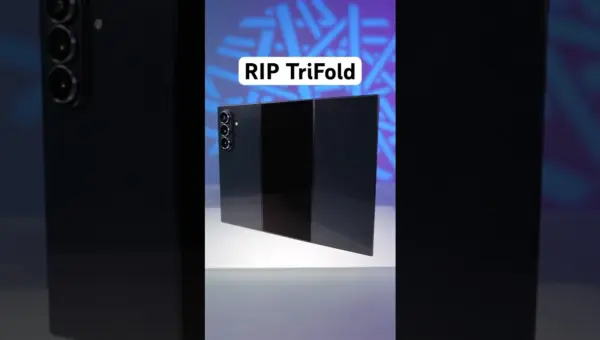
Samsung Scraps TriFold Phone After Just Months
Samsung has officially discontinued its experimental TriFold smartphone just months after its release. The high-priced, bulky device, while innovative, proved too impractical for mainstream adoption. Samsung's Z Fold 7 offers a more balanced foldable experience.


AI Backlash Grows as Public Distrust Mounts
A growing public backlash against artificial intelligence is becoming increasingly evident, fueled by fears of job displacement and the perceived dehumanizing nature of AI. Recent incidents, protests, and negative public opinion polls indicate a significant turning point in societal attitudes towards AI.